Try protein, ghee, B12, my family, gelatin. Arrow keys to move, Enter to open.
Not vegan? Then you are exactly who this site is for.
Most of us grew up on milk, eggs and meat, because that is what our families and cultures served. No judgement here. One small swap at a time, and we’ve got you covered.
— the cow, no hard feelings
Free · No catch · Nothing to buy
If you are trying to go vegan and it is not going well, write to me.
Eight years ago I was the person doing this badly. I ate salad for a week, felt awful, and nearly decided it did not work. What I needed was one person to answer four or five stupid-sounding questions. Nobody was there. So now I am.
If you are going vegan, or trying to
The evidence — with the parts that are wrong labelled as wrong
For advocates and organisations
Anywhere in the world
The helpline is not a local service. Write from any country — most of what people get stuck on is the same everywhere, and where it is not, tell me where you shop and I will work with what you can actually buy. I am in Ashburn, Virginia, but the inbox is not.
New here? Four things, in this order
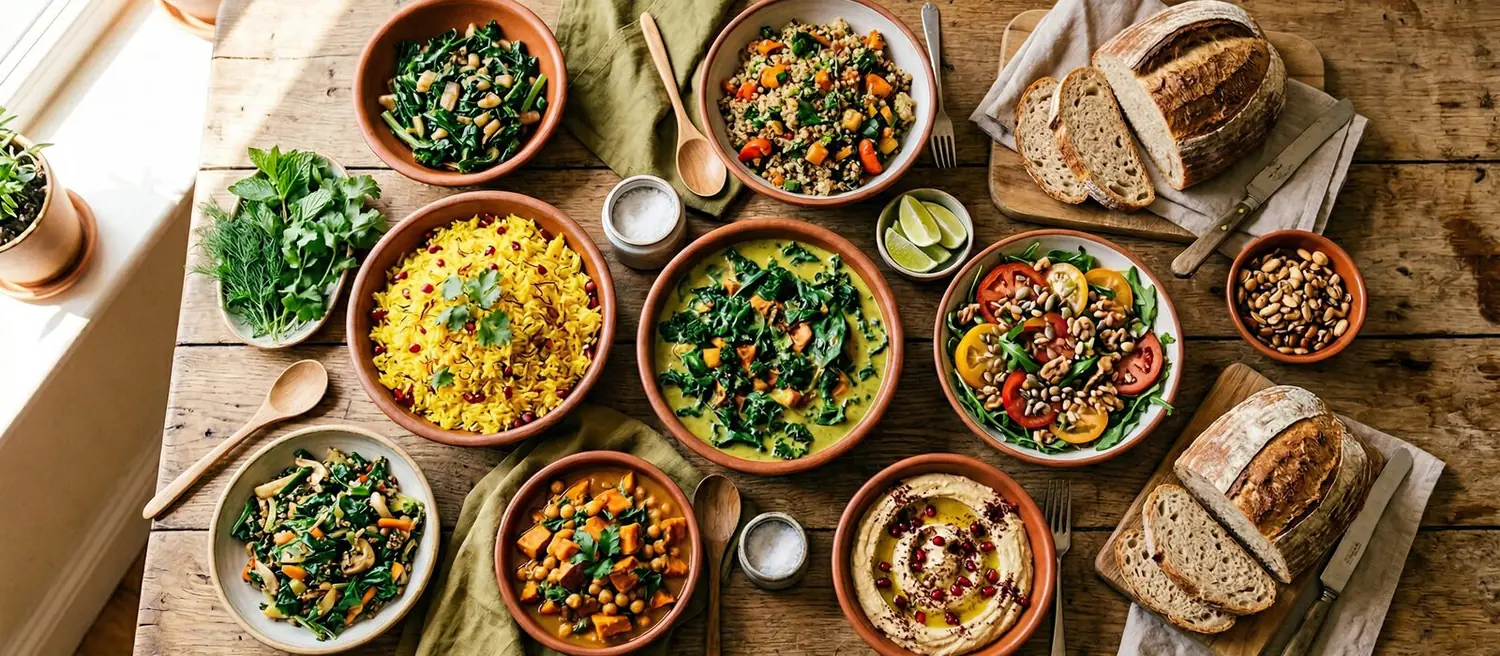
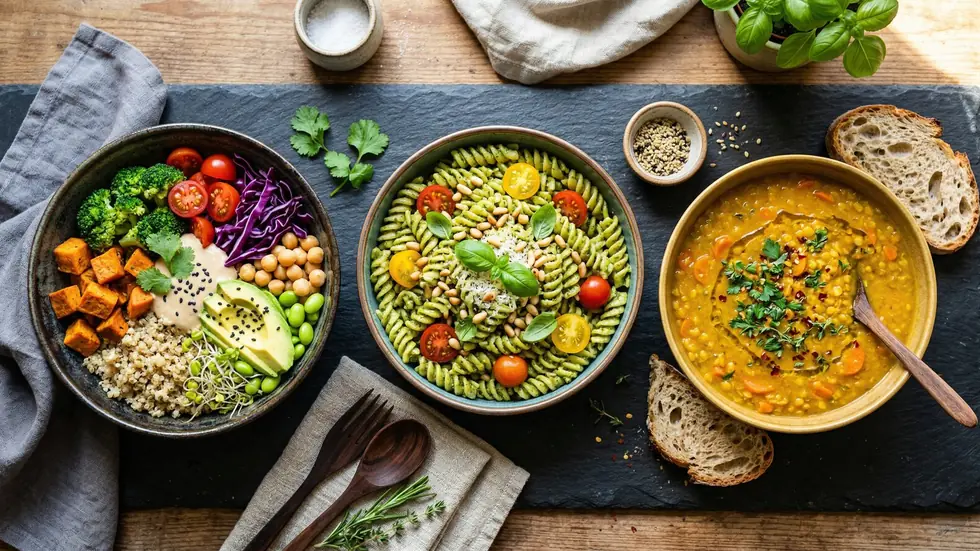
What actually goes on the table at a potluck. Nobody is told anything until afterwards.
About Me · How This Started
Nobody Was Ever Argued Into It
I’m Charan, in Ashburn, Virginia. Eight years vegan. I spent years doing animal advocacy — facts, films, leaflets — and it never worked once. Their minds were locked. Now I bring food. The food opens the door. Then I help whoever walks through it.
1
It started with the animals
I love animals. When I understood what happens to them, I could not unknow it. Everything here comes from that, and nothing here will be built on pretending otherwise.
2
For years I argued. It never worked
I explained, I shared the footage, I made the case at family tables. I cannot point to one person it worked on. What I finally understood is that their minds were closed before I said a word — not hostile, just closed, the way anyone’s is about something they have done every day for forty years. An argument does not open a closed door. It makes the person hold it shut. Psychologists have a name for it — reactance: push people, and they push back.
3
I started bringing unusual dishes, from unusual ingredients, to non-vegan potlucks
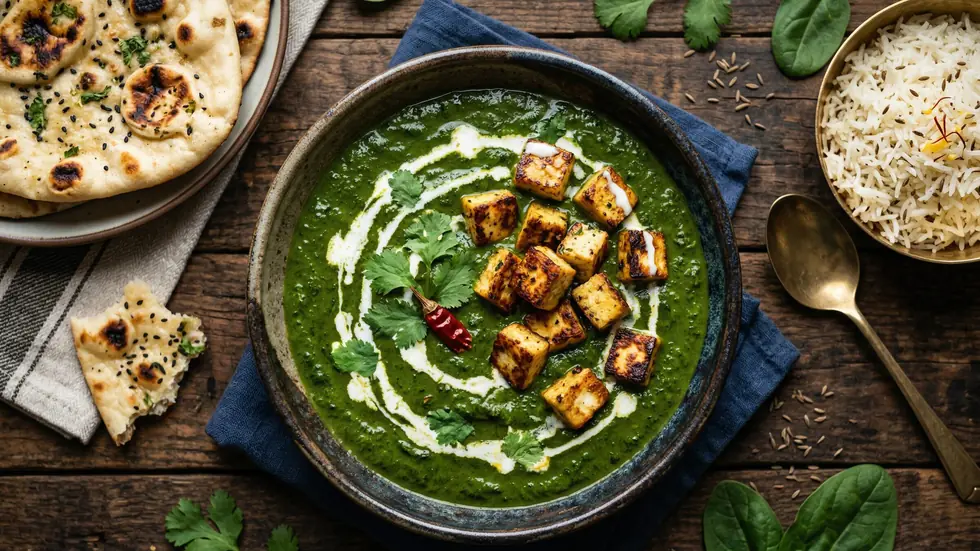
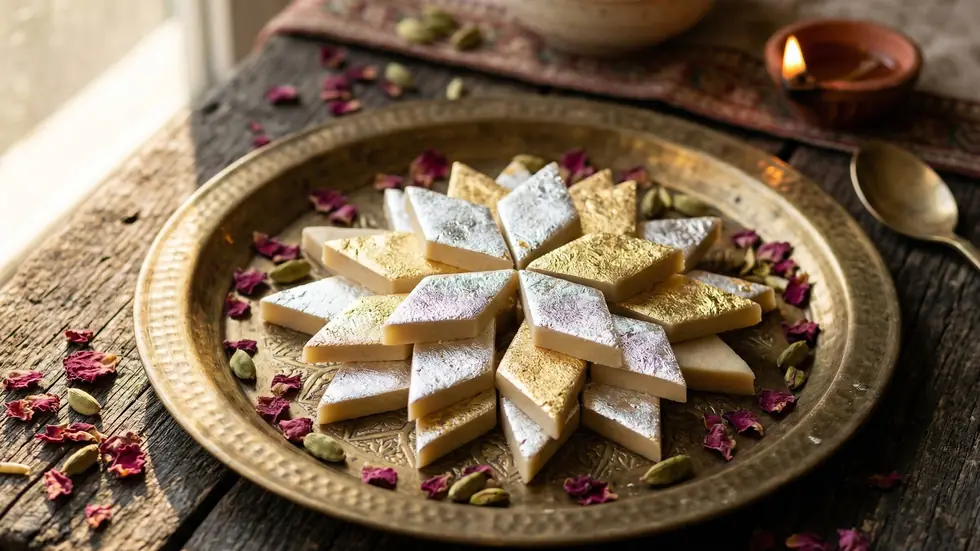
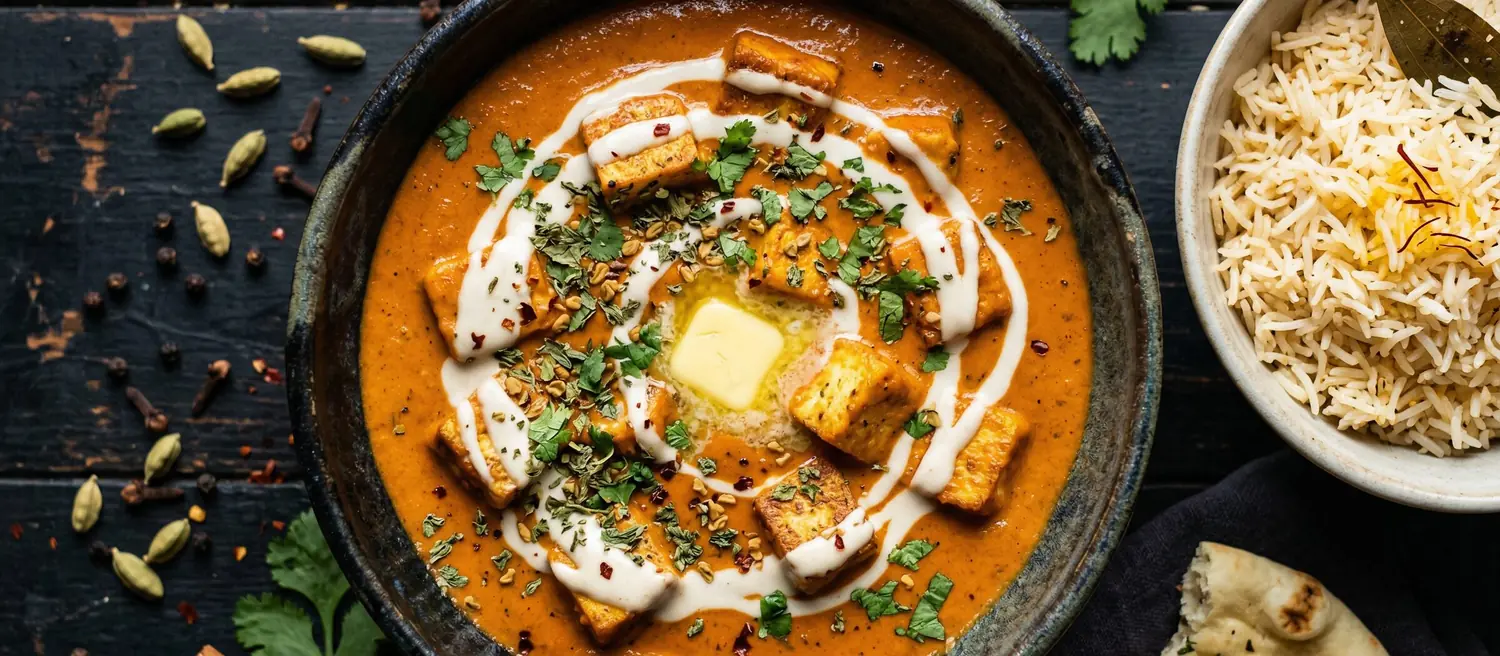
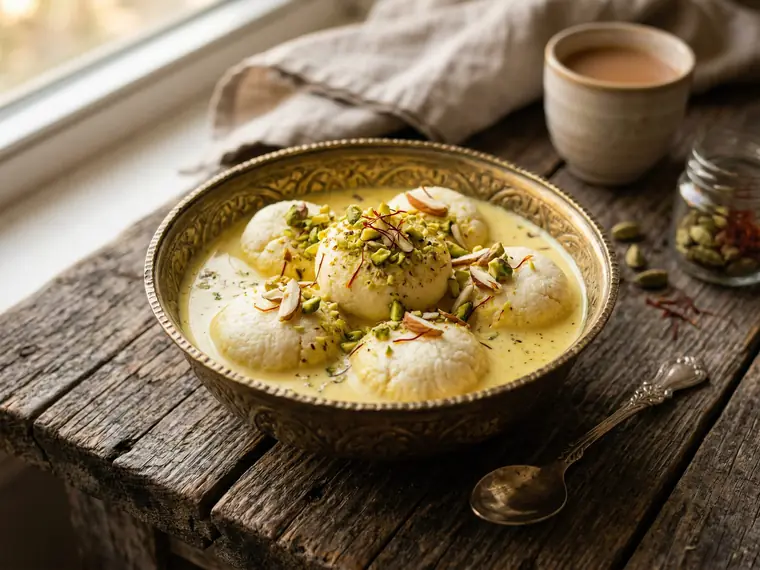
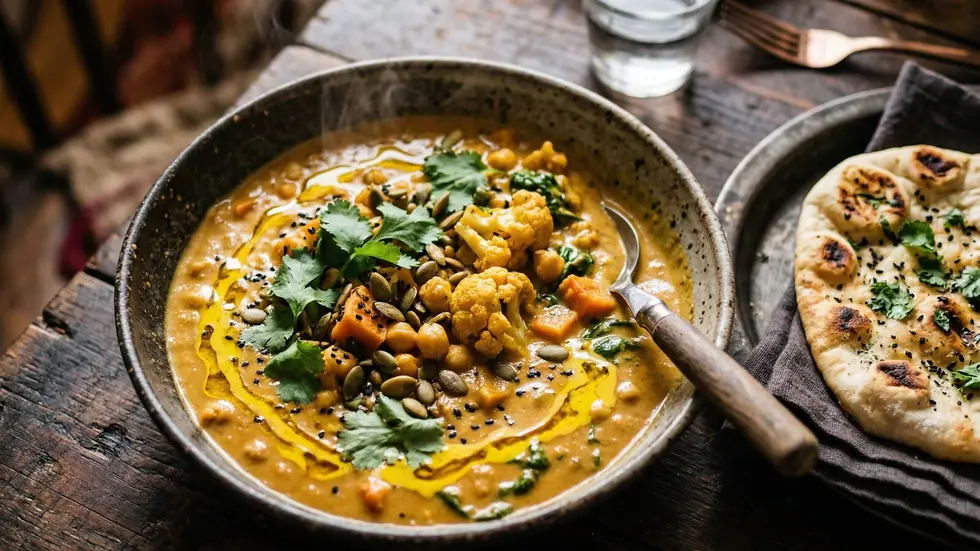
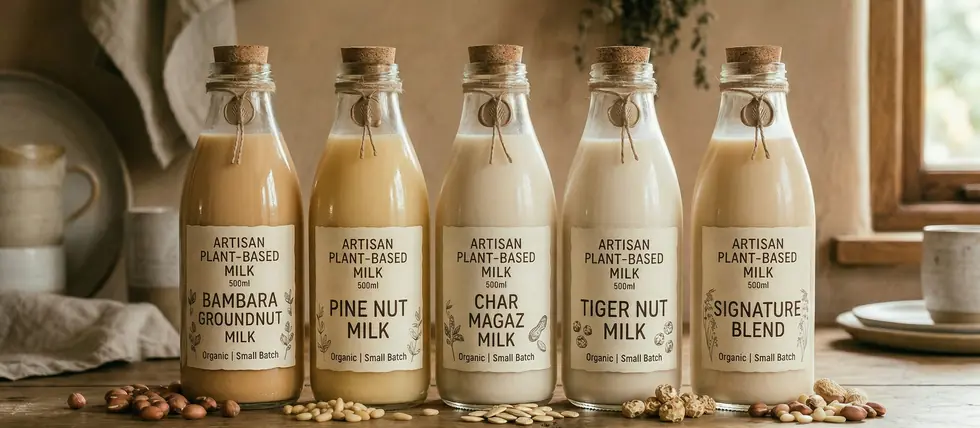
Birthdays, office parties, family gatherings, community events — near home and in other states, wherever I’m the only vegan in the room. Twelve dishes — cheese from watermelon seeds, milk from tiger nuts, butter paneer, ice cream. No labels. I don’t say the word vegan. All of it soy-free and gluten-free — I love soy and eat it myself, but I leave it out on purpose, so nobody at the table is shut out by an allergy and nobody can wave it away as “just tofu.”
4
People eat. They come back for seconds. Then they get curious
Somebody asks who made it. That is the door opening, and it opened from their side. They cannot say “I could never give that up” — they just did, at a party, without noticing.
5
Then I ask, instead of telling
What do you actually eat in a week? What would you miss? If you tried this, what would you be doing it for? They name their own reason — almost always their health first — and that is where we start. The reason someone says out loud is the one that survives.
6
Then I help them. That is what this helpline is
The curious ones leave with from a normal supermarket — a plant milk, lentils, a spread, one thing that replaces the dish they said they could never give up — and this address. Weeks later, some of them write. Eight years ago I was the one doing this badly — salad for a week, feeling awful, nearly deciding it did not work. What I needed was one person to answer four or five stupid-sounding questions. Nobody was there. So now I am. Most people don’t quit over ethics or willpower; they quit because something went wrong on a Tuesday and there was no one to ask.
7
They come in for their health and end up vegan for the animals
I never push them there. The ones who stay almost always arrive at the animals on their own, months later — and because they walked there themselves, it holds.
Eight years. One potluck at a time.
Everything on this site — the 130 swaps, the 115 claims, the science, the animals — is what I wish somebody had handed me in year one. , or . If you run a group or a challenge and somebody in it is about to give up, .
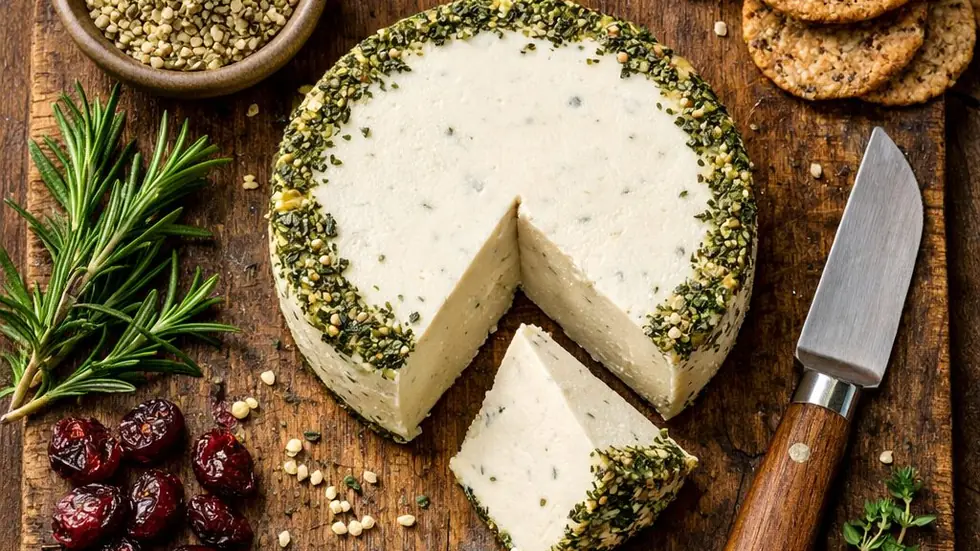
Hemp seed cheese. Nobody at the table asked what was in it until after the second slice.
What this site is, and is not
It is one person with an evening inbox, in Ashburn, Virginia. There is nothing to buy here and there never will be. No list to join, no course, no funnel. If you want to order food, that is a separate business and a separate address.
The two long pages — and — carry a source for every claim, and each ends with a section on the things I could not verify and therefore will not tell you. That is deliberate. The moment one claim here falls apart, everything else becomes suspect.
Free · No catch · Nothing to buy
The Helpline
If you are trying to go vegan and it is not going well, write to me. I will answer. You do not have to live near me, and you do not have to already be vegan, or be sure that you want to be.
You do not need to know anything before you write. “What do I put on toast” is a real question and gets a real answer.
You do not have to live near me
I answer from anywhere in the world. India, the UK, Canada, the Gulf, anywhere — the questions are mostly the same, and where they are not, tell me which shops you actually have and I will work from that rather than from an American supermarket. There is no time zone attached to an inbox and no charge attached to any of it.
I Will Help You. That Is The Whole Offer.
Eight years ago I was the person doing this badly. I ate salad for a week, felt awful, and nearly decided it did not work. What I actually needed was one person to answer four or five stupid-sounding questions. Nobody was there. So now I am.
This is not a company service and there is nothing attached to it. You do not have to order anything, ever. You do not have to live near me. You do not have to already be vegan, or be sure you want to be. “I am thinking about it and I do not know where to start” is a completely good reason to write.
It is one person answering emails in the evening, so it is not instant — but it is real, and it is free, and I will not try to sell you anything at the end of it.
Wanting to order food instead? That is
Veganminati
— catering, single meals, market days, one week’s notice on everything.
Put Helpline in the subject and I will know it is not an order. That link fills the subject in for you — or copy the address and write from wherever you like.
I read every one myself.
Or Write From Here
Nothing to install, nothing to sign up for. It goes to the same inbox as an email, and you get the same person back.
Find Me In Person
I travel for this. If I’m near you, come and say hello — a conversation over food is still the best version of this helpline.
When
Where
What
17–20 September 2026
Warsaw, Poland
CARE — the Conference on Animal Rights in Europe. Find me at the career fair or book a 1:1 through the conference app.
Next
Thailand
Dates being fixed. Write to me if you’re there and want to meet or host a potluck.
October 2026
Japan
Dates being fixed — write and I’ll tell you which cities.
October 2026
South Korea
Dates being fixed — write and I’ll tell you which cities.
Always
Ashburn, Virginia
Northern Virginia potlucks, temple gatherings and markets. Ask and I’ll tell you the next one.
Want me to bring food to something? If you’re organising a non-vegan gathering anywhere I’m travelling — a family dinner, an office party, a community event — that is exactly the kind of thing I come for. Write with the date and I’ll tell you if I can make it.
The Ten I Get Asked Most
There are 115 claims on the myths page. These are the ten that arrive in my inbox in the first fortnight, nearly every time. Each one opens the full answer.
Not on the list? , or just write to me.
Three Ways To Reach Me
How
What to do
How long you will wait
Email anywhere in the world
Write to charanjeevbali@gmail.com with Helpline in the subject. Tell me where you are stuck and what you cannot eat.
Usually within 48 hours. Always within a week. If a week goes by with nothing, send it again — it did not arrive.
WhatsApp if you would rather type on a phone
Message this number. Same person, same answers — and you can send a photo of the label.
Same as email: usually within 48 hours.
In my kitchen Ashburn and around Loudoun
Come and cook the thing you think you cannot give up. Bring the recipe. We will make it plant-based together and you take it home.
By arrangement. There is no charge for this — it is not the paid class.
Wherever I am markets, pop-ups, potlucks
Find me and ask. Bring your mother, your sceptical husband, your teenager. Taste first, argue later.
On the spot. This is the one I like best.
You are allowed to ask an obvious question
“What do I actually put on toast” is a real question and I will give it a real answer. Nobody is grading you, and there is no question here that I did not once have to ask somebody myself.
What I Can Help With, And What I Cannot
The second column matters more than the first. Knowing where somebody stops being useful is what makes the rest of it worth anything.
Ask me about
Your first shop — what to actually put in the trolley
Reading a label, and which words hide dairy and egg
What to cook in week one so you do not quit in week two
Replacing one specific dish you cannot imagine giving up
Cooking around gluten, soy or a nut allergy
Feeding a family who did not agree to this
Eating out around Northern Virginia
Why you felt weak when you tried before
What the published guidance says about B12 and the usual doses
Indian cooking specifically — ghee, paneer (Indian cottage cheese), dahi (yogurt), khoya, mithai
How to talk to a parent about it without a fight
Ask somebody better than me about
Medical advice, medication, or what your blood results mean — your doctor
A meal plan for pregnancy, a baby, a child, or a diagnosed condition — a registered dietitian
Anaemia, thyroid disease, diabetes, kidney disease — your doctor first, then a dietitian
A severe allergy where a mistake is dangerous — your allergist
Food that has started to feel frightening or controlling — see the next section
Anything urgent. This is an inbox, not a crisis line.
I am not a dietitian and I am not a doctor. I am a cook who has read a great deal and who will tell you plainly which of those two things a question belongs to.
When I Am The Wrong Person To Write To
One thing I want to say directly, because in this world people usually talk around it.
Going vegan and restricting food can look identical from the outside, and sometimes they get tangled together on the inside too. If the honest position is that food has started to feel frightening, or shameful, or like something you have to control to feel all right — then which foods are on the list is not the first problem to solve, and I am not the right first call.
That is not me turning you away. I will still cook for you, still answer, still be glad you wrote. I would just rather say plainly that there are people whose actual job this is, and they are free.
Free support in the US
National Alliance for Eating Disorders helpline — 1‑866‑662‑1235, staffed by licensed therapists, Monday to Friday, 9am–7pm Eastern. Free, and they will help you find treatment near you. allianceforeatingdisorders.com
If you are in immediate danger, please call or text 988 in the US, or your local emergency number.
And if you tried before and felt terrible
That is worth investigating rather than ignoring, and it is usually one of four things — not eating enough, low iron, low B12, or low zinc and protein. All four are measurable. Ask your doctor for bloods including B12, ferritin and vitamin D. Take the numbers seriously either way; feeling bad is information, not a verdict on the whole idea.
The First Month, If You Want Company For It
The first four weeks are where nearly everybody gives up, and almost never because of the food. It is because something happened — a wedding, a bad week, a mother-in-law — and there was nobody to ask what to do about it.
So: write to me once a week for a month. That is the whole thing. Tell me what you cooked, what went wrong, what somebody said to you. I will write back.
Week one — we change your milk and nothing else, and you tell me how the chai went.
Week two — one breakfast and one dinner you can cook without thinking.
Week three — the dish you were most afraid of losing. We make it properly.
Week four — eating out, other people’s houses, and what to say when somebody asks.
No app, no group chat, no daily reminders. Four emails, spread over a month, from a person who will remember what you said last time.
For Organisations: Send Me The Ones About To Give Up
If you run a challenge, a group, a society, a sanctuary, a Facebook page — someone in it is quietly giving up this month. Most people who stop being vegan stop in the first year, and the first month is the worst of it. Send them to me. It costs you nothing and it costs them nothing.
Anyone whose problem is one dish they cannot imagine giving up
Anyone cooking around gluten, soy or a nut allergy — where most vegan advice quietly falls apart
What I will not do
Sell them anything, ever
Add them to a list
Tell you what they wrote to me
Give medical advice — I say so, and I point them to a doctor or a dietitian
Push. Nobody was ever argued into this
What happens next is the four weeks above: one email a week, from one person who remembers what they said last time. Milk in week one, two meals in week two, the dish they were afraid of losing in week three, other people’s houses in week four. Then they stay because of the animals, not because of me.
The starter kit
When I meet somebody curious at a potluck, I hand them a bag from a normal supermarket — a plant milk, a bag of lentils or chana, a spread, and one thing that replaces the dish they said they could never give up. Nothing from a specialist shop. Nobody stays vegan in a shop they cannot afford. If your organisation wants to do the same, — copy it.
Two ways to refer somebody: give them this address, or write to me yourself with their first name and I will write first. Put Referral in the subject. The paste-able paragraph, the card and the code are on .
Nearly every message is one of these six. Here are the short answers, so you can skip the wait if one of them is yours.
“I don’t know what to buy. Where do I even start?”
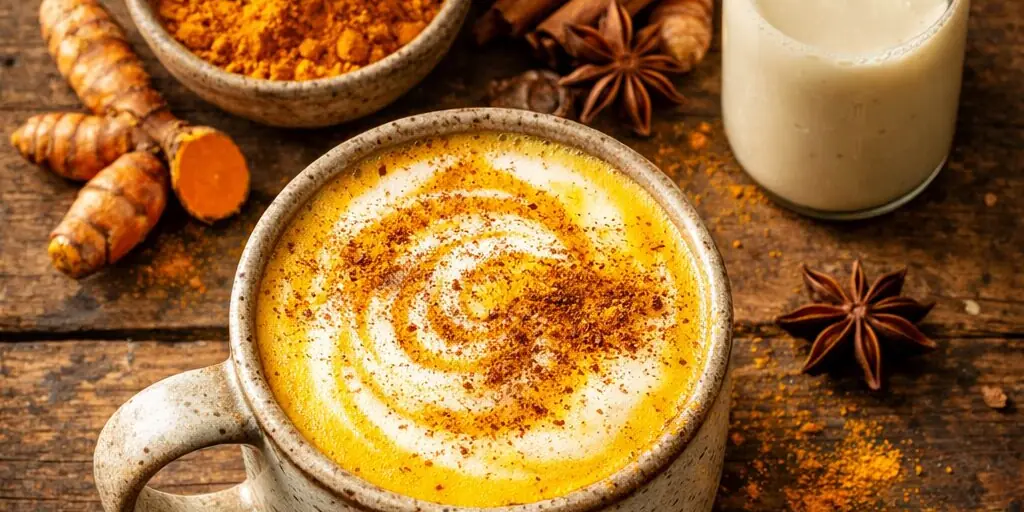
Change your milk and nothing else this week. Buy soy or oat for chai and coffee — that single swap removes more dairy from most people’s week than everything else put together, because of how much of it goes into tea.
Then, next week, one bag of lentils, one of chana, rice, atta, potatoes, whatever vegetables are cheap. That is the whole shop. The expensive aisle with the fake meat is optional and always was.
“I tried it and I felt weak and tired.”
Tell me what you ate that week. Nine times out of ten the answer is salad, and the problem is that you removed food without replacing it — plant food is bulkier, so people accidentally eat far less than they think.
The other four causes are low iron, low B12, low zinc, and not enough protein, and all four are measurable. Ask your doctor for bloods including B12, ferritin and vitamin D before you conclude anything.
“My family will not eat it.”
Then do not tell them. Cook one dish, do not label it, put it on the table with everything else, and say nothing. This works almost every time, and it is the entire method this kitchen is built on.
Announcing it turns dinner into a debate about who is right. Serving it turns dinner into dinner.
“I cannot give up cheese / paneer / ghee.”
Then do not, yet. Cheese is the hardest one and it is the hardest one for everybody — leave it until last. Milk first, then ghee, then paneer (Indian cottage cheese), then cheese, over months rather than days.
For the Indian three specifically: plant ghee on algae oil carries about 0.5 g of saturated fat a tablespoon against dairy ghee’s 8.7. Paneer is just protein set by acid, so any high-protein plant milk does it. Both are more doable than cheese, and doing them first buys you time.
“I also cannot have gluten / soy / nuts.”
This is the one I get asked least and can help with most, because it is where nearly all vegan advice quietly falls apart — gluten-free rules out seitan and chaap, soy-free rules out tofu and tempeh, and between them they remove almost every packaged vegan protein on the shelf.
The answer is to cook rather than shop. Lentils, chana, rajma and horse gram are free of both. Chickpea tofu from besan takes ten minutes. Watermelon seed milk and paneer (Indian cottage cheese) are nut-free and soy-free. Write to me with what you cannot eat and I will send you a week of food.
“Is it expensive?”
Vegan food is cheap. Vegan products are expensive. Dried lentils, chickpeas, rice, atta, potatoes and seasonal vegetables are the cheapest calories in any shop on earth; mock meats and vegan cheese cost more than the things they replace.
If money is the barrier, that barrier is made entirely of the replacement aisle. Skip it.
What Happens To What You Write
It comes to one inbox and I am the only person who reads it.
You are not added to any list. There is a newsletter and this is not it.
I do not share it, quote it, or post it. If I ever want to use something you said as an example, I will ask you first and I will take no for an answer.
Nothing here is a medical record and I am not qualified to keep one. Please do not send me test results expecting an interpretation — send those to your doctor.
Ask me to delete the thread and I will.
Free Help That Is Not Me
I am one person with an evening inbox. These are bigger, and they are also free — use them alongside, or instead, without asking me.
Who
What they do
Challenge 22
A free 22-day programme run by Animals Now, with volunteer mentors and certified dietitians supervising the nutrition advice. Over a million people have been through it since 2014. You can ask for a personal mentor. challenge22.com
A registered dietitian
The right answer for pregnancy, feeding a child, or any diagnosed condition. Challenge 22 lists vegan-friendly ones; your insurance may also cover a referral.
The Vegan Society
Long-standing UK charity with careful, referenced nutrition guidance that is worth reading whichever country you are in. vegansociety.com
National Alliance for Eating Disorders
Free helpline staffed by licensed therapists, 1‑866‑662‑1235, Monday to Friday 9am–7pm Eastern. allianceforeatingdisorders.com
I am not affiliated with any of them and nobody pays me to list them. They are here because they are good and because I would rather you got help from somebody than waited on me.
Write To Me
However badly formed the question is. However long ago you gave up. However sure you are that you could never do it.
Nobody was ever argued into this, and I am not going to try. But if you have decided you want to, or you are only curious, or you just want somebody to tell you what to buy on Saturday — that is what this is for, and it costs nothing.
What the research actually establishes, what it only suggests, and the popular claims I will not repeat because I could not find a source for them. No photographs of slaughterhouses. No adjectives doing work that evidence should do.
Before you read: this page is not here to blame you.
If you eat meat, milk or eggs, so does almost everyone you know, and so did most vegans once. Nobody chose the food system they were born into. This page is here so you know, and so you can choose. Whenever you are ready, we will help, free.
There is a version of this page that would be easier to write. It would pick the most affecting studies, drop the failed replications, and round every number up. It would probably work better in the short term.
I am not writing that one, for the same reason the kitchen publishes the recipes that failed: the moment somebody finds one thing here they can disprove, everything else on the site becomes suspect. So the sections below include the studies that did not replicate, the claims I could not source, and one live scientific dispute that I am not going to pretend is settled.
If you came here already convinced, the useful part is section seven — the things you may be repeating that do not hold up. If you came here sceptical, start at the top; the formal position of the field is more careful and more interesting than either side usually reports.
1 · What scientists actually signed
Two documents get cited constantly and quoted badly. Here is what each one really says.
The Cambridge Declaration on Consciousness — 7 July 2012
Signed at the Francis Crick Memorial Conference at Churchill College, Cambridge, in the presence of Stephen Hawking. The operative sentence:
“The absence of a neocortex does not appear to preclude an organism from experiencing affective states… the weight of evidence indicates that humans are not unique in possessing the neurological substrates that generate consciousness. Non-human animals, including all mammals and birds, and many other creatures, including octopuses, also possess these neurological substrates.”
Cambridge Declaration on Consciousness, 2012
Read it carefully. It names mammals, birds and octopuses. It does not name fish, and it makes a claim about neurological substrates — the hardware — not a claim about what any particular animal experiences. It was a declaration by conference participants, not a peer-reviewed paper and not an institutional position of the University of Cambridge.
The New York Declaration on Animal Consciousness — 19 April 2024
Four sentences, hosted at NYU. The middle two are the ones that matter, and the distinction between them is deliberate:
“First, there is strong scientific support for attributions of conscious experience to other mammals and to birds.
Second, the empirical evidence indicates at least a realistic possibility of conscious experience in all vertebrates (including reptiles, amphibians, and fishes) and many invertebrates (including, at minimum, cephalopod mollusks, decapod crustaceans, and insects).”
New York Declaration on Animal Consciousness, 2024
“Strong scientific support” and “realistic possibility” are two different epistemic claims, and the document is precise about which animals get which. Its organisers wrote separately that it would be “inappropriate to talk about ‘proof,’ ‘certainty,’ or ‘conclusive evidence’” in this area. The declaration makes no policy recommendation of any kind.
How this got reported
The headline on Quanta Magazine’s launch-day story was “Insects and Other Animals Have Consciousness, Experts Declare.” The article’s body quotes “realistic possibility” correctly — the headline states as fact what the scientists stated as a possibility. If you have seen “scientists declare insects are conscious” shared online, that headline is where it came from.
It launched with around 40 signatories; the open list has since grown into the hundreds. Signatories sign in a personal capacity, not for their institutions.
2 · What the law recognises
Legal recognition of sentience is real, recent, and much weaker than it sounds.
United Kingdom — Animal Welfare (Sentience) Act 2022
Royal Assent 28 April 2022. Section 5(1) defines “animal” as any vertebrate other than humans, any cephalopod mollusc, and any decapod crustacean — octopus, squid, crab, lobster, crayfish, prawn.
What the Act actually does: it requires the Secretary of State to maintain an Animal Sentience Committee, which may publish reports on whether a government policy had “all due regard” to animal welfare, to which ministers must respond within three months.
What it does not do
It creates no enforceable rights or duties toward animals. Ministers need only respond to reports; acceptance is discretionary. “Due regard” is undefined in the statute. The Act does not define sentience. There is no enforcement mechanism. It is a procedural duty on government, not a protection for an animal.
Why crabs and octopuses were added
Because of a specific evidence review: Birch and colleagues at the London School of Economics, commissioned by DEFRA, November 2021. They assessed eight criteria — nociceptors; integrative brain regions; neural pathways connecting the two; responses modulated by anaesthetics; motivational trade-offs between threat and reward; flexible self-protective behaviour after injury; associative learning beyond habituation; and behaviour showing the animal values pain relief when injured.
Their gradings were graded, not blanket: very strong evidence for octopods, strong for true crabs, substantial for cuttlefish, squid, lobsters, crayfish and caridean shrimps, and explicitly weak or uncertain for nautiloids and penaeid shrimps. Their recommendation was that all cephalopod molluscs and decapod crustaceans be treated as sentient in UK welfare law. The government took it.
European Union — Article 13
Worth quoting in full rather than stopping where advocacy usually stops:
“…the Union and the Member States shall, since animals are sentient beings, pay full regard to the welfare requirements of animals, while respecting the legislative or administrative provisions and customs of the Member States relating in particular to religious rites, cultural traditions and regional heritage.”
Treaty on the Functioning of the European Union, Article 13
The carve-out is part of the sentence. Quoting only the first half is the kind of thing that makes a reader stop trusting a page.
United States — the gap
There is no federal statute recognising animal sentience. The Animal Welfare Act’s definition of “animal” expressly excludes birds, rats and mice bred for research, and “other farm animals…used or intended for use as food or fiber.” The Humane Methods of Slaughter Act covers “cattle, calves, horses, mules, sheep, swine, and other livestock” — poultry is not named, and USDA has declined petitions to read it in.
The honest version of this: chickens and turkeys sit outside both statutes. That is not the same as “no protection at all” — the Poultry Products Inspection Act and state cruelty codes exist, though most state codes exempt customary farming practices.
3 · Chickens
Roughly nine in every ten land animals killed for food is a chicken. They are also the animal about which people hold the strongest confident opinions and the least evidence.
Newly hatched chicks track quantities
Rugani and colleagues (2009, Proceedings of the Royal Society B) showed chicks a set of identical objects, then hid them behind screens and moved some from one screen to the other while the chick watched. The chicks approached the screen hiding the larger set, with quantities up to five. They were days old and had never been trained.
Hens will wait — but not as long as you have been told
This one is worth getting right, because the popular version is wrong. Abeyesinghe and colleagues (2005, Animal Behaviour) offered hens a choice between a short wait for a small feed and a longer wait for a much larger one.
In the standard condition — 2 seconds’ wait for 3 seconds of food, versus 22 seconds’ wait for 22 seconds of food — the hens were impulsive. They took the small immediate reward. Self-control only appeared in a “jackpot” condition where the longer wait was cut to 6 seconds; there, seven of eight hens chose the delayed larger reward, at a mean rate of 0.93.
The authors read the impulsive result as temporal discounting under uncertainty rather than a cognitive ceiling — the jackpot condition ruled out “an absolute cognitive constraint.” But if you have seen “hens will wait 22 seconds for more food,” that is the study, reported backwards.
Food calls behave like referential signals
Evans & Evans (1999) played recordings of male food calls to isolated hens in a sound-attenuated chamber with no food present. The hens looked down and moved their heads toward the ground as if foraging. Acoustically similar ground alarm calls did not produce it. Contact calls from comparable social contexts did not either.
“Functionally referential” is a technical term: the signal behaves like a referential one. The authors themselves note such signals likely encode several kinds of information at once. It is not a claim that chickens have a word for food, and I am not going to upgrade it into one.
A hen responds to her chicks’ distress
Edgar and colleagues (2011, Proceedings of the Royal Society B, Bristol) directed a puff of air at chicks while the mother watched, against three control conditions. The hens showed increased heart rate, increased maternal vocalisation, increased alertness, reduced preening, and a measurable drop in eye temperature — and did so even though the chicks themselves barely vocalised, which means the hen was responding to the event rather than to a distress call.
The paper’s own conclusion is careful: adult female birds possess “at least one of the essential underpinning attributes of empathy.” That is emotional contagion — one component — not empathy entire. The authors said so; so will I.
4 · Pigs
Mirrors — and the replication that failed
Broom, Sena & Moynihan (2009) found that seven of eight mirror-experienced pigs located hidden food using a reflection, in roughly 23 seconds.
Then Gieling and colleagues (2014) tried to repeat it and published under the title “Lack of mirror use by pigs to locate food.” In replication, 2 of 11 pigs in one trial and 1 of 11 in another used the mirror. Marino & Colvin — whose review is the standard citation for pig cognition — concluded in their own words that the original results “are not as robust as they may seem.”
The same reviewers state plainly that pigs have not demonstrated mirror self-recognition by the mark test, unlike great apes, elephants, dolphins and magpies.
The joystick study, with its caveats attached
Croney & Boysen (2021, Frontiers in Psychology) trained four pigs to move a cursor with a joystick to hit targets on a screen. All four performed above chance on the easiest targets; two Yorkshires reached 42–48% accuracy and one micro pig reached 76%.
The authors’ own limits are as interesting as the result: the apparatus was built for primates, pigs are far-sighted so the monitor sat at 45 cm, and “the pigs’ limited dexterity no doubt constrained their performance.” Four animals is four animals.
One incidental observation from that study has stayed with me. When the food dispenser malfunctioned, the pigs carried on working for verbal encouragement alone.
5 · Cows
The “eureka” study did not replicate
You will find, on a great many vegan sites, the claim that cows experience visible excitement at the moment of solving a problem. It comes from one study: Hagen & Broom (2004), a yoked design in which heifers who controlled the delivery of a reward “got more excited” than heifers who received the same reward without control.
In 2020, Meagher and colleagues at UBC tried to reproduce it in Scientific Reports. Their finding, verbatim: “There was no treatment effect on play in the current study, and unlike Hagen and Broom, we observed play in both learning and control individuals.” They found “no evidence that play is linked with a learning experience,” concluding instead that heifers are motivated to take part in learning tasks but that other aspects of the experience were also rewarding.
Why this is on the page
Because I have seen the eureka claim on a hundred vegan pages and the failed replication on none of them. A single 2004 study whose key contrast did not hold up in 2020 is not a fact. Reporting both is the only version of this page worth putting my name on.
Cow and calf
Mother–calf bonds form within about five minutes of birth (Hudson & Mullord, 1977). After separation, mothers walk, urinate, vocalise and butt, and remain restless for over 24 hours. Weary & Chua (2000) found mothers produced contact calls at significantly higher rates when separation happened at four days than at six hours or one day — the longer the pair are together, the stronger the response.
I could not obtain the original abstracts for the Weary and Flower papers directly; those findings are reported at second hand through the Marino & Allen review. So I am not going to publish specific vocalisation counts or durations for them. I also found no source at all for the widely circulated claim that cows cry for their calves for weeks, and I am not going to repeat it.
The health argument for early separation does not hold up either
Beaver and colleagues (2019, Journal of Dairy Science) reviewed 70 peer-reviewed papers on the health effects of separating dairy calves early. For calf scours and mastitis, findings “pointed to beneficial or no effects of suckling.” For cryptosporidiosis, pneumonia, immunity and mortality, results were mixed. Overall: “no consistent evidence in support of early separation.”
Be precise about what that means. It undercuts the industry’s health justification for the practice. It is not itself evidence of emotional harm. Those are different claims and it is worth keeping them apart.
6 · Fish — a real dispute
This is the section where I would most like to give you a clean answer, and cannot. Whether fish consciously feel pain, as opposed to detecting and responding to injury without experiencing it, is an open argument between serious neuroscientists. Here is each side in its own words.
The case that they do
Sneddon, Braithwaite & Gentle (2003) mapped 58 receptors on the head of the rainbow trout and classified 22 as nociceptors — the first demonstration of them in a fish.
Injecting acid or bee venom into the lips raised opercular beat rate from roughly 52 to 93 beats a minute, delayed the resumption of feeding from roughly 80 minutes to roughly 170, and produced rocking and, in the acid group only, rubbing the lips on the tank substrate.
A 2018 paper by ten authors including Sneddon, Broom and Brown argued that sceptics reject the precautionary principle and misread the analgesia literature.
The case that they do not
Rose and colleagues (2014) argue those behaviours show nociception, not conscious pain: “claims that fish feel pain remain unsubstantiated.”
Their central anatomical point uses Sneddon’s own data. C-fibres — the nerve type responsible for the worst pain in humans — are about 5% of small fibres in fish against 83% in human skin nerves. In Sneddon’s trout, 21 of 22 nociceptors were A-delta; exactly one was a C-fibre.
Key (2016) goes further: fish “lack the necessary neurocytoarchitecture, microcircuitry, and structural connectivity” for pain, because the fish pallium is not laminated and only diffusely interconnected.
When Key published, the journal ran dozens of open peer commentaries. Some supported him. More opposed him — Broom, Brown, Balcombe, Braithwaite, Striedter, and Anil Seth, whose title is the best single summary of where the field actually sits: “Why fish pain cannot and should not be ruled out.”
That is the honest position. Not “fish definitely feel pain.” Not “fish definitely do not.” It cannot be ruled out, and the precautionary weight falls on assuming they might — which is exactly the New York Declaration’s “realistic possibility” wording, arrived at independently.
7 · What I will not tell you
Every claim in this section is one I have seen on vegan websites, including ones I like. None of them survived a search for a source.
The claim
Status
What I actually found
“Pigs are as intelligent as a three-year-old child”
No source
No peer-reviewed study making a direct pig-versus-child comparison. Marino & Colvin’s review — the standard reference for pig cognition — does not make this claim.
“Cows have best friends”
No source
Traced to a 2011 University of Northampton study. Every version I could find is a press item or a blog; no peer-reviewed publication located. Gutmann et al. (2015) is the nearest real evidence for stable social preferences in dairy cows.
“Cows cry for their calves for weeks”
No source
The separation response is documented. The duration claim is not, in anything I could find.
“Cows have eureka moments”
Did not replicate
One 2004 study; the key contrast failed to reproduce in 2020. See section five.
“Pigs recognise themselves in mirrors”
Contested
They use mirrors to find food in one study and largely not in its replication, and they have never passed the mark test. Using a mirror as a tool is not self-recognition.
“A fish passed the mirror test, so fish are self-aware”
Authors disagree
Kohda et al. (2019) found cleaner wrasse scraped at marks visible only in a mirror — then wrote, in the same paper, that they “do not consider…that this should be taken as evidence of self-awareness in the cleaner wrasse.”
Three general warnings, which cut in both directions
The mirror test is weak evidence either way. De Waal’s objection to the wrasse result is that cleaner wrasse are specifically adapted to spot and remove things stuck to fish, so scraping at a mark may be their day job rather than self-recognition. And in the other direction: dogs reliably fail the visual mirror test, which is routinely reported as evidence they lack self-awareness — but Horowitz’s “olfactory mirror” work suggests the test may simply be in the wrong sense for a scent-dominant animal. A failed test is not evidence of absence, and a passed one is not proof.
The guilty look is not guilt. Horowitz (2009) crossed whether 14 dogs had actually eaten a forbidden treat with whether the owner scolded them, deliberately misinforming owners half the time. Dogs showed no more “guilty” behaviour when they had actually disobeyed. Scolding was the significant predictor — and the effect was strongest when the dog had in fact been obedient. This is the cleanest published demonstration that a confidently-read animal emotion was the observer’s projection, and I keep it in mind on every other page of this site.
Faces are poor evidence. Barrett and colleagues (2019) found that even in humans, facial configurations do not map reliably onto discrete emotions. If reading a human face is unreliable, reading a pig’s is weaker still. The legitimate exception is a validated grimace scale — the sheep pain scale developed against footrot and mastitis, checked against analgesic response. That measures pain, against a known standard. Reading contentment off a photograph does not.
And the objection people raise back
“Plants feel pain too” is usually offered as a gotcha, and it deserves an actual answer. Taiz and colleagues (2019, Trends in Plant Science) reviewed the plant-consciousness literature and concluded the evidence is “highly problematical”: proponents “consistently glossed over the unique and remarkable degree of structural, organizational, and functional complexity that the animal brain had to evolve before consciousness could emerge,” and it is “extremely unlikely” that plants, lacking anything comparable, possess it. On the “root brain” idea they note dryly that if the root tip is a command centre, so is the shoot tip, and you may as well call the whole plant a brain.
Two honest notes. That paper is an opinion piece in a peer-reviewed journal and the plant-signalling community contests it — it is the strongest citation for the mainstream position, not a settled consensus document. And the argument cuts the wrong way for the person making it: most crops grown on earth are eaten by farmed animals, so if plant suffering counted, eating plants directly would still cause less of it. Section one of has the figures.
8 · The numbers, and their error bars
Almost every animal-count you see quoted is a single number. Almost none of them should be.
83 billion
land animals slaughtered worldwide
FAO via Our World in Data · 2022
124 billion
farmed fish killed for food — range 78–171 billion
Mood et al. · 2019 data
1.1–2.2 tn
wild fish caught, annual average
Mood & Brooke · 2000–2019
The same fact, measured three different ways
Land animals are counted by head. Fish are not — the FAO records catch in tonnes, so every fish number in circulation is a weight divided by an estimated average body weight. The bars are the published ranges; the dot is the midpoint everyone quotes.
FAO via Our World in Data (2022) · Mood et al., Animal Welfare, 2023 (farmed, 2019 data) · Mood & Brooke, 2024 (wild, 2000–2019 average) · the land-animal figure has no range because it is a count, not an estimate — but it excludes male chicks killed in the egg industry
Per species, for 2021: chickens 73.79 billion, ducks 4.31 billion, pigs 1.4 billion, sheep 617 million, goats 501 million, cattle 332 million. Faunalytics puts the 2024 land-animal total at just under 88 billion.
Why the fish numbers have ranges and the others do not
Because nobody counts fish. The FAO records wild catch in tonnes, not individuals — unlike wild-caught marine mammals, crocodiles, and every farmed mammal and bird, which are counted by head. Every fish headcount in circulation is a tonnage figure divided by an estimated average body weight, and the divisor is a guess assembled species by species.
That is why the honest figure is a range and why the true number could be roughly half or roughly double the midpoint. The researchers who produced these estimates end their paper by recommending that the FAO simply start reporting fish by number. Until it does, anyone quoting a single precise figure for fish is quoting a midpoint and dropping the uncertainty.
One more caveat, from Our World in Data: the land-animal figure “does not include additional deaths that occur during the production of meat and dairy, such as male baby chickens slaughtered in the egg industry, and other animals for which no data exists.” The real total is higher than the counted one.
9 · What follows from this
Less than you might expect, and that is deliberate.
None of the above proves that a chicken’s experience resembles yours. The research does not reach that, and the researchers are careful not to claim it. What it establishes is narrower and, I think, sufficient: that the animals we farm in the largest numbers have nervous systems built for feeling, respond to injury in ways consistent with experiencing it, and that the formal scientific position on the harder cases is not “no” but “we cannot rule it out.”
The New York Declaration’s third sentence is the only conclusion I would draw out loud: when there is a realistic possibility of conscious experience in an animal, it is irresponsible to ignore that possibility in decisions affecting that animal.
What you do with that is not my business. I am not going to tell you what you owe anyone. I run a kitchen, and the offer at the end of every page on this site is the same one: if you want to eat differently and you do not know how, write to me and I will answer. There is nothing to buy and no follow-up.
The end of this argument, for me, is not a slogan. It is a plate somebody goes back to for seconds.
10 · Sources
Everything above, in order. Where I could not verify something, the page says so rather than citing it.
Cambridge Declaration on Consciousness, Francis Crick Memorial Conference, 7 July 2012 — fcmconference.org
The New York Declaration on Animal Consciousness, NYU, 19 April 2024 — declaration and background
“Insects and Other Animals Have Consciousness, Experts Declare,” Quanta Magazine, 19 April 2024 — quantamagazine.org
Birch, Burn, Schnell, Browning & Crump, Review of the Evidence of Sentience in Cephalopod Molluscs and Decapod Crustaceans, LSE for DEFRA, November 2021 — lse.ac.uk
Treaty on the Functioning of the European Union, Article 13 — eur-lex.europa.eu
Broom, Sena & Moynihan, “Pigs learn what a mirror image represents,” Animal Behaviour 78:1037–1041, 2009; Gieling, Mijdam, van der Staay & Nordquist, “Lack of mirror use by pigs to locate food,” Applied Animal Behaviour Science 154:22–29, 2014 — sciencedirect.com
Croney & Boysen, “Acquisition of a Joystick-Operated Video Task by Pigs,” Frontiers in Psychology 12:631755, 2021 — frontiersin.org
Hagen & Broom, “Emotional reactions to learning in cattle,” Applied Animal Behaviour Science 85:203–213, 2004; Meagher, Strazhnik, von Keyserlingk & Weary, “Assessing the motivation to learn in cattle,” Scientific Reports 10:6847, 2020 — nature.com
Marino & Allen, “The Psychology of Cows,” Animal Behavior and Cognition 4:474–498, 2017 — PDF
Beaver, Meagher, von Keyserlingk & Weary, “A systematic review of the effects of early separation on dairy cow and calf health,” J. Dairy Science 102:5784–5810, 2019 — journalofdairyscience.org
Sneddon, Braithwaite & Gentle, “Do fishes have nociceptors?” Proc. R. Soc. B 270:1115–1121, 2003 — royalsocietypublishing.org
Rose, Arlinghaus, Cooke, Diggles, Sawynok, Stevens & Wynne, “Can fish really feel pain?” Fish and Fisheries 15:97–133, 2014 — PDF
Key, “Why fish do not feel pain,” Animal Sentience 3(1), 2016, with open peer commentary — issue contents; Sneddon et al., “Fish sentience denial: Muddying the waters,” Animal Sentience 21(1), 2018
Kohda et al., “If a fish can pass the mark test…” PLOS Biology 17(2):e3000021, 2019 — plos.org; de Waal, “Fish, mirrors, and a gradualist perspective on self-awareness,” PLOS Biology 17(2):e3000112, 2019
Horowitz, “Disambiguating the ‘guilty look’,” Behavioural Processes 81:447–452, 2009 — PDF
Barrett, Adolphs, Marsella, Martinez & Pollak, “Emotional Expressions Reconsidered,” Psychological Science in the Public Interest 20(1), 2019 — sagepub.com; McLennan et al., sheep facial expression pain scale, Applied Animal Behaviour Science 176:19–26, 2016
Taiz, Alkon, Draguhn, Murphy, Blatt, Hawes, Thiel & Robinson, “Plants Neither Possess nor Require Consciousness,” Trends in Plant Science 24:677–687, 2019 — PDF
Mood, Lara, Boyland & Brooke, “Estimating global numbers of farmed fishes killed for food annually from 1990 to 2019,” Animal Welfare 32:e12, 2023 — cambridge.org; Mood & Brooke, wild-caught estimates, Animal Welfare 33:e6, 2024 — doi.org
Found an error?
Tell me and I will fix it, and say on the page that it was fixed. That is the arrangement.
The evidence · including the parts that lose the argument
Food and the Earth
The land, the emissions, the water — and a long section on where vegan environmental claims are exaggerated, outdated, or simply wrong. Including the one that has been repeated for twenty years after its own authors conceded the error.
If you only take one thing from this page, take this: the environmental case for eating fewer animal products is strong enough that it does not need help, and every exaggerated version of it hands the other side an easy win.
So this page reports the counter-evidence in the same voice as the evidence. Twice it concedes a point outright. Once it concedes a number that is genuinely worse for the plant-based side than for beef. If that costs the argument something, the argument was not worth much.
1 · Land
The foundational study is Poore & Nemecek, published in Science in 2018. It is not an estimate from a model — it consolidated data from about 38,700 commercially viable farms across 119 countries, covering 40 products that together account for roughly 90% of global protein and calorie consumption, plus 1,600 processors, packaging types and retailers.
83%
of the world’s farmland goes to meat, dairy, eggs and aquaculture
Poore & Nemecek 2018
37%
of our protein comes back from it
same study
18%
of our calories come back from it
same study
The strongest number in the whole debate
What animal farming takes from the earth, set against what it puts on the plate. Nobody contests these three figures — not the FAO, not the livestock sector.
Poore & Nemecek, Science, 2018 · 38,700 farms across 119 countries · “farmland” here includes cropland grown for feed
Their scenario for a global shift away from animal products reduces food’s land use by 3.1 billion hectares — a 76% reduction.
Three things the advocacy version drops
The range. It is 2.8–3.3 billion hectares, not a point estimate.
The arable share. Of that 76%, the reduction in arable land is only 19%. The great majority of the land freed is pasture — which is exactly the land whose alternative use is most contested. See section seven.
The scenario. It models complete global dietary change. It is not an estimate of what one more person switching achieves.
The finding almost nobody quotes
The same paper found that impact can vary fifty-fold among producers of the same product. Ninetieth-percentile beef emits 105 kg CO2eq per 100 g of protein and occupies 370 m²-years; tenth-percentile dairy beef is 12 and 50 times lower respectively. How a thing is farmed matters enormously.
And then the sentence that resolves it, from the same authors: “impacts of the lowest-impact animal products typically exceed those of vegetable substitutes.” Within-category variation is huge. It still does not close the gap between categories.
2 · Emissions
Xu and colleagues (2021, Nature Food) put global food-production emissions at 17.3 gigatonnes CO2eq a year (±1.7), split:
Source
Share of food emissions
Animal-based food, including livestock feed
57%
Plant-based food
29%
Other utilisations
14%
Where food emissions come from
Total food-production emissions are about 17.3 gigatonnes of CO₂-equivalent a year. This is how they divide.
Xu et al., Nature Food, 2021, on 2010 data · the ±1.7 Gt uncertainty on the total is not shown · the 14% is not a rounding error and should not be dropped
The single largest commodity is beef at 25% of food emissions. The largest plant is rice at 12%. The paper’s title says animal emissions are “twice” plant emissions — that is 57 against 29, which is accurate, provided you do not quietly drop the 14%.
How big is the food system overall?
Here the honest answer is a range, not a number. Crippa and colleagues (2021) put food systems at 34% of total global greenhouse gas emissions. Poore & Nemecek, via Our World in Data, put it at 26%. The gap is a boundary-definition difference — what counts as inside the food system — not a factual dispute. Quoting “a third” without saying so slightly overstates the case; quoting 26% is defensible.
The finding that cuts against “eat local”
Transport is about 5% of food’s emissions. More than 80% of food-transport CO2 is trucks; air freight is 0.4% of it. As Hannah Ritchie puts it: “If people switch from imported plant-based foods or chicken to local beef, their carbon footprint will rise.” What you eat matters far more than how far it travelled.
3 · The number that keeps shrinking
If you take one credibility lesson from this page, take this one. The FAO has revised its own livestock emissions figure downward twice, and vegan advocacy is still quoting the 2006 version.
FAO report
Year
Livestock share of global emissions
Livestock’s Long Shadow
2006
18%
Tackling Climate Change Through Livestock
2013
14.5% — 7.1 Gt CO2eq
Pathways towards lower emissions
2023
~12% — 6.2 Gt CO2eq
The FAO has revised its own figure down twice
Same organisation, same subject, three reports. The 2006 number is the one you still see quoted everywhere — including by people arguing for what I am arguing for.
FAO: Livestock’s Long Shadow (2006), Tackling Climate Change Through Livestock (2013), Pathways towards lower emissions (2023) · the 2023 report drew a formal objection from scientists over its methodology
An advocacy page citing 18% in 2026 is citing a twenty-year-old figure that its own publisher has superseded twice. I would rather say that first than have someone else say it to me.
And the specific claim that was wrong
Livestock’s Long Shadow stated that livestock produces more greenhouse gases than transport. It is one of the most-repeated lines in the movement, and the methodology behind it was faulty: the FAO applied a full life-cycle assessment to livestock — feed, land-use change, manure, processing, distribution — and compared it against tailpipe-only emissions for transport, excluding vehicle manufacture, road construction, and fuel extraction and refining.
Frank Mitloehner at UC Davis identified this publicly in 2010. FAO co-author Pierre Gerber conceded it to the BBC:
“I must say honestly that he has a point — we factored in everything for meat emissions, and we didn’t do the same thing with transport, we just used the figure from the IPCC…”
Pierre Gerber, FAO, to BBC News, 24 March 2010
But be equally precise about what was not conceded
In the same exchange Gerber said FAO “stand entirely behind the 18 percent figure.” The transport comparison was withdrawn. The total was not.
So “the FAO retracted its livestock figure” is the mirror-image overclaim, made by the livestock side, and it is also wrong. The figure came down later, through new research, not through retraction.
On Mitloehner specifically
He is worth engaging with properly rather than dismissing, because on the transport point he was right and everyone now agrees.
Where he is right
The 2006 transport comparison was invalid. Uncontested, and conceded by its author.
The physics of methane’s short lifetime is not disputed — see the next section.
US livestock genuinely is a smaller share of US emissions than the global figure implies, because the US has an unusually large industrial and transport sector.
Where the substitution happens
“Animal agriculture is 4% of US emissions” is a US-only, direct-emissions figure. EPA puts US agriculture at 9.4% of total US emissions in 2022, and that excludes imported feed and land-use change abroad, and books agricultural soil management under land use instead.
A national percentage is not a global percentage, and neither is a per-serving impact.
His centre’s funding is almost entirely agribusiness — roughly $3.2m in commitments, including about $500k a year from an animal-feed foundation. That is worth stating and it is not a refutation. Say it, then argue the substance.
4 · Methane is genuinely different
This is the strongest live argument the livestock side has, and treating it as a bad-faith invention would be exactly the error this page exists to avoid. Myles Allen at Oxford, who developed the alternative metric, is a mainstream climate scientist and an IPCC lead author.
The physics, from IPCC AR6: methane’s perturbation lifetime is about 11.8 years. CO2 has no single lifetime and a substantial fraction persists for centuries. Consequences:
CO2 accumulates. Constant emissions mean rising concentration and rising warming.
Methane is destroyed on a decade timescale. A constant emission rate produces a roughly stable concentration, and therefore roughly stable rather than rising warming.
GWP100 — the standard conversion, which prices biogenic methane at 27× CO2 over a century — treats a tonne of each as a fixed exchange rate and cannot represent that difference. Allen and colleagues proposed GWP* to fix it: it relates cumulative CO2 to the rate of change of short-lived pollutants. Lynch and colleagues quantified the result: a stable methane source is worth roughly a quarter of its GWP100 value, and a decline of about 0.3% a year produces negligible additional warming.
Why it is taken seriously
The underlying physics is not disputed by anyone.
IPCC AR6 itself states that pathways with the same aggregated CO2-equivalent emissions “rarely lead to the same estimated temperature outcome.”
And the awkward fact for my side: a genuinely shrinking herd is a different climate object from a constant one, and GWP100 does not show that.
Why it is contested
It grandfathers. Rogelj & Schleussner showed that applying GWP* at country level “is equivalent to implementing a ‘grandfathering’ principle” — high historical emitters are rewarded with the right to keep emitting; low emitters are penalised.
“No additional warming” is not “no warming.” A constant herd maintains the temperature it already caused.
Targets cannot be metric-swapped mid-stream. New Zealand cut its 2050 biogenic methane target from 35–47% to 14–24% on this reasoning in October 2025.
In 2026, 42 climate scientists including 11 IPCC lead authors published a statement objecting that these approaches focus “only on changes in warming over time, rather than total warming.”
The honest summary: the physics of GWP* is not in dispute. What is in dispute is whether a metric that measures change in warming is a legitimate basis for targets, and who benefits when it is applied to one sector or one country rather than globally. Anyone who tells you this is settled — in either direction — is not reading the literature.
5 · Water, and the burger figure
Water footprints come in three kinds, and conflating them is where almost every viral statistic goes wrong.
Kind
What it is
Does it drain a reservoir?
Green
Rainwater consumed by the crop or pasture
No. It falls on that land whatever grows there
Blue
Surface and groundwater actually withdrawn
Yes. This is the number that maps onto aquifers and restrictions
Grey
Freshwater needed to dilute the pollution to standard
No — it is a pollution measure wearing water’s clothes
Mekonnen & Hoekstra’s global averages for beef, per kilogram:
15,415 L
total water footprint per kg of beef
the headline number
93.5%
of it is green — rain on grazing and feed land
14,414 L
550 L
is blue — actual withdrawal
3.6% of the total
What “15,000 litres of water per kilo of beef” is actually made of
Three physically different things, summed into one alarming number. Green water is rain that fell on that land whatever grew there. Only the blue sliver comes out of a river, a reservoir or an aquifer.
Mekonnen & Hoekstra, Ecosystems, 2012, global averages · blue water is 3.6% of the total · the paper’s own preferred comparison is per gram of protein, where beef is six times pulses
So when you see “660 gallons of water for one burger,” here is what is happening. Run the source data yourself: 15,415 L/kg works out to about 1,847 gallons a pound, so roughly 460 gallons for a quarter-pound patty — the Water Footprint Calculator says 450. The 660 figure does not reconcile with its own source; it is either different beef data or it has quietly added the cheese and the bun.
And of that ~460 gallons, the blue water — the part that comes out of a tap, a river or an aquifer — is around 17 gallons. Still a real number, still favouring the plant-based case. But two orders of magnitude below the headline.
The fair counter-argument
Green water is not free. Land receiving that rain could grow human food instead, so it represents a genuine opportunity cost. It is just not water depletion, and calling it that is what breaks the statistic.
The paper’s own preferred comparisons are far more modest and far more defensible: per gram of protein, beef’s water footprint is six times that of pulses. Per calorie it is twenty times cereals. Use those.
6 · Almonds, avocados, quinoa, soy
Four things get thrown at vegans. Two of them are wrong, one is half right, and one is right — so here they are with the scores marked.
Almond milk Half right
True: almond is the thirstiest common plant milk. Per litre of beverage, almond takes 371 L of water against soy’s 28 and oat’s 48 — and California, where most almonds grow, is water-stressed.
False: that this makes it worse than dairy. Same source data, per litre: dairy takes 628 L of water, 8.9 m² of land and 1.14–2.50 kg CO2eq. Almond takes 371 L, 0.5 m² and 0.42 kg. It is better on all three; the water gap is narrow, not reversed.
The real answer: if water is your concern, the argument is not almond versus dairy. It is soy or oat versus everything.
Avocado They have a point
This is the one that survives scrutiny, so here it is with the number attached. A 2024 study of two municipalities in Michoacán found avocado blue water at 689–712 litres per kilogram.
Beef’s global-average blue water is 550 L/kg.Irrigated Michoacán avocado uses more withdrawn water per kilogram than beef does. There is also documented deforestation associated with the expansion.
The qualifications are real — that is one irrigated region against a global average, it is per kilogram rather than per calorie or per gram of protein, and beef’s total footprint is still eight to twelve times higher. But the blue-water comparison stands, and conceding it costs almost nothing: avocado is neither a staple nor a protein source. It is a criticism of a fruit, not of plant-based eating.
Quinoa Largely false
The story was that Western demand priced Andean growers out of their own staple. Bellemare and colleagues (2018, World Development) actually measured it: for a 10% rise in the quinoa price, welfare of the average household in producing areas increased by about 0.7%. Producers’ welfare rose faster than the general population’s, and rising prices reduced variability in their income — the crop worked as partial insurance. The Peruvians eating less quinoa were disproportionately wealthier urban households; the producers were poorer, and gained.
There is a separate and more serious literature on soil degradation from monoculture expansion in the Bolivian altiplano, which I have not verified figures for and therefore will not quote.
Soy Backwards
“Soy destroys the Amazon, so your tofu is the problem.” The split:
Direct human food — tofu, soy milk, tempeh, edamame
7%
Industrial, including biofuels
4%
Remainder, processed into soybean oil
—
So most soy-driven deforestation is attributable to meat, not tofu. Two honest additions: in 2015 only 13% of Brazilian soy came from the Amazon and 48% from the Cerrado, which is less protected and more affected; and pasture, not soy, drives most direct Amazon clearance — soy contributes by pushing pasture into forest. The overclaim to avoid is that tofu is therefore deforestation-free. Seven per cent of a crop with a serious land footprint is not zero. Ask where it was grown.
7 · Land that cannot grow crops
The strongest argument on the livestock side, and it deserves accurate numbers.
Mottet and colleagues (2017) found that of roughly 6 billion tonnes of feed consumed by livestock each year, 86% is not edible by humans — crop residues and by-products. Soybean meal is only 4% of global feed intake by mass. On average it takes 3 kg of cereals per kg of meat, and cattle need 0.6 kg of human-edible protein to produce 1 kg of protein in milk and meat.
The most misquoted number in this entire debate
The same paper says: “within the 2.5 billion ha of land required for feed production, 57% cannot be used for food production.”
That 57% is of the land used for feed production. It is not 57% of pastureland, and not 57% of all agricultural land. Anyone quoting it that way — and it gets quoted that way constantly, on both sides — is misstating the source.
The counter that actually lands
“This land cannot grow crops” does not mean “this land is best used for livestock.” The alternative is not wheat; it is ecosystem restoration. Hayek and colleagues (2021, Nature Sustainability) put the carbon opportunity cost at 332–547 gigatonnes CO2 of sequestration available from shifting global food production to plant-based diets by 2050 — equivalent to 99–163% of the emissions budget for a 66% chance of holding warming to 1.5 °C.
And the overclaim from the other direction
Regenerative grazing is often presented as a carbon sink that cancels the problem. The largest review of that literature — Grazed and Confused?, from Oxford’s Food Climate Research Network — found that under generous assumptions soil sequestration could offset 20–60% of emissions from the grass-fed sector, 4–11% of total livestock emissions, and 0.6–1.6% of total human emissions. Its lead author: “Grazing livestock are not a climate solution. Grazing livestock are net contributors to the climate problem.” The sequestration is small, time-limited and reversible.
8 · India is a different problem
Most of what is written about dairy and climate is written about Western dairy, and almost none of it transfers. I cook Indian food, so this section matters to me more than the rest of the page.
India
United States
Herd size per holding
0.6–2.0 cows and 0.3–1.8 buffalo
~144 head
Yield per animal per year
2,531 kg (crossbred)
9,980 kg
What the animal eats
64% crop residues, 18% green fodder, 12% grazing, 6% concentrates
Largely dedicated feed grain
Which animal
Water buffalo produce ~53% of the milk
Cattle
Where the milk goes
48% consumed in the producing household; only 15% through formal channels
Overwhelmingly commercial
India is the world’s largest milk producer — about a quarter of global output, 230 Mt in 2022–23, with per-capita availability of 459 g a day against a world average of 322. Livestock emissions were about 222 Mt CO2e in 2018 — roughly 7.5% of India’s economy-wide emissions, of which about 90% is enteric fermentation.
The part that does not resolve neatly
Indian milk is more carbon-intensive per litre than Western milk. A Karnataka smallholder study found 1.45–1.81 kg CO2eq per kg of milk, against roughly 0.8–1.2 in intensive systems — because yields per animal are low and the animal is maintained year-round regardless.
But it is produced on crop residues rather than dedicated feed cropland, in herds of one to three animals, mostly for the household that keeps them. The efficiency argument and the land-competition argument point in opposite directions here.
Anyone who tells you Indian dairy is simply better, or simply worse, has picked whichever of those two arguments suits them. I do not have a clean answer and I am not going to invent one.
9 · What I actually think
After all of the above, the case that survives is narrower than the one you usually hear — and, I think, more persuasive for it.
The land figure is the strongest number in the whole debate. 83% of farmland for 18% of calories is not a rounding error and no one contests it.
Beef is in a category of its own. A quarter of all food emissions from one product.
What you eat matters far more than where it came from. Transport is 5%.
Milk is the swap with the best ratio of impact to effort — the biggest single change most people can make without changing anything they consider a meal.
Methane is genuinely different from CO2, and pretending otherwise loses the argument to anyone who has read the physics.
The FAO figure has come down twice. Say it before someone says it to you.
What I will not do is tell you this is the most important thing you can do about climate, or that going vegan is sufficient, or that the numbers are worse than they are. They are bad enough.
And if you are here because the environment is what moved you, the useful next page is not the philosophy — it is the practical one. Change your milk and nothing else this week. That is the whole first step, it costs nothing, and it removes more dairy from most people’s week than everything else put together, because of how much of it goes into tea.
10 · Sources
Poore & Nemecek, “Reducing food’s environmental impacts through producers and consumers,” Science 360:987–992, 2018 — science.org · full text PDF
Xu et al., “Global greenhouse gas emissions from animal-based foods are twice those of plant-based foods,” Nature Food 2:724–732, 2021 — nature.com
Crippa et al., “Food systems are responsible for a third of global anthropogenic GHG emissions,” Nature Food 2:198–209, 2021 — nature.com
FAO, Livestock’s Long Shadow, 2006; Tackling Climate Change Through Livestock, 2013 — fao.org; Pathways towards lower emissions, 2023
Pierre Gerber, quoted in “UN body to look at meat and climate link,” BBC News, 24 March 2010 — bbc.co.uk; context and the “stand entirely behind” quotation via Vegetarian Resource Group
Allen et al., “A solution to the misrepresentations of CO2-equivalent emissions of short-lived climate pollutants,” npj Climate and Atmospheric Science 1:16, 2018 — nature.com; Lynch, Cain, Pierrehumbert & Allen, Environmental Research Letters 15:044023, 2020 — open access
Rogelj & Schleussner, “Unintentional unfairness when applying new greenhouse gas emissions metrics at country level,” ERL 14:114039, 2019 — iopscience.iop.org; Carbon Brief Q&A on GWP* — carbonbrief.org; scientific statement on methane metrics, 2026 — methanescience.org
Mekonnen & Hoekstra, “A Global Assessment of the Water Footprint of Farm Animal Products,” Ecosystems 15:401–415, 2012 — PDF; Water Footprint Calculator
Guerrero-García-Rojas et al., “Avocado Water Footprint for Two Municipalities in Michoacán, Mexico,” Agriculture 14(7):981, 2024 — mdpi.com
Bellemare, Fajardo-Gonzalez & Gitter, “Foods and Fads: The Welfare Impacts of Rising Quinoa Prices in Peru,” World Development 112:163–179, 2018 — author summary
Mottet, de Haan, Falcucci, Tempio, Opio & Gerber, “Livestock: On our plates or eating at our table?” Global Food Security 14:1–8, 2017 — summaries via Feedipedia and ILRI
Hayek, Harwatt, Ripple & Mueller, “The carbon opportunity cost of animal-sourced food production on land,” Nature Sustainability 4:21–24, 2021 — nature.com
Garnett et al., Grazed and Confused?, Food Climate Research Network, Oxford, 2017 — tabledebates.org; Nature Communications 2023 on soil carbon offset risk — nature.com
Press Information Bureau, Government of India, World Milk Day 2024 — pib.gov.in; USDA ERS, India’s Dairy Sector, LDPM-272-01, 2017 — PDF
Mech et al., “Carbon footprint of milk production…in smallholder dairy farms in Karnataka, India,” J. Dairy Science 106(12), 2023 — journalofdairyscience.org; Vasudha Foundation / GHG Platform India, 2022 — PDF
Found an error?
Tell me and I will fix it, and say on the page that it was fixed.
Effect sizes, study designs, and the confidence they justify
What the Evidence Actually Shows
Cholesterol, blood pressure, HbA1c, weight, fibre. Every number here carries its study design, its sample size and its confidence interval — and section six is the long list of things this diet is claimed to do and does not.
I am a cook. I am not a doctor and not a dietitian. Nothing on this page is advice about your body, your medication or your condition. It is a summary of published research with the citations attached so you can check it, or hand it to somebody qualified.
If you are on medication for blood pressure or diabetes, a diet change can alter what dose you need. That is a conversation with your doctor before you start, not after.
1 · How to read an effect size
Most nutrition writing gives you a direction — “lowers cholesterol” — and never a size. The size is the whole question.
Term
What it means here
RCT
Randomised controlled trial. People assigned by chance. The only design that can show cause.
Cohort
People followed over time, not assigned. Shows association, not cause. Cheaper, longer, and confounded by everything else those people do.
Mean difference
How much the number moved, on average, against the comparison group.
95% CI
The range the true value probably sits in. If it crosses zero, the finding is not significant — and this page says so every time it happens.
HR / OR
Hazard or odds ratio. Below 1 is lower risk, above 1 is higher. Always ask what the absolute numbers were.
The healthy-user problem, which affects almost everything below
People who choose vegetarian diets in these studies also smoke less, drink less, and exercise more. Studies adjust for that, and adjustment is never complete.
You can see the size of the problem inside a single meta-analysis. Yokoyama’s 2014 blood-pressure work reported both designs. The randomised trials found systolic blood pressure 4.8 mmHg lower. The observational studies found 6.9 mmHg. Same diet, same analysis — the observational estimate is about 40% larger, and that gap is the healthy user.
Where this page gives you a trial number and a cohort number, the trial number is the one to believe.
2 · Cholesterol
The strongest general evidence is Koch and colleagues (2023, European Heart Journal): a meta-analysis of 30 randomised trials, about 2,370 people, running from 10 days to 5 years.
Measure
Mean difference
Significant?
LDL cholesterol
−0.30 mmol/L (95% CI −0.40 to −0.19) — about −11.6 mg/dL, a 10% fall
Yes, p = 4×10⁻⁸
Total cholesterol
−0.34 mmol/L (−0.44 to −0.23) — 7%
Yes
Apolipoprotein B
−12.92 mg/dL (−22.63 to −3.20) — 14%
Yes, p = 0.01
Triglycerides
+0.06 mmol/L (−0.01 to 0.13)
No — p = 0.11
Note the last row. Triglycerides did not move, and slightly went the wrong way. Nobody quotes that row. It is in the same paper as the row everybody does quote.
A vegan-only pool, 2025. Koch mixed vegetarian and vegan trials. Tow and colleagues (2025, Trends in Food Science & Technology) pooled only vegan diets — 11 randomised trials — and found LDL −0.40 mmol/L (95% CI −0.49 to −0.31) across 9 trials and 826 people, total cholesterol −0.34, and body weight −5.05 kg (−6.99 to −3.10) across 7 trials. Triglycerides again did not move (−0.27, CI crossing zero, p = 0.15). The LDL number is a little larger than Koch’s; the direction is the same; and the same row stays blank.
And the result that is almost always left out
If cholesterol is what you came for, the plant-based diet is not the strongest dietary intervention on record. The portfolio diet is.
Chiavaroli and colleagues (2018) pooled seven controlled comparisons in 439 people with high cholesterol: LDL −0.73 mmol/L (95% CI −0.89 to −0.56), about a 17% fall, against a control diet that was itself a cholesterol-lowering diet. GRADE certainty: high. That is more than twice the effect of “go plant-based” on its own.
It works because it is specific rather than general: nuts, plant sterols, viscous fibre and soy protein, in stated amounts. Which is the honest headline of this whole page — what you add matters at least as much as what you remove.
the authors’ own calibration: about half the effect of blood-pressure medication
their words, not mine
That last framing is the authors’ own: the reduction is “comparable to other lifestyle modifications and approximately half the magnitude of pharmaceutical interventions.” Half a drug is a real thing. It is not a drug.
And the pool that found nothing. Yokoyama’s seven trials were mostly vegetarian, not vegan. When Tow and colleagues (2025) pooled only vegan trials, systolic pressure moved −1.45 mmHg (95% CI −4.93 to +2.02) and diastolic −0.65 (−3.13 to +1.84) — six trials, 489 people, and both intervals cross zero. That does not overturn Yokoyama; it is a smaller pool with wider intervals. It does mean the blood-pressure claim is better supported for vegetarian diets in general than for vegan diets specifically, and a page that quotes the first number should quote the second.
4 · Blood sugar
The current best evidence is Lv and colleagues (2025, Nutrition Reviews): 9 randomised trials, 681 people who already had type 2 diabetes.
Measure
Result
Significant?
HbA1c
−0.36 percentage points (95% CI −0.54 to −0.19)
Yes, p < 0.001
LDL cholesterol
−0.16 mmol/L (−0.26 to −0.07)
Yes
BMI
−0.94 kg/m² (−1.43 to −0.45)
Yes
Systolic blood pressure
—
No
Fasting glucose
—
No
One detail worth having: HbA1c only moved in trials longer than twelve weeks. Shorter studies found nothing.
And in people without diabetes, it barely moves at all: the 2025 vegan-only pool (Tow et al., 8 trials, 788 mostly non-diabetic adults) found HbA1c −0.07 points (95% CI −0.18 to +0.04), not significant. The effect is real where blood sugar is already high, and close to nothing where it is not — which is what you would expect, and not what the headlines say.
The trial everybody cites, reported properly
Barnard 2006 is the famous one: 99 people, 22 weeks, low-fat vegan against the standard diabetes-association diet.
In the primary comparison — everybody in the study — HbA1c fell 0.96 points on the vegan diet against 0.56, and the difference was NOT statistically significant (p = 0.089).
The result you have seen quoted — 1.23 against 0.38, p = 0.01 — is from the subgroup whose medication did not change during the trial. That subgroup analysis is legitimate and interesting. It is not the primary result, and presenting it as one is how a real finding becomes an overstatement.
5 · Weight
The BROAD trial (2017) is the most-quoted number: a randomised trial in New Zealand where people ate a whole-food plant-based diet with no calorie counting and no portion limits — told simply to eat until satisfied.
At six months, the between-group difference was −10.6 kg (95% CI ±2.9) and −3.9 kg/m² of BMI. Cholesterol change was not significant (p = 0.1).
Before you quote 10.6 kg
65 people. A quarter dropped out by six months — only 49 of 65 completed, and 23 of the 33 in the intervention arm were followed up at a year.
The authors also state that their participants had higher health literacy than the general community, that diet and exercise were self-reported, and that the control group was probably contaminated by the consent process.
It is a real randomised trial and the effect is large. It is also small, leaky, and unusually well-supported. Both things are true.
6 · What it does not show
This is the longest section on the page, and deliberately.
“A vegan diet reverses heart disease”
This is the single most overstated claim in plant-based health, and it rests on two studies that do not say it.
Ornish (1990, 1998) was a randomised trial, and it did find less arterial narrowing. But look at what the intervention was — five things at once:
a low-fat vegetarian diet (about 10% fat)
aerobic exercise, at least three hours a week
stress management training, at least one hour a day — stretching, breathing, meditation, imagery
smoking cessation
group support meetings, four hours a week
Fewer than fifty people completed. No design on earth can tell you which of those five did the work, and the authors do not claim it could.
Esselstyn (2014) is weaker still, and it is the one shared most. It was not randomised and had no control group. 198 self-selected patients who asked for plant-based counselling; outcomes collected by telephone years later, and from family members for those who had died; imaging for only 22% of them.
The comparison that breaks it
The famous contrast — 0.6% adverse events among the adherent, 62% among the non-adherent — compares people who stuck to a demanding self-directed programme against 21 people who chose to stop.
People who abandon an intensive regime differ systematically from people who don’t: in illness, in support, in circumstance. That contrast measures adherence, not diet. Any intervention on earth would show the same pattern.
The Stanford twin study
Landry and colleagues (2023, JAMA Network Open) is a genuinely clever design — 22 identical twin pairs, one twin to each diet, so genetics are held constant. It found LDL −13.9 mg/dL, fasting insulin −2.9 µIU/mL, weight −1.9 kg.
Now the authors’ own limitations, in their words: “Our study was not designed to be isocaloric; thus, changes to LDL-C cannot be separated from weight loss observed in the study.” Also: 44 people, 8 weeks, no follow-up, generally healthy participants, and meals were delivered for only the first four weeks.
Independent reviewers added that the vegan group ate roughly 200 calories a day less, and reported lower dietary satisfaction. It is a real randomised trial. It is not evidence that a vegan diet lowers cholesterol independently of eating less.
Mortality — where the cohorts actively disagree
What supports the case
EPIC-Oxford (48,188 adults, 18 years): vegetarians had ischaemic heart disease HR 0.78 — but 0.90 after full adjustment, so the effect roughly halves once you adjust properly. Absolute: 10 fewer cases per 1,000 over ten years.
Adventist Health Study-2 (73,308 people): all-cause mortality HR 0.88.
What complicates it
In AHS-2 the benefit is essentially a male finding. Men HR 0.82; women HR 0.93 — not significant. Vegan women 0.97, not significant. No significant reduction in any major cause-specific mortality for women.
Appleby 2016 pooled 60,310 UK adults and found all-cause mortality HR 1.02 — no difference at all. Their words: “vegetarians and comparable nonvegetarians have similar all-cause mortality.”
One thing that explains a lot of the gap: in EPIC-Oxford the meat eaters ate about 79 g a day. These cohorts compare vegetarians against moderate meat eaters, not against a typical Western diet.
And the finding nobody on my side likes
EPIC-Oxford found more strokes in vegetarians
Total stroke: HR 1.20 (1.02–1.40) — 20% higher. Haemorrhagic stroke: HR 1.43 (1.08–1.90). In absolute terms, 3 more strokes per 1,000 over ten years.
And it did not attenuate after adjusting for the usual risk factors.
The authors’ own hypothesis is interesting: vegetarians have low LDL, and there is evidence of 21% higher haemorrhagic stroke risk per 1 mmol/L of LDL reduction. They also point at lower B12, vitamin D, essential amino acids and long-chain omega-3.
The honest counterweight: two Taiwanese Buddhist cohorts (Chiu 2020) found the opposite — stroke HR 0.41 and 0.28. Two good cohorts, opposite directions. That is what “we do not know” looks like.
7 · Where it carries real risk
Not theoretical risk. Measured, in vegans, in published data.
Vitamin B12 The clearest one
Niklewicz and colleagues (2024) pooled 930 vegans, 1,019 vegetarians and 1,166 omnivores:
Marker
Vegans
Omnivores
Deficiency threshold
Serum B12 (pmol/L)
249.4
384.9
< 180
Methylmalonic acid (nmol/L)
269
180.5
> 260
Homocysteine (µmol/L)
13.4
9.7
≥ 13
Read the bold rows. The pooled vegan average for two functional markers sits past the deficiency threshold. Not one unlucky subgroup — the average. Supplemented vegans did significantly better on every measure.
Iodine The one nobody talks about
Eveleigh and colleagues (2023, British Journal of Nutrition), 11 studies, 4,421 adults: pooled vegan urinary iodine 12.2 µg/L, against a WHO severe-deficiency threshold of under 20 and an optimal range of 100–200. Pooled intake 17.3 µg a day against a requirement of 150.
That is not a marginal shortfall. If you have read a hundred vegan articles and none of them mentioned iodine, that is the point of this section.
Bones Real, and fixable
EPIC-Oxford (54,898 people, 17.6 years) found, in vegans against meat eaters: total fractures HR 1.43, hip fractures HR 2.31. In absolute terms, 14.9 more hip fractures per 1,000 over ten years against 2.9 for vegetarians.
But a 2025 meta-analysis found the modifier that matters: vegan women taking no supplements had nearly three times the hip-fracture risk — and combined calcium and vitamin D supplementation eliminated the excess. The 2025 Academy position paper says the same.
8 · The official position, and how it changed
The Academy of Nutrition and Dietetics replaced its position in February 2025. Almost every website still quotes the 2016 one.
2016
2025 — current
Wording
“are healthful, nutritionally adequate”
“can be nutritionally adequate”
Who it covers
“all stages of the life cycle, including pregnancy, lactation, infancy, childhood”
Adults only, not pregnant or lactating
Benefit claimed
“prevention and treatment of certain diseases”
“several health outcomes associated with cardiometabolic diseases”
Concerns named
—
Lower bone mineral density, higher fracture risk, lower B12 and vitamin D
Their own caveat is the sentence this whole site is built around: “vegetarian dietary patterns are about more than avoiding animal products, and, like all diets, should be planned appropriately to avoid common nutrient deficiencies.”
The other official position: the US Dietary Guidelines, 2025–2030
The federal guidelines were reissued in January 2026, and they moved in the opposite direction from most nutrition writing of the last decade. The document is short — nine pages — and worth reading in full rather than through anybody’s summary, including this one.
2020–2025
2025–2030 — current
Vegetarians and vegans
A named “Healthy Vegetarian Dietary Pattern”, one of three patterns modelled in full — though it was built with eggs and dairy in it, never as a vegan pattern
One short section: “Consume a variety of whole foods, especially protein-rich foods, such as dairy, eggs, beans, peas, lentils, legumes, nuts, seeds, tofu, or tempeh” — and a warning to “significantly limit highly processed vegan or vegetarian foods”. The named pattern is not mentioned.
Protein
The RDA, 0.8 g per kg of body weight
1.2–1.6 g per kg per day — half as much again to twice the RDA
Dairy
Low-fat and fat-free
“When consuming dairy, include full-fat dairy with no added sugars”
Cooking fat
Oils; limit saturated fat to under 10% of calories
Olive oil first; “other options can include butter or beef tallow” — while keeping the same under-10% saturated fat line
Processed food
No explicit category
“Highly processed foods” named and limited, for the first time
Supplements, for vegans
“Consider use of a vitamin B12 supplement” for those eating few animal products
“Targeted supplementation” and monitoring of B12, vitamin D, calcium and iron
Three things to hold at once. The guidelines still describe a vegan diet as workable — whole foods, legumes, tofu, a supplement plan — which is exactly the plan on . They also now recommend butter and beef tallow on one page and a saturated-fat ceiling on another, and the two do not reconcile; several nutrition bodies said so in writing the week they came out. And the 1.2–1.6 g/kg protein figure is not where most of the trial evidence sits: it is at the upper end of what is studied for older adults and athletes, and well above what the people in the trials on this page were eating when their cholesterol fell. Quote the guidelines by all means. Quote the page number too.
What I think the evidence supports
Modest, real, repeatable improvements in LDL cholesterol, blood pressure and HbA1c, in randomised trials. Roughly half the effect of the corresponding drug, at no cost and with no side effects except the ones listed in section seven.
Not reversal of heart disease. Not a mortality guarantee — the cohorts disagree, and one large UK study found no difference at all. Not automatic health: an Indian vegetarian diet built on white rice, refined flour and ghee is
And not without a supplement plan. B12 is not optional. Iodine is not optional. If you are a woman, neither is calcium and vitamin D.
9 · Sources
Koch et al., “Vegan diet and cardiometabolic risk factors,” European Heart Journal 44(28):2609, 2023 — academic.oup.com
Chiavaroli et al., portfolio diet meta-analysis, Progress in Cardiovascular Diseases, 2018
Yokoyama et al., “Vegetarian diets and blood pressure,” JAMA Internal Medicine, 2014 — structured abstract
Lv et al., Nutrition Reviews 83(8):1438, 2025 — academic.oup.com; Yokoyama et al., Cardiovascular Diagnosis and Therapy, 2014 — cdt.amegroups.org
Barnard et al., Diabetes Care 29(8):1777, 2006
Wright et al., the BROAD study, Nutrition & Diabetes, 2017 — nature.com
Ornish et al., The Lancet 336:129, 1990 — PDF; five-year follow-up, JAMA 280:2001, 1998 — PDF
Esselstyn et al., Journal of Family Practice 63(7), 2014 — PDF
Tong et al., EPIC-Oxford IHD and stroke, BMJ 366:l4897, 2019 — bmj.com; Chiu et al., Neurology 94(11):e1112, 2020
Orlich et al., Adventist Health Study-2, JAMA Internal Medicine, 2013 — jamanetwork.com; Appleby et al., AJCN 103(1):218, 2016 — Oxford repository
Tong et al., EPIC-Oxford fractures, BMC Medicine, 2020 — springer.com; Ballarin et al., Nutrition Reviews, 2025 — academic.oup.com
Niklewicz et al., B12 status, Nutrition Bulletin 49:463, 2024 — PDF
Eveleigh, Coneyworth & Welham, iodine, British Journal of Nutrition, 2023
Reynolds et al., fibre and whole grains, The Lancet 393:434, 2019 — repository PDF
Academy of Nutrition and Dietetics position paper, 2025 — PDF; 2016 position — record
Tow, Looi, Nithusharini, Lakshmipathy, Palanisamy & Sundralingam, “The green plate effect: systematic review and meta-analyses of vegan diets and metabolic health in adults,” Trends in Food Science & Technology 164:105227, 2025 — sciencedirect.com
US Department of Agriculture and Department of Health and Human Services, Dietary Guidelines for Americans, 2025–2030, January 2026 — the nine-page document (vegetarians and vegans, p. 9; protein, p. 3; fats, p. 4)
Part One
The Milk Myth
Start here, because it reframes everything that follows: drinking milk after infancy is the unusual thing. Not drinking it is the human default.
Global adults65–70%cannot fully digest lactose
East Asia & Native America~100%lactase non-persistent
Northern Europe2–15%the true outlier
Two in three people cannot digest it
Between 65% and 70% of the world’s adults are lactose intolerant, according to the current clinical literature. It is not a disease and it is not rare — it is the majority condition of our species. What varies is only how common it is, and where.
Population
Lactose intolerant
American Indian · many East Asian populations
~100%
Western Africa
60–80%
South America · Ashkenazi Jewish
50–80%
Italy, Greece, Arab countries
high
Northern Europe · North America (white)
2–15%
The reason a Western supermarket treats dairy as ordinary and lactose-free milk as the special item is not biology. It is that the dairy aisle was designed by, and for, the one population on earth that mostly kept the enzyme.
Lactase persistence is the mutation, not the norm
Every mammal produces lactase, the enzyme that splits lactose, while nursing — and switches it off after weaning. Humans included. Keeping lactase into adulthood is a genetic mutation that spread through a handful of dairy-farming populations in the last several thousand years, and the clinical literature is explicit about which state is original: “lactase nonpersistence is of the ancestral form… and lactase persistence is secondary to mutation.”
Among Indo-European populations the switch is a single-letter change — the C/T-13910 variant sitting near the LCT gene inside MCM6. Inherit T from both parents and you keep the enzyme for life. Inherit C from both and it shuts down on schedule, exactly as it does in every other mammal on the planet.
Why this matters to us
Plant milk is often described as a substitute for “real” milk. Read the genetics the other way round and it is simply food that works for the two-thirds of humanity dairy was never built for — which is most of the world, and most of the families we cook for.
What actually happens after weaning
The shutdown is not instant, and its speed is itself ancestral:
Chinese and Japanese populations — lose 80–90% of lactase activity within 3–4 years of weaning
Jewish and some Asian populations — 60–70% over several years
Northern Europeans and North Americans — may take 18–20 years to reach their lowest level
Which explains a familiar family story: the child who drank milk happily and the adult who quietly stopped. Nothing went wrong. The gene simply ran its programme.
Why India is the interesting exception
India drinks more dairy than almost anywhere, and yet lactase persistence is patchy across the subcontinent — higher in the north-west, much lower in the east and south. Traditional Indian cooking solved this centuries before anyone sequenced a gene: dahi (yogurt), chaas, paneer (Indian cottage cheese) and ghee are all lactose-reduced. Bacteria eat the lactose in curd; it drains away in the whey when paneer is pressed; and ghee is almost pure fat with the milk solids removed.
So the tradition was never really “drink milk.” It was ferment it, strain it, clarify it. Our kitchen does the same three things — we just start from a seed instead of an udder.
Protein is the one everybody asks about and the one nobody actually runs short of. These four are the ones that quietly matter, and only the first is non-negotiable.
Nutrient
Why it matters
Where to get it
Honest note
Vitamin B12
Nerve function and red blood cells. Damage from long deficiency can be permanent.
A supplement. 50–250 mcg daily, or ~2,000 mcg weekly, cyanocobalamin. Or fortified foods every single day.
Not optional, not negotiable, and no plant food replaces it. This is the one thing I insist on.
Vitamin D
Bone health, immune function, mood.
Sun, fortified milks, or a D2 / lichen-derived D3 supplement.
Not a vegan issue — most people in northern climates are low regardless of diet, especially in winter and especially with darker skin.
Omega-3 (EPA & DHA)
Brain, eye and heart function.
Algal oil — the original source that fish get theirs from. Ground flax, chia, walnut and hemp give ALA.
Conversion of ALA to DHA is poor. If you want reliable DHA, take algae rather than relying on flaxseed.
Iodine
Thyroid function. Genuinely overlooked.
Iodised salt, or a measured supplement.
Plant milks are rarely fortified with iodine in the US. Seaweed is a source but wildly variable — kelp in particular can deliver a dangerous excess. Prefer iodised salt over guessing with seaweed.
Worth keeping an eye on
Nutrient
The practical move
Iron
Vitamin C with the meal. Chai and coffee an hour after, not with. Get ferritin checked if you have heavy periods.
Calcium
Fortified milk (shake the carton), calcium-sulphate-set tofu, sesame, ragi, kale and bok choy. Not spinach — oxalates lock it up.
Zinc
Pumpkin seeds, hemp, cashews, lentils, oats. Soaking and sprouting pulses reduces phytates and lifts absorption.
Selenium
One or two Brazil nuts a day covers it. Three or more a day is too many — this is a nutrient you can genuinely overdo.
B12 always. Vitamin D in winter. Algal omega-3 if you can afford it. Iodised salt in the kitchen. That is the entire list. Anybody selling you more than that is selling you something.
Vegan and gluten free together is easy in an Indian kitchen and hard in a Western one, because Western vegan protein is largely wheat. Here is exactly where the gluten hides.
Where the gluten actually is
Seitan — it is wheat gluten. The whole product.
Soya chaap — soy flour plus wheat atta. Most brands. Check every tin.
Most mock meats — vital wheat gluten is the standard binder.
Hing / asafoetida — nearly always cut with wheat flour. Buy the rice-flour version.
Soy sauce — brewed with wheat. Use tamari.
Oat milk — oats are gluten free but are routinely cross-contaminated. Certified GF only.
Barley malt, malt extract, malt vinegar.
Rava, suji, dalia, and most ready masala mixes.
What to use instead
Besan (chickpea) — binder, batter, pancake, and a tofu in its own right.
Singhara (water chestnut) and rajgira (amaranth).
Kuttu (buckwheat) — not wheat despite the name.
Jowar, bajra, ragi — millets, and better rotis than people expect.
Dal-chawal, sambhar, rasam, idli, dosa, khichdi, chana masala, rajma, most South Indian food and most of our own menu are already both. If you need vegan and gluten free at once, cook Indian — the cuisine solved this centuries before anyone named the problem.
If it is coeliac, not a preference
Then cross-contamination matters as much as ingredients: a shared fryer, a shared tawa, a shared flour tin, a wooden spoon. Tell whoever is cooking that it is medical. Say the word coeliac. Most people adjust immediately once they know, and most people assume preference unless told.
Harder than gluten free, because soy is the default vegan protein and it hides in more places. But everything soy does has a substitute.
Where the soy is
Tofu, tempeh, edamame, soy milk.
Soya chaap and all soy chunks / TVP / nutri nuggets.
Soy sauce, most miso, most teriyaki and hoisin.
Soy lecithin — in most chocolate, and in a great many packaged foods.
Most vegan cheeses, yogurts, butters and creamers.
Most protein powders and protein bars.
Vegetable oil blends, which often mean soybean oil.
What replaces it
Chickpea tofu (Burmese tofu) — besan and water, set like a halwa. Cheap, fast, no soy.
Magaz paneer (Indian cottage cheese) — our own, made from watermelon seed.
Seitan — if gluten is fine for you, this is the strongest soy-free protein.
Lentils, chana, rajma, lobia, horse gram — the actual answer.
Pea protein and lupin for concentrated protein.
Hemp, pumpkin and sunflower seeds.
Jackfruit and king oyster mushroom for texture.
Chickpea miso and coconut aminos for the salty-savoury note.
Oat, magaz, tiger nut, hemp or coconut milk.
Two things people get wrong
Highly refined soybean oil is generally considered safe for most people with soy allergy because the allergenic protein is removed — but cold-pressed and unrefined soybean oil is not, and this is a conversation for your allergist, not a website. Separately, a soy allergy and avoiding soy for thyroid reasons are different problems: thyroid patients on levothyroxine usually need only to separate soy from their dose by a few hours, not to eliminate it.
The hardest combination, because the two lists cancel each other: gluten free rules out seitan and chaap, soy free rules out tofu and tempeh, and between them they remove almost every packaged vegan protein on the shelf. It is still completely doable — you just have to cook.
You need
Use
Why it works for both
Protein, main
Lentils, chana, rajma, lobia, horse gram, peas.
Naturally free of both. 15–18 g per cooked cup. This is the backbone.
A paneer (Indian cottage cheese)
Chickpea tofu from besan, or magaz paneer.
No wheat, no soy, sets firm enough to fry and hold in gravy.
Concentrated protein
Pea protein isolate, lupin flour, hemp hearts.
All three avoid both. Pea protein is the most available.
Meaty texture
King oyster mushroom, jackfruit, banana blossom, cauliflower.
Structure without either allergen — but add protein separately, none of these carry it.
Replaces soy sauce and stock cubes, both of which usually contain one or the other.
Fat
Algae ghee, coconut oil, cold-pressed sesame or groundnut.
Avoid unlabelled “vegetable oil”, which is often soybean.
A day that satisfies both, with no special products
Morning — besan chilla with coriander chutney, chai with tiger nut milk. Lunch — rajma, rice, cucumber salad, lemon squeezed over for the iron. Snack — roasted makhana. Dinner — chana masala, jowar roti, sabzi, dahi (yogurt) made from magaz. Every item is vegan, gluten free and soy free, and not one of them is a substitute product.
Vegan cooking leans hard on cashew and almond, so this one takes real substitution — and the names in this category are badly misleading in both directions.
Sounds like a nut, is not
Sounds harmless, is a nut
Tiger nut — a tuber. Fox nut / makhana — a water-lily seed. Water chestnut / singhara — an aquatic vegetable. Nutmeg — a spice, not a tree nut. Coconut — removed from the FDA major tree-nut list in the January 2025 guidance.
Pine nut — still an FDA major tree nut as of the January 2025 guidance. This one catches people out constantly. Bambara groundnut / BAMnut — a legume, and its producer advises against it for peanut allergy. Baru — a legume with incomplete allergen data.
The nut-free swaps that actually work
Instead of
Use
Note
Cashew cream
Magaz (watermelon seed) cream, or sunflower seed cream.
Magaz is the closest match in the world for neutrality and richness. This is why it is our house base.
Almond milk
Oat (certified GF if needed), tiger nut, hemp, sunflower, magaz.
Sunbutter behaves closest to peanut butter in baking.
Almond flour
Sunflower seed flour, besan, singhara, oat flour.
Sunflower flour can turn green with baking soda — a harmless chlorogenic acid reaction.
Pesto
Pumpkin or sunflower seed.
Traditional pesto uses pine nut, which is a tree nut — swap it.
If you are cooking for someone else’s allergy
Read the ghee label — some plant ghees are produced on shared lines with cashew. Ask for a nut-free batch. And when a claim is printed on a card at a table, the whole batch has to have been made under that condition, not just the intention. We say what we know and we say what we do not.
The hidden ingredients · and the ones vegans get wrong
Not Vegan After All
Sugar, beer, bread, sweets, cheese, vitamins — and the green dot on every Indian packet, which is not a vegan mark and never was. Half this page is things to watch for. The other half is things your vegan friends are wrong about.
Paste or type the ingredients from any package, E-numbers included, and press Check it. It flags what is animal, what depends on the maker, and the allergens.
Try:
1 · How to read this
Almost every page like this one is written to alarm you. This one is written to save you time, which means saying “this is not a problem where you live” as often as it says “check this.”
Every item carries one of three verdicts:
Verdict
Means
True
Reliably animal-derived. Worth knowing.
Sometimes
Depends on the manufacturer, the country, or the year. The honest answer is usually here.
Mostly false
A claim vegans repeat that does not hold up. Section ten is all of these.
Where I could not find a source, the page says so rather than filling the gap with a number. Section thirteen is the full list of things I could not verify, and it is long, because this subject is full of figures everyone repeats and nobody can trace.
The one hierarchy worth memorising
In order of how much you can trust it:
1. Third-party certification — the Vegan Trademark, Certified Vegan. 2. A manufacturer’s own “suitable for vegans”. 3. The ingredient list. 4. A country mark like India’s green dot — which, as the next section shows, tells you almost nothing.
And note: there is no legal definition of “vegan” in UK food law. The Chartered Trading Standards Institute found 76.4% of shoppers wrongly assume the word guarantees zero animal product. It does not. Certification does.
2 · India: the green dot is not a vegan mark
If you buy food in India, this is the most useful thing on this page, and it is written into the regulation in black and white.
Every packaged food in India carries a green circle or a brown triangle. Most people read the green one as “no animals were involved.” Here is what the Food Safety and Standards labelling regulations actually say:
“Non-Vegetarian Food” means an article of food which contains whole or part of any animal including birds, insects, fresh water or marine animals or eggs or products of any animal origin, but does not include milk, milk products, honey or bees wax or carnauba wax or shellac.
FSSAI, Compendium of Labelling & Display Regulations, Version VIII, 9 September 2025
Note the internal oddity: insects are named as non-vegetarian — and then shellac and beeswax, both insect products, are explicitly carved back out.
What the marks are actually worth:
Mark
What it tells you
Brown triangle
Useful. Contains egg, meat, fish, or another animal-origin ingredient outside the exempted list. Put it back.
Green circle
Almost useless to a vegan. You still have to read the ingredients for milk solids, ghee, whey, honey, shellac and beeswax — which is to say, for the things that are actually in most Indian biscuits, chocolate, rusks and namkeen.
And note what carries no mark at all: the regulation exempts liquid milk, milk powders and honey entirely.
The one place the green dot is quietly useful is emulsifiers. Because the definition captures “products of any animal origin”, an animal-fat-derived emulsifier like E471 should trigger the brown mark in India, which is more than any European label will tell you. That is my inference from the wording, not a ruling I could find — treat it as a hint, not a guarantee.
3 · Sugar and bone char Depends where you live
The most-repeated claim on the internet, and the one most often overstated. Bone char is cattle bone, calcined and used as a decolourising filter bed that cane sugar passes through. Nothing of it remains in the sugar; the objection is to its use in the process.
Two facts defuse most of the panic:
Beet sugar never uses bone char. The process is completely different — lime and CO₂, no refining stage. In the US, beet is 55–60% of domestic production.
Bone char is a cane-refining technology only, and only in some refineries.
Where you shop
The answer
India
Not an issue Indian mills make “plantation white” sugar by sulphitation — lime and sulphur dioxide, sometimes phosphoric acid. Bone char is not part of it. Refineries that do refine raw sugar use ion-exchange resin. Jaggery is clarified with okra stem mucilage, deola bark and lime — all plant and mineral.
UK
Not an issue Tate & Lyle: “All of our sugars are suitable for vegans, except Tate & Lyle Traditional Royal Icing Sugar, which contains egg white.” PETA UK (January 2026): no major UK sugar company is known to use bone char. The real UK catch is egg white in royal icing sugar — a far better tip than the bone-char scare.
EU
Largely not An Italian refiner calls char filtration “a technological practice that has become obsolete practically all over the world.” But see the organic footnote below.
USA
Some refineries ASR Group — Domino, C&H, Florida Crystals, the largest cane refiner in the world — stated in 2021 that 65% of all ASR sugar is bone-char-free. Yonkers stopped in the 1980s, Baltimore converted in June 2015, South Bay never used it. Crockett (California) and Arabi/Chalmette (Louisiana) still did as of 2021.
Two things worth knowing, and one caveat
The US lot-code trick. ASR products whose lot number begins with 1, 4 or 6 came from the bone-char-free refineries. Codes 5 and 7 did not. Last confirmed 2021 — I found no update since, so re-check before relying on it.
“Organic” is a regulated answer in the US and not in the EU. The US National List (7 CFR 205.605) permits activated charcoal “only from vegetative sources”, so USDA-organic sugar cannot legally be bone-char filtered. The equivalent EU organic list says only “activated carbon” with no source restriction. Almost no vegan site makes this distinction and it is a real one.
4 · Beer and wine The law is against you
This is the section where the honest answer is: you cannot tell from the label, and that is deliberate.
Beer and wine are cleared using finings — and the traditional ones are animal. Isinglass is collagen from fish swim bladders and is, in CAMRA’s words, “the most prevalent type used in brewing.” Wine uses gelatine, isinglass, egg white and casein at doses from 10 to 600 mg per litre.
Finings are process aids, not ingredients, so they do not have to be declared. And the exemption is explicit in EU and UK law:
“Fish and products thereof, except… (b) fish gelatine or Isinglass used as fining agent in beer and wine”
Regulation (EU) 1169/2011, Annex II, item 4 — the allergen labelling list
So isinglass never has to appear on a beer or wine label in the UK or EU. Egg and milk finings in wine must be declared only if they are still detectable in the finished bottle. In the United States nothing is required at all, though a rule proposed in January 2025 would change that — I have not confirmed whether it has been finalised.
The practical answers are: look for a vegan mark, choose unfined beers (New England IPAs and hazy styles are usually unfined by design), or check Barnivore, a crowd-sourced database of over 65,000 drinks built from replies producers gave the community. It is not certification and entries can be years old, but it is the best thing that exists.
Guinness — get the year right
“Guinness went vegan in 2016” is a year or two early. Diageo announced the intent in November 2015; in April 2017 they were still commissioning the new filtration system; the company statement covering bottle, can and keg from St James’s Gate came in January 2018. Guinness 0.0 was confirmed in October 2021, Draught and Harp in January 2022.
And not every Guinness-branded beer is vegan — several brewed outside St James’s Gate are still listed otherwise on Barnivore. I did not verify why or when.
5 · Bread, colours and coatings
L-cysteine / E920 Sometimes — and the “human hair” line is out of date
A dough conditioner made either by hydrolysing keratin — human hair, duck feathers, hog bristles — or by fermentation. The famous figure that 90% of the market is animal-derived is from 2011 and I found nothing current.
The UK picture is different: in 2013 the Food Standards Agency said the only L-cysteine its members would use is the synthetic kind, Asda and Allied Bakeries confirmed synthetic across their ranges, and industry said E920 is now very rarely used in UK bread. A vegan L-cysteine exists commercially. And in the UK and EU it must always be labelled — look for “L-cysteine” or “E920”. If it is there, the source is not stated and only the manufacturer can tell you.
Carmine / cochineal / E120 True — and easy to spot
Crushed scale insects, used as a red colour. This is one of the very few hidden animal ingredients that is legally required to be named in both the US and the EU. The FDA banned generic “artificial colour” for it from January 2011; it must say “cochineal extract” or “carmine”. In the EU it is E120, carminic acid, carmines, Natural Red 4 or CI 75470.
Treat this one as reassuring rather than alarming: it is on the label if it is in there.
Shellac / E904 True — but not what you have been told
A resin secreted by the lac insect on trees in India and Southeast Asia, used to glaze sweets, sprinkles, panned chocolate, coated fruit and pills. On labels: shellac, E904, confectioner’s glaze, resinous glaze, food glaze, pharmaceutical glaze, lac resin.
A precision point, because this gets said badly: refined shellac is a secretion, not crushed insects. The raw resin is dissolved, heated and filtered to remove debris and insect parts. Harvesting it does kill lac insects, which is why it fails a vegan standard — but “your sweets are coated in crushed bugs” is carmine, not shellac. Say the true thing.
Milk, hiding in plain sight True, but findable
Whey, casein, caseinate, lactose and milk solids must be declared in the UK, EU and US, so this is a reading problem rather than a hidden one. The Vegan Society’s list of places people forget to look: soya milk (some manufacturers have added whey powder), breakfast cereal, crisps, and “dairy-free” chocolate that is really just milk-chocolate-adjacent.
6 · Cheese and rennet Sometimes — and Indian paneer (cottage cheese) is the exception
Coagulant
What it is
Animal rennet
Chymosin from the fourth stomach of unweaned calves. A slaughter by-product.
Microbial
Protease from fungi. No animal input.
FPC
Fermentation-produced chymosin — the calf gene expressed in a microorganism. Identical enzyme, no animal in the chain. About 90% of cheese made in the United States uses it, up from 70% in 2007.
Two European cheeses are legally required to use calf rennet, and I checked both specifications directly. Parmigiano Reggiano: “Milk coagulation, obtained exclusively by the use of calf rennet.” Grana Padano: “Coagulation is achieved using calves’ rennet.”
Grana Padano has a second animal ingredient almost nobody mentions: its specification permits lysozyme — from egg white — up to 2.5 g per hundred kilograms of milk, everywhere except Trentingrana. So standard Grana Padano is not even egg-free, and Trentingrana is the lysozyme-free designation.
The shopper’s line: generic “Parmesan” may well be microbial. “Parmigiano Reggiano” is calf rennet by law. I did not check Gorgonzola, Pecorino Romano, Manchego, Roquefort or Comté, so I am not going to list them.
Indian paneer (cottage cheese), correctly framed
Paneer and chhana are set by acid — citric, lactic or acetic, or sour whey — not by rennet. The FSSAI definition says so: “obtained…by precipitation with permitted acidulants and heating.”
So paneer is not vegan, because it is dairy. But it was never a rennet question, and that is the accurate way to say it. It is also why — you only have to reproduce acid coagulation, which any high-protein plant milk will do.
7 · Vitamins
Item
Verdict
What to do
Vitamin D3
Usually animal
Cholecalciferol is normally from lanolin, sheep’s wool. This is the one to check. D2 is always non-animal. For D3, the label must say “from lichen” or “vegan D3”; silence means lanolin. Worth noting lanolin is a wool by-product rather than slaughter-derived — some people weigh that differently.
Vitamin B12
Almost always fine
B12 in supplements and fortified food is made by bacteria, not taken from animals. The molecule is fine; check the capsule.
Omega-3 (EPA/DHA)
Usually fish
Algal oil is the direct equivalent. I could not source a clean market-share figure, so I am not giving one.
Capsules
Sometimes gelatin
Softgels are the highest risk. A vegetarian shell almost always says so — “vegetarian capsule” or “HPMC”. Silence means assume gelatin.
Vaccines
Some contain gelatin
MMR-II, ProQuad, Varivax, FluMist and Zostavax contain gelatin; many others contain bovine albumin or casein, and most flu vaccines contain egg. This is information, not an avoidance instruction. The Vegan Society’s own definition is “as far as is possible and practicable”, and medically necessary vaccination is the standard example of the exception. Take the vaccine.
8 · Two more Indian ones almost nobody covers
Silver leaf — vark Historically true, now unclear
The silver leaf on mithai was traditionally beaten between layers of ox gut or cow hide, because the leaf separates more cleanly from animal tissue than from paper.
In 2016 FSSAI prohibited animal-origin material in silver leaf manufacture — silver leaf “should not be manufactured using any material of animal origin at any stage” — and approved a route using specially treated paper coated with food-grade calcium powder. Traditional manufacturers challenged the regulation and a High Court stayed it in July 2017; FSSAI was still pushing enforcement in 2018.
I could not establish how that litigation ended, so I am not going to tell you vark is now safe. The industry has mostly converted, but vark on mithai from a halwai you do not know cannot be assumed animal-free. Ask, or scrape it off.
Ayurvedic products True, and outside the labelling system entirely
Beauty Without Cruelty India: “It is a common misconception that Ayurvedic products are always vegetarian. Today, they commonly contain about 50 different animal substances.”
Named ones include gorochana (bile of ox or cow), musk from deer, conch, pearl oyster, coral, deer horn, egg shell, lac, beeswax, honey and ghee. Named formulations with goat meat include Ajamamsa Rasayana and Aswagandhadi Lehyam.
The regulatory gap is the real story. Ayurvedic products fall under the Drugs and Cosmetics Act, not FSSAI, so the green and brown marks are not mandatory on them at all. BWC cites a Patanjali badam pak containing pearl oyster while displaying a green vegetarian symbol.
9 · Not food at all
Thing
Verdict
Detail
Bone china
True
Roughly 50% bone ash, usually cattle. The name is the label. “Fine china”, “porcelain”, “new bone china” and “stoneware” are not.
Shellac on fruit
Sometimes
Approved as a fruit and vegetable coating. Loose fruit is usually unlabelled. Buy unwaxed or wash it.
Stearic acid in sweets
Mostly plant now
Food-grade stearates now come mostly from palm, coconut or corn. But Wrigley confirmed in 2015 that the stearic acid in Life Savers mints came from beef and pork. Not on the label; you have to ask.
Photographic film
True
Silver-halide emulsion sits in gelatin. Intrinsic to the process.
Brushes
Sometimes
“Natural bristle” means hog, badger, squirrel, goat or horse. “Synthetic”, “taklon” and “nylon” do not.
Glycerine / E422
Usually plant
A by-product of fat splitting and biodiesel; feedstock may be vegetable or animal. “Vegetable glycerine” is the only reliable signal. I could not source a split, so I will not guess.
Candles, tyres, fabric softener
Open questions
All three turn on where stearic acid or tallow quats came from, and I could not find a single authoritative source for any of them. Every result was a low-quality blog. So they are here as open questions, not facts.
10 · What vegans get wrong
Every claim in this section is one I have seen repeated by people on my own side. Getting these wrong is how a movement loses arguments it should win.
Figs and the wasp — and the correction is also wrong
You have heard that figs are not vegan because a wasp dies inside every one. You may also have heard the rebuttal: that commercial figs are self-pollinating and there is no wasp. Both of those are wrong, and the true version is more interesting than either.
The biology. Common figs — Brown Turkey, Celeste, Black Mission, Kadota, Adriatic — are parthenocarpic and set fruit with no pollination at all. For those, in the words of a University of Florida extension service: “chances of finding a wasp inside a commercial common types fig fruits is zero.”
But Smyrna-type figs are not a rounding error — they dominate the world dried-fig trade. Turkey supplies over half the world’s dried figs, and its main cultivar, Sarılop, is a Smyrna type for which “caprification is compulsory.” In California, Calimyrna — the same variety under another name, and wasp-pollinated — was about 45% of fig acreage in the 1998 crop profile, which is the most recent breakdown I could find.
And even in those, there is no wasp. The female enters, pollinates, and dies — she cannot reach the long female flowers to lay in, so she leaves seeds rather than offspring. The fig then produces ficin, an enzyme that digests her, and absorbs the nutrients.
The accurate answer
Fresh figs in a UK, US or Indian supermarket are almost always common-type and have never contained a wasp. Dried figs are a different story — over half the world’s supply is a wasp-pollinated variety. Even then, nothing of her remains; ficin has dissolved her.
Whether a wasp that died inside a flower she could not reproduce in makes a fig non-vegan is an ethical judgement, not a factual one. Anyone who tells you the science settles it — in either direction — has not read it.
The rest
The claim
Verdict
Actually
“All sugar is bone char”
Mostly false
Beet never. UK, EU and India effectively never. US organic barred by regulation. Even ASR was 65% bone-char-free in 2021. The true case is specific US cane refineries.
“E-numbers are usually animal”
False
The Vegan Society’s own watch list names nine E-numbers out of roughly 350 in use — and of those nine, only about three are reliably animal.
“E471 is animal fat”
Mostly false
Mainly soy, canola, sunflower, coconut and palm — partly because animal-fat emulsifiers are commercially awkward for vegetarian and religious markets. Animal fat cannot be ruled out.
“Glycerine is animal fat”
Mostly false
Usually plant. Sometimes not. Nobody I could find has published the split.
“Natural flavours means animal”
Mostly false
The FDA definition does permit meat, seafood, poultry, eggs and dairy — and does not require disclosure. But the same definition covers spices, fruit, herbs and fermentation. It is an unknown, not a red flag. It matters most in savoury, cheese-flavoured and “buttery” products.
“Cadbury India contains beef”
False
A recurring viral graphic. Mondelez has stated all Cadbury products made in India are vegetarian, and it has been fact-checked as false. The real Indian issue is not hidden meat — it is openly declared dairy under a green dot.
“B12 supplements are animal”
False
Bacterial fermentation. Check the capsule, not the vitamin.
11 · A hundred things that surprise people
A hundred things people get wrong in both directions: things that are quietly not vegan, and a few that are vegan when everyone assumes they are not. Short version first; the sections above have the long ones.
Three verdicts here: Not vegan means animal-derived as usually sold. Check means it depends on the brand, the country or the restaurant. Vegan means it surprises people by being fine.
Food and cooking 26
Most of these are not about the obvious ingredient: they are about the stock, the fat, the fish sauce or the glaze that nobody mentions on the menu.
Thing
Verdict
Why
Instead
Kopi luwak (civet coffee)
Not vegan
Coffee cherries eaten and passed by Asian palm civets, small cat-like animals. Studies found most are now kept caged and force-fed for tourists and buyers.
Any ordinary coffee. The beans are the same plant.
Worcestershire sauce
Check
The classic recipe (Lea & Perrins) contains anchovies.
Vegan Worcestershire (Annie’s and others), or soy sauce with a dash of vinegar.
Caesar dressing
Not vegan
Anchovies, Parmesan and often raw egg.
Vegan Caesar dressings, or tahini, lemon, capers and garlic.
Fish sauce and shrimp paste
Not vegan
The base of many Thai, Vietnamese and Korean dishes, including “vegetable” curries.
Ask for soy sauce instead; vegan fish sauce exists.
Oyster sauce
Not vegan
Made from oyster extract; common in Chinese stir-fries.
“Vegetarian oyster sauce” made from mushrooms.
Pesto
Check
Traditional pesto has Parmesan, made with animal rennet.
Vegan pesto, or make it with nutritional yeast.
Refried beans
Check
Some brands and restaurants cook them with lard.
Cans labelled “vegetarian”; ask at restaurants.
Flour tortillas
Check
Some contain lard.
Check the label; corn tortillas are usually just corn, lime and water.
Pie crust and pastry
Check
Often made with butter or lard.
Many frozen puff pastries use oil; check the label.
Restaurant fries
Check
Some are fried in beef tallow; McDonald’s US fries have “natural beef flavor” made with milk and wheat.
Ask what oil they use; Burger King US fries have no animal ingredients.
“Vegetable” soup
Check
Very often made on chicken or beef stock.
Ask, or look for “vegetable broth” on the label.
Restaurant rice
Check
Mexican rice is often cooked in chicken broth; pilaf and biryani often with butter or ghee.
Ask for plain steamed rice.
Bouillon cubes and stock powders
Check
“Vegetable” flavour stock can still contain chicken fat, whey or lactose.
Cubes labelled vegan.
Instant ramen
Check
The noodles are often fine, but the flavour packet can contain chicken, beef, fish or milk.
Check the packet; some flavours are vegan.
Margarine and spreads
Check
Some still contain whey, buttermilk, fish oil or vitamin D3 from lanolin.
Spreads labelled vegan or plant butter.
Kimchi
Check
Traditional kimchi uses fish sauce or salted shrimp.
Kimchi labelled vegan; many US brands are.
Miso soup and dashi
Check
Miso is soy, but the dashi broth is usually made with bonito (fish) flakes.
Kombu and shiitake dashi.
Tempura batter
Check
Often contains egg.
Ask; many restaurants have an egg-free batter.
Gravy
Check
Usually made from meat drippings or stock.
Mushroom or onion gravy.
Naan
Check
Usually made with yogurt or milk, sometimes egg, then brushed with butter or ghee.
Roti or chapati with no ghee.
Bread
Check
Can contain milk, butter, eggs, honey, whey or L-cysteine.
Most bagels, baguettes and sandwich loaves are fine; see section 5.
Fresh pasta and egg noodles
Check
Usually made with egg. Dried pasta usually is not.
Dried spaghetti, penne and other shapes.
Vitamin D3 in fortified foods
Check
D3 is usually made from lanolin (sheep’s wool grease).
D2, or D3 from lichen.
Orange juice with omega-3
Check
Some “heart healthy” juices have used fish oil and fish gelatin.
Plain orange juice.
Honey-roasted nuts and granola
Not vegan
Honey, and sometimes milk powder or whey in clusters and bars.
Plain or salted nuts; granola sweetened with maple.
Cereal
Check
Some contain honey, milk powder, gelatin (marshmallows) or vitamin D3 from lanolin.
Read the label; plenty of cereals are vegan.
Sweets and snacks 12
Gelatin, milk, honey and two shiny coatings (shellac and beeswax) do most of the damage here.
Thing
Verdict
Why
Instead
Marshmallows
Not vegan
Made with gelatin, from pig or cow skin and bones.
Vegan marshmallows (Dandies and others).
Gummy bears and gummy worms
Not vegan
Most are set with gelatin.
Pectin-set gummies labelled vegan.
Jell-O and gelatin desserts
Not vegan
Gelatin is the whole dessert.
Agar jelly.
Candy corn
Not vegan
Usually contains gelatin, honey and confectioner’s glaze (shellac).
Vegan candy corn brands, or Skittles and Sour Patch Kids.
Jelly beans and shiny candy
Check
The shine is often confectioner’s glaze (shellac, from lac insects) or beeswax.
Check for “confectioner’s glaze” or “beeswax”.
Sprinkles
Check
Often coated with confectioner’s glaze.
Sprinkles labelled vegan.
Red and pink sweets
Check
Colour may be carmine (cochineal), made from crushed insects.
Look for “carmine”, “cochineal” or E120 on the label.
Frosting
Check
Butter, milk, and sometimes gelatin.
Many tub frostings happen to be vegan; check.
Dark chocolate
Check
Some dark bars add milk fat or milk powder.
Bars that list only cocoa, sugar, vanilla and lecithin.
Chewing gum
Check
Some contain gelatin, or stearic acid or glycerin of animal origin.
Gum labelled vegan.
Chips and crisps
Check
Many flavours use whey, milk powder, cheese or chicken flavouring.
Plain salted chips are usually fine.
Hot chocolate mix
Check
Most contain milk powder.
Plain cocoa powder with plant milk.
Drinks 5
The drink itself is plant, but how it is cleared, sweetened or topped can be animal.
Thing
Verdict
Why
Instead
Wine
Check
Often clarified (“fined”) with egg white, casein (milk), gelatin or isinglass (fish bladder).
Some cask ales use isinglass; some beers add honey or lactose (milk stouts).
Most big US lagers are vegan; check Barnivore.
Cider and some apple juice
Check
Can be fined with gelatin.
Brands that say vegan, or cloudy unfiltered juice.
Coffee-shop drinks
Check
Some syrups and sauces contain milk (pumpkin spice sauce, white mocha, caramel drizzle).
Ask which syrups are dairy-free.
Protein shakes
Not vegan
Whey and casein are milk proteins.
Pea, soy or rice protein.
Medicine and supplements 16
Never stop or swap a prescribed medicine on your own. The Vegan Society’s own definition says “as far as is possible and practicable”, and that includes your health. Ask your pharmacist whether a vegan version exists.
Thing
Verdict
Why
Instead
Gelatin capsules and softgels
Not vegan
Most capsules and softgels are made of gelatin.
Look for “vegetarian capsules”, HPMC or pullulan.
Lactose in tablets
Not vegan
Lactose (milk sugar) is one of the most common tablet fillers.
Ask the pharmacist; another brand of the same medicine may not use it.
Vitamin D3 supplements
Check
Usually from lanolin (sheep’s wool grease).
Vitamin D2, or D3 from lichen.
Fish oil omega-3
Not vegan
From fish.
Algae oil, which is where fish get their omega-3 anyway.
Glucosamine
Check
Usually from shellfish shells.
Corn-fermented glucosamine labelled vegan.
Chondroitin
Not vegan
From cow, pig or shark cartilage.
No direct vegan version; ask your doctor about alternatives.
Collagen powders and “beauty” supplements
Not vegan
Collagen comes from cow or fish skin and bones.
Vitamin C and protein help your body make its own collagen.
Gummy vitamins
Check
Many are set with gelatin.
Pectin-set gummies labelled vegan.
Probiotics
Check
Some are grown on dairy, and many come in gelatin capsules.
Probiotics labelled vegan.
Cough drops and syrups
Check
Often contain honey, and some lozenges contain gelatin.
Check the label; plenty are honey-free.
Premarin (menopause hormone therapy)
Not vegan
Made from the urine of pregnant mares.
Plant-derived estradiol is available; talk to your doctor.
Armour Thyroid
Not vegan
Made from dried pig thyroid glands.
Levothyroxine is synthetic (check the filler for lactose); talk to your doctor.
Pancreatic enzymes (Creon and others)
Not vegan
From pig pancreas.
Talk to your doctor; this is a case where your health comes first.
Heparin
Not vegan
Made from pig intestines.
Your doctor’s call, always.
Some vaccines
Check
Some flu vaccines are grown in eggs, and a few vaccines contain gelatin.
Egg-free flu vaccines exist; talk to your doctor.
Condoms
Check
Many latex condoms are processed with casein, a milk protein.
Brands labelled vegan.
Clothes and accessories 11
If it is soft, warm or shiny and came from nature, check it. No need to throw out what you own; just buy differently next time.
Thing
Verdict
Why
Instead
Silk scarves, ties and pillowcases
Not vegan
Silkworms are usually boiled or steamed alive inside their cocoons to keep the thread whole.
Tencel, modal, satin polyester or cupro.
Leather shoes, belts, bags and watch straps
Not vegan
Animal skin, mostly cattle.
Labelled vegan leather, canvas, cork.
Suede and nubuck
Not vegan
Both are leather, sanded.
Microsuede.
Wool, cashmere, mohair, angora and alpaca
Not vegan
From sheep, goats, rabbits and alpacas.
Cotton, acrylic, recycled polyester, hemp.
Down jackets, pillows and duvets
Not vegan
Feathers from ducks and geese, sometimes plucked live.
Synthetic fill (PrimaLoft and others).
Fur trim on hoods
Not vegan
Real fur is sometimes sold as “faux”.
If the hairs have a soft, fine underfur at the base, it may be real.
Shearling and sheepskin boots
Not vegan
Sheepskin with the wool on.
Boots lined with synthetic fleece.
Pearls and mother-of-pearl buttons
Not vegan
Made by oysters and mussels.
Glass or shell-free buttons.
Horn and bone buttons
Not vegan
From animal horn and bone.
Corozo (tagua nut), wood or coconut buttons.
Felt hats
Check
Classic felt fedoras are wool or rabbit-fur felt.
Straw, cotton or synthetic felt.
The patch on the back of jeans
Check
Traditionally leather; many are now card-like “jacron”.
Check the patch, or cut it off.
Beauty and personal care 12
Two labels help: “vegan” for ingredients and the Leaping Bunny for animal testing. They are not the same thing.
Thing
Verdict
Why
Instead
Lipstick and blush
Check
Red and pink shades can contain carmine (crushed insects).
Look for “carmine”, “CI 75470” or a vegan label.
Lip balm
Check
Usually beeswax or lanolin.
Candelilla or carnauba wax balms.
Lanolin creams
Not vegan
Wool grease from sheep.
Shea butter or castor oil.
Keratin hair treatments
Check
Keratin is often from horns, hooves, feathers or wool.
Plant-protein treatments labelled vegan.
Collagen creams
Not vegan
Often from cow or fish.
Products labelled vegan.
Squalene
Check
Was taken from shark liver; most squalane today is from olives or sugarcane.
Look for “plant” or “olive” squalane.
Shimmer in makeup (guanine)
Check
Guanine is from fish scales; most shimmer is now mica or synthetic.
Vegan-labelled products.
Hyaluronic acid
Check
Was made from rooster combs; now mostly made by bacterial fermentation.
Usually fine; vegan labels confirm.
Snail mucin
Not vegan
Snail slime, common in Korean skincare.
Centella or aloe products.
Tattoo ink
Check
Some blacks used bone char, and some inks contain glycerin or shellac.
Ask your artist for vegan ink.
Perfume
Check
Musk, civet, castoreum and ambergris came from animals; almost all are synthetic now.
Vegan-labelled perfume.
Bar soap
Check
“Sodium tallowate” is beef fat.
Look for sodium cocoate or olivate.
Home, hobbies and the rest 6
The less obvious corners, from the kitchen cupboard to the music room.
Thing
Verdict
Why
Instead
Bone china
Not vegan
Roughly half bone ash. See section 9.
Porcelain or stoneware.
Candles
Check
Beeswax, or stearin from tallow.
Soy, coconut or plain paraffin candles.
Watercolour paint and art supplies
Check
Ox gall (bile) in watercolours, bone black pigment, sepia from cuttlefish ink, and animal-hair brushes.
Synthetic brushes and paints labelled vegan.
Wood glue and old furniture
Check
Hide glue, made from animal skins, is still used in restoration and instruments.
Most modern wood glue is synthetic (PVA).
Violin bows and gut strings
Not vegan
Bows use horsehair; some strings are sheep gut.
Synthetic bow hair and strings.
Leather sports balls
Not vegan
NFL footballs are cowhide (the “pigskin” name is old); many basketballs and baseballs are leather.
Composite or rubber balls.
Surprisingly vegan 12
And the good news: things people assume are not vegan, but are.
Thing
Verdict
Why
Instead
Oreos
Vegan
No animal ingredients on the label; the “may contain milk” warning is about shared lines.
Most vegans eat them.
Guinness
Vegan
Stopped using isinglass in 2017-2018; draught, bottle and can.
Cheers.
Lotus Biscoff cookies
Vegan
Flour, sugar, oil and spices. No butter or egg.
Imitation bacon bits
Vegan
McCormick Bac’n Pieces are flavoured soy, not bacon.
Skittles, Sour Patch Kids and Swedish Fish (US)
Vegan
No gelatin in the US recipes.
Check the label in other countries.
Cocoa butter and shea butter
Vegan
Plant fats; the word “butter” means nothing here.
Peanut butter
Vegan
Just peanuts, sometimes oil and salt; a few brands add honey.
Lactic acid (E270)
Vegan
Despite the name, almost always made by fermenting sugar, not from milk.
Cream of tartar
Vegan
A by-product of winemaking, from grapes.
Shellac nail polish
Vegan
The brand name for a gel polish; the gel itself is synthetic.
Check the brand for animal testing separately.
Insulin
Vegan
Modern human insulin is made by microbes, not from pigs or cows.
Egg cream (the New York drink)
Not vegan
The surprise runs the other way: no egg, but made with milk.
Make it with plant milk.
Nothing in the 100 matches that. Try a shorter word, or ask the cow.
12 · E-numbers on the label
E-numbers are the European system, also used in the UK, India (as INS numbers, the same digits without the E), Australia and much of the world. US labels use the names instead, so both are here.
Most E-numbers are plant or synthetic. These are the ones worth knowing: nine that are always animal, and the fat-based emulsifiers that can go either way. For a Check, only a vegan label or the maker can tell you which.
Number
Name
Comes from
Verdict
E120
Carmine, cochineal
Crushed cochineal insects
Not vegan
E441
Gelatine
Pig and cow skin and bones
Not vegan
E542
Edible bone phosphate
Animal bones
Not vegan
E901
Beeswax
Bees
Not vegan
E904
Shellac
Lac insect resin
Not vegan
E913
Lanolin
Sheep’s wool grease
Not vegan
E966
Lactitol
Made from lactose (milk sugar)
Not vegan
E1000
Cholic acid
Ox bile
Not vegan
E1105
Lysozyme
Egg white
Not vegan
E322
Lecithin
Usually soy or sunflower; occasionally egg
Check
E422
Glycerol (glycerin)
Plant oils or animal fat
Check
E430 to E436
Polysorbates
Fatty acids from plant or animal fat
Check
E470a, E470b
Salts of fatty acids
Plant or animal fat
Check
E471
Mono- and diglycerides
Plant or animal fat; very common in bread
Check
E472a to E472f
Esters of mono- and diglycerides
Plant or animal fat
Check
E473 to E477
Sucrose and other fatty-acid esters
Plant or animal fat
Check
E481, E482
Stearoyl lactylates
Plant or animal fat
Check
E491 to E495
Sorbitan esters
Plant or animal fat
Check
E570
Stearic acid
Mostly palm or coconut now; can be beef or pork
Check
E572
Magnesium stearate
Mostly plant; can be animal
Check
E631
Disodium inosinate
Often meat or fish; can be fermented
Check
E627
Disodium guanylate
Often fish or yeast
Check
E635
Disodium ribonucleotides
A mix of E627 and E631
Check
E640
Glycine
Usually synthetic; can be from gelatin
Check
E920, E921
L-cysteine, L-cystine
Feathers or hair, or fermentation
Check
E153
Vegetable carbon
Usually plant; check “bone char”
Check
E161g
Canthaxanthin
Synthetic, but sometimes carried in gelatin
Check
E160a
Beta-carotene
Plant or synthetic; sometimes carried in gelatin
Check
E270
Lactic acid
Fermented sugar, despite the name
Vegan
E325 to E327
Lactates
Made from lactic acid, usually fermented
Vegan
13 · What I could not verify
This subject is full of numbers everyone repeats and nobody can trace. Here is what I looked for and did not find. If you know better than me on any of these,
Any industry-wide figure for how much US cane sugar goes through bone char. No such number exists in any source I found. ASR’s own 65% covers one company.
Whether the Crockett and Arabi refineries still use bone char in 2026. Last confirmed 2021 — and the same goes for the lot-code trick.
The current share of L-cysteine from keratin versus fermentation. The 90% figure is from 2011.
Whether human hair is legally barred as an E920 source in the EU. Widely repeated online; I could not retrieve the operative text from three separate routes.
Which PDO cheeses beyond Parmigiano Reggiano and Grana Padano legally require animal rennet.
What coagulant Indian processed cheese uses.
The final legal status of the 2016 vark regulation after the 2017 stay.
Whether India’s brown mark is actually applied to animal-derived emulsifiers. That was my inference from the wording.
Anything on tyres, candles or fabric softener beyond blogs. The weakest items here.
Any silk figure — silkworms per garment, or how common ahimsa silk really is.
Whether the January 2025 US allergen-labelling rule for alcohol has been finalised.
Dates for the Skittles gelatin and carmine removals. Secondary sources contradict each other.
A single specific Indian packaged food with a genuinely hidden animal ingredient. I looked. I did not find one. What I found instead was the opposite — a viral claim that turned out to be false.
And the thing worth taking away
Most of what people worry about turns out to be either on the label already (carmine, milk, L-cysteine in the UK) or not true where they live (bone char in India, the UK and the EU).
The two that genuinely hide are finings in beer and wine, which the law specifically exempts, and vitamin D3, which is usually lanolin unless it says otherwise. If you fix those two and read the ingredient list, you have covered nearly all of it — without turning your shopping into an interrogation.
The Indian answer, in one line: the green dot means no meat, not no dairy. Everything else on this page is detail.
14 · Sources
FSSAI, Compendium of Labelling & Display Regulations, Version VIII, 9 September 2025 — fssai.gov.in; legal commentary — Obhan & Associates, 2021
This page will go out of date faster than anything else on the site — refineries convert, brands reformulate, regulations move. Tell me and I will fix it and date the correction.
Written from inside the tradition, not against it
Ahimsa and the Cow
India is the largest milk producer on earth and defends dairy as the non-violent choice. I think that defence was true once and is not true now — and the argument for that comes out of the Indian texts themselves, not out of anything Western.
Because when a white vegan tells an Indian family their dairy is cruel, the conversation is over before it starts — and they are right that it is over. It sounds like one more person who does not understand the house telling them how to run it.
I cook Indian food for a living. I make paneer (Indian cottage cheese), ghee, khoya, dahi (yogurt), rasmalai and gulab jamun without a cow, and I make them well enough that people ask for the recipe before they ask what is in them. My argument is not that the tradition is wrong. It is that the tradition made a promise about how the animal would be treated, and the modern industry does not keep it.
Everything below is sourced. Section five is the case against me, researched as hard as the rest, and it contains two concessions I would rather not make.
2 · What the texts actually say
The Hindu texts are in tension with themselves, and pretending otherwise is dishonest
Ahimsa is the first of the five yamas in the Yoga Sutras (2.30). The Mahabharata says it plainly — ahimsa paramo dharma, non-injury is the highest dharma (Anushasana Parva 13.116). The Bhagavad Gita lists it among the divine qualities (16.2) and as a constituent of knowledge (13.7–10).
The Manusmriti contains the sharpest statement of complicity I know of in any religious text:
“He who permits (the slaughter of an animal), he who cuts it up, he who kills it, he who buys or sells (meat), he who cooks it, he who serves it up, and he who eats it, (must all be considered as) the slayers (of the animal).”
Manusmriti 5.51, Bühler translation
That is the entire supply-chain argument, written down two thousand years before anyone said “supply chain.” The buyer is a slayer.
And five verses later, the same chapter says this
“There is no sin in eating meat, in (drinking) spirituous liquor, and in carnal intercourse, for that is the natural way of created beings, but abstention brings great rewards.”
Manusmriti 5.56, same chapter, same translation
The text is internally in tension and I am not going to quote one half and hide the other. Anyone who cites 5.51 at you without 5.56 is arguing, not reading.
And the older layer is more complicated still
The historian D. N. Jha — Professor of History at Delhi University, a member of the Indian Council of Historical Research, an NCERT textbook author — argued in The Myth of the Holy Cow (2001) that beef was part of the early Indian diet, that cattle were routinely offered in Vedic sacrifice, that the Charaka Samhita prescribes beef medicinally, and that the Brahmanical prohibition on cow-killing developed around the middle of the first millennium CE rather than being present from the start.
Two things must be said about that book, and both matter.
It is an argument, not a survey. Jha set out to demonstrate a thesis and the book reads that way. Reviewers found it dense and hard going for anyone not already inside the Indological literature.
And publishing it was dangerous. Jha received death threats. Hindu nationalist organisations called the book blasphemous. A civil court in Hyderabad restricted its circulation. The Indian publisher came under enough pressure that Verso brought out the international edition from London. I am not going to pretend this is a neutral academic question in India, because it is not. But a claim being politically explosive is not the same as a claim being false, and the historical position Jha describes is the mainstream one among historians of the period.
The Jain texts are less ambiguous
Ahimsa is the first and governing vow in Jainism. Two passages are usually cited on dairy specifically — the Uttarādhyayanasūtra 17.15, which calls one who eats milk and curds a bad śrama&nfrown;a, and the Puruśārthasiddhyupāya verse 71, which lists butter among the great degenerative substances not to be eaten.
The more interesting argument is structural. The Tattvārthasūtra lists five aticāras — transgressions of the ahimsa vow: tethering, beating, piercing the skin, overloading, and withholding food.
Read that list again against a dairy shed
Tethering. Piercing the skin. Withholding food. A 2020 study of 405 cows across 38 farms in Kerala found 100% of the cows wore nasal-septum-piercing halters, half the farms kept cows close-tied twenty-four hours a day, and every cow was close-tied at least twelve hours.
Three of the five transgressions, documented, in a peer-reviewed veterinary paper, in one Indian state.
The scholar Christopher Jain Miller makes the argument I find hardest to answer: when the scriptures permitted dairy, they were permitting something that no longer exists. Milk taken as surplus from an animal who was not bred to order, not inseminated, not separated from her calf, and not sold on when she stopped producing. The permission assumed a relationship. The relationship is what changed.
3 · Where gau mata comes from
Reverence for the cow is genuinely ancient. The Vedic term aghnya — “not to be killed” — is real and old.
But the political mother-cow, the one that appears on posters beside Bharat Mata, is much more recent than most people assume, and the dates are not in dispute:
When
What
1860s
Organised cow protection begins with the Namdhari (Kooka) Sikhs of Punjab
1881
Dayananda Saraswati, founder of the Arya Samaj, publishes Gokarunanidhi — “Ocean of mercy to the cow”
1882
First Gaurakshini Sabha founded in Punjab. These societies rescue wandering cattle and house them in gaushalas
1893
Cow-killing riots during Eid-ul-Adha — the largest riots in British India after 1857. At least 100 dead in Punjab alone
Historians of late-colonial North India read the mother-cow icon as constructed in that period, alongside Bharat Mata and Matri Bhasha, as part of a political project. The reverence is old. The movement is about a hundred and sixty years old. Both of those are true and neither cancels the other.
4 · What happens now
These are government figures wherever government figures exist, and I say so where they do not.
239 MMT
milk produced in India, 2023–24 — about a quarter of world output
Press Information Bureau
193 m
cattle, plus 110 million buffalo
20th Livestock Census, 2019
5.0 m
stray cattle counted
20th Livestock Census, 2019
Artificial insemination — and the claim I will not make
You will read that Indian dairy cows are artificially inseminated. Most of them are not. The Department of Animal Husbandry and Dairying says so in its own guidelines:
“The average A.I coverage of the country is only 30%… Rest of the 70% are either left unbred or bred with scrub bulls of unknown genetic merit.”
DAHD, Guidelines for the Nationwide Artificial Insemination Programme Phase III, 2021
The national target is 70%. As of March 2025 the programme reported 83.9 million animals covered and 123.4 million inseminations performed. So the accurate statement is not “Indian cows are inseminated” — it is that artificial insemination is official state policy, expanding fast, and deliberately engineered toward female calves: 5.87 million doses of sex-sorted semen produced at government facilities, 90% accurate for females, with the price being cut from ₹800 to ₹250 a dose.
That last fact is the one worth sitting with. The state is spending public money to make sure fewer male calves are born, because of what happens to male calves.
Male calves
The USDA's Economic Research Service, in a report on India's beef exports, states that about 70% of male calves die or are slaughtered within a short period of birth.
Where that number comes from, honestly
The USDA sourced it to Rabobank, 2012 — an industry estimate, now fourteen years old, not a census. Two peer-reviewed Indian animal-science reviews put the figure at roughly 10 million male buffalo calves a year, but neither shows its derivation, and the literature appears to be recycling the same estimate.
So: this is an estimate with a shallow evidence base that everyone repeats. I am repeating it because it is the best figure that exists and because the direction is corroborated by the census — but you should know it is an estimate, not a count.
What is not an estimate is the language used about male calves in Indian animal-science journals, written by meat scientists arguing they should be better utilised rather than by animal advocates. They describe male calves as “considered as burden and left as such as stray animals,” neglected “with a view to save on mother's milk and feed resources,” and “kept with dispassion, not nourished properly.”
Where the cows go
Nine states and territories ban the slaughter of cows and their progeny outright — Delhi, Gujarat, Haryana, Himachal Pradesh, Jammu & Kashmir, Punjab, Rajasthan, Uttar Pradesh, Uttarakhand. Penalties are severe: Gujarat's amended Act carries a minimum of ten years and a maximum of life.
Assam permits slaughter above ten years of age; West Bengal above fourteen. Kerala, Arunachal Pradesh, Meghalaya, Mizoram and Nagaland have no cow-slaughter legislation at all.
An animal that cannot legally be killed in Rajasthan and can be in Kerala does not stop existing when she stops producing milk. The internal movement is widely reported and I could not find a reliable quantified figure for it, so I am not going to invent one. Cross-border movement into Bangladesh is documented in Border Security Force seizure data, which shows a sharp decline — from 10,600 head seized on the Meghalaya frontier in 2020 to 3,644 in 2023. Seizure figures are not trade figures, and they are the government reporting on its own success. Treat them as directional.
Oxytocin
Injecting oxytocin to force milk let-down is specifically illegal in India. Section 12 of the Prevention of Cruelty to Animals Act 1960 prohibits phooka and, since the 1982 amendment, “any other operation (including injection of any substance) to improve lactation which is injurious to the animal's health.” The penalty is up to two years, a fine, and forfeiture of the animal.
For comparison, the general cruelty provision in Section 11 still carries a fine of ₹10 to ₹50 for a first offence — an amount unchanged since 1960.
How common is it? The Government of India has stated that scientific data on the extent of the practice is not available. The only figure I found is from FIAPO, an Indian animal-advocacy federation, which investigated 451 dairies across ten states in 2017 and reported oxytocin use at 47% of them. That is one NGO's investigation, not a national statistic, and I am labelling it as such.
Gaushalas — and a real problem with the numbers
Count
As of
Source
7,676
March 2023
Lok Sabha answer. Rajasthan 2,269; Gujarat 1,418; MP 905; UP 582
Uttar Pradesh goes from 582 to 8,112 in twenty months. That is a change in what is being counted, not a building programme — but I could not confirm the definitional change, so both figures are here with their dates.
The government also states plainly: “The data regarding number of cows in those gaushalas are not maintained.” Nobody knows how many animals are in them.
The one peer-reviewed study of gaushala management — 54 shelters, median 232 cattle each — found median annual mortality of 13.8%, against 1–5% on Western dairy farms. 41% provided pasture access. 18% disposed of carcasses in open spaces or creeks. 91% allowed unrestricted breeding.
And a Jain-studies academic makes the observation that stayed with me longest: religiously run gaushalas commonly sustain themselves by selling milk — so a shelter for retired cows funds itself by milking the younger ones.
5 · The case against me
Researched as hard as everything above. Two of these I cannot answer.
Indian dairy really is structurally different, and it is not close
India
United States
Animals per household
Two to three, averaging about five litres
~144 head per farm
Who owns the animals
Small and marginal farmers own 33% of land but about 60% of female cattle and buffalo
Commercial operations
What the animal eats
Crop residues are the single largest bulk feed. Cultivated fodder takes only 5% of cultivable land
Dedicated feed grain
Protein conversion
4.3 units of protein per unit of feed input
0.53
Manure
Organic manure valued at ₹3.35 lakh crore a year
A disposal problem
What an Indian dairy animal actually eats
This single chart is the reason Western criticism of Indian dairy so often misfires. Almost two-thirds of the diet is crop residue — the stalks and husks left after a harvest, which no human was going to eat.
USDA Economic Research Service, India’s Dairy Sector, LDPM-272-01, 2017 · share of dry matter · cultivated fodder occupies only 5% of India’s cultivable land
And why it is still more carbon-intensive per litre
The same animal that eats waste also produces about a quarter as much milk. She is maintained year-round either way, so her emissions are divided across far fewer litres.
USDA ERS, 2017 · Indian figure is the crossbred herd · Mech et al., J. Dairy Science, 2023, put Karnataka smallholder milk at 1.45–1.81 kg CO₂eq per kg against roughly 0.8–1.2 in intensive systems
This is not a confined feeding operation. It is an animal living with a family, eating what would otherwise be waste, in a system that converts feed to protein eight times better than the American one. Anyone who argues about Indian dairy without knowing this will be dismissed by Indian readers in the first paragraph, and should be.
The honest counterweight from the same body of research: that Kerala study found 80% of cows in normal body condition and 10.4% lame — alongside the universal nose-piercing and tethering. Both pictures are true at once.
Eighty million livelihoods, and most of them women
Dairy employs more than 80 million farmers in India. Nearly 70% of the dairy workforce is women. There are more than 48,000 women-led village dairy cooperative societies. The cooperative network alone has around 17 million farmer members across 230,000 villages, and dairy contributes roughly 5% of the national economy.
I do not have an answer to this. A transition that impoverished seventy million rural women would not be ahimsa by any reading of the word, and any vegan who waves this away has not thought about it.
Children's growth
An Indian study across two national surveys — 24,670 children in NFHS-3 and 132,767 in NFHS-4 — found milk intake associated with higher height-for-age. A cross-country study of 673,177 observations across seventy low- and middle-income countries found milk consumption associated with a reduction in stunting of about 1.9 percentage points.
The authors' own caveat matters: the effect was stronger in wealthier quintiles, and milk may be standing in for better overall nutrition rather than causing the difference. But in a country with India's rates of childhood undernutrition, this is not a consideration to skip past.
The concession I would most like to avoid
Nobody has modelled this. I looked for a peer-reviewed study of what a large shift away from dairy would actually do in India — to nutrition, to rural incomes, to the animals themselves, to the land. I could not find one, in either direction.
That is a real weakness on my side of the argument, not a point in my favour. I am asking people to change something enormous on the strength of reasoning, not modelling.
And the sharpest criticism comes from a sympathiser
Yamini Narayanan's Mother Cow, Mother India (Stanford, 2023) is the serious scholarly version of this whole page — that the sacred “mother cow” and the commodity “dairy cow” are two constructs that between them hide what actually happens.
Reviewing it in Contributions to Indian Sociology, Vasundhara Bhojvaid accepts the diagnosis and rejects the conclusion. Her argument is about caste: Dalits and religious minorities perform the “bad touch” of slaughter and carcass disposal while upper castes perform the “good touch” of milk. On that reading the problem is a caste structure, and veganism is a market solution to something markets did not create and cannot fix.
I do not think that is right, but I think it is the strongest objection in the literature, and it comes from inside the same tradition of criticism rather than from the dairy industry.
6 · The Jains who already moved
This is not a Western idea arriving in India. It is already happening, and it is happening in the tradition with the strictest ahimsa doctrine of all.
Who
What
When
Shree Digambar Jain Association, UK
Members voted for vegan catering at all events
October 2016
Young Jains, UK
Motion passed for exclusively vegan, Jain-suitable meals
April 2017
Jain Center of Southern California
Dairy-free vegan food only at all organised events
from January 2019
Individual ascetics have gone further. Muni Shri Vihar Sagarji Maharaj called on Jains to discontinue milk in 2014. Aryika Shree Chaitanyamati Mataji, in 2021: “Milk is not vegetarian but it is non-vegetarian and this is why we have renounced it as well.”
The limit of that claim
Every organisational pledge I could verify is diaspora — Britain and the United States. I found no formal dairy-free declaration by a major Jain body inside India, and none by any pan-Jain authority anywhere. The evidence from India itself is individual ascetics, not institutions. I would like to be able to write a stronger sentence here and I cannot.
7 · What there is to eat
Gulab jamun, no khoya
Rasmalai, no milk
India's plant-based dairy market was about ₹250 crore in 2021 and is projected at ₹891 crore for 2025, with more than 45 brands and 223 products across milk, yoghurt, butter and cheese, according to the Good Food Institute India. Most Indian consumers who buy it use both, and most say they will pay roughly a 20% premium.
But the market is the least interesting part of the answer, because the cuisine already contains most of what you need. Idli, dosa and the whole fermented South Indian repertoire are dairy-free by construction. Every dal. Chana, rajma, chhole. Most sabzi. Roti, paratha made on oil, poori. Coconut milk through the entire South. The dairy in Indian food is concentrated in a much smaller set of places than people assume — chai, paneer (Indian cottage cheese), ghee, dahi (yogurt), and the mithai — and every one of those five now has a version I can make and would serve to anyone.
I am deliberately not citing a source for that paragraph. It is what I know from cooking, not something I read, and I would rather say so than dress it up.
Where to actually start, if this landed
Change your chai milk and nothing else this week. In an Indian household that single swap removes more dairy than every other change put together, because of how much of it goes into tea. Not paneer. Not ghee. Chai.
Then, in this order over months rather than days: ghee, then paneer, then dahi, then the mithai. Cheese last, if ever. , and if you want somebody to answer questions while you do it, .
8 · What I am not saying
I am not saying Hinduism or Jainism is wrong. My argument is that both traditions set a standard for how an animal must be treated, and the industry does not meet it. That is an argument for the tradition, not against it.
I am not saying Indian dairy is the same as American dairy. It plainly is not, and section five says so with numbers.
I am not saying every Indian dairy animal is mistreated. Many are loved. That was never the question — the question is what happens to her calf, and to her when she stops producing.
I am not saying eighty million people should lose their livelihood. I do not know what the answer to that is, and I said so.
And I am not going to tell you what you owe anyone. Nobody was ever argued into this, including me. I was fed.
9 · Sources
Manusmriti 5.48, 5.51, 5.56 — Bühler, The Laws of Manu, Sacred Books of the East vol. 25, 1886 — sacred-texts.com
Yoga Sutras 2.30, 2.35; Mahabharata, Anushasana Parva 13.116; Bhagavad Gita 16.2, 13.7–10, 17.14 — verse references via Hindupedia and Centre for Yoga Studies
Christopher Jain Miller, “Are Jains Vegan? What Do Jain Scriptures Say About Dairy?” Arihanta Institute — arihantainstitute.org
D. N. Jha, The Myth of the Holy Cow, Matrix Books 2001 / Verso 2002; reception and the circulation order — Wikipedia; reviewed in Journal of the American Academy of Religion 72(1), 2004
Cow protection movement, 1860s–1893 — Wikipedia; Charu Gupta, “The Icon of Mother in Late Colonial North India” — researchgate.net
DAHD, Guidelines for Nationwide Artificial Insemination Programme Phase III, 2021 — dahd.gov.in; Lok Sabha Q.1946, 11 March 2025 — dahd.gov.in; Rashtriya Gokul Mission — pib.gov.in
Landes, Melton & Edwards, “From Where the Buffalo Roam: India's Beef Exports,” USDA ERS LDPM-264-01, 2016 — ers.usda.gov
Jairath et al., “Buffalo calf: an emerging meat source in India,” MOJ Food Process Technol 2017 — medcraveonline.com; Kumar & Yadav, Journal of Animal Research 2021 — PDF
Cow-slaughter legislation by state — Factly; USDA GAIN, “India — Cattle Slaughter Legislations,” 2015
Gaushala counts — Lok Sabha Q.3423, 21 March 2023 — dahd.gov.in; Basic Animal Husbandry Statistics 2024 via Lok Sabha reply, 19 December 2024
Sharma, Schuetze & Phillips, “The Management of Cow Shelters (Gaushalas) in India,” Animals 2020;10(2):211 — PDF; Jonathan Dickstein on gaushala economics — Arihanta Institute
Mullan et al., “Welfare Challenges of Dairy Cows in India Identified Through On-Farm Observations,” Animals 2020;10(4):586 — mdpi.com
Herd structure and smallholder economics — Meeta Punjabi for FAO — fao.org; feed efficiency and manure valuation via Scroll.in / PASTRES
Thomas et al., “The role of dairy consumption in the relationship between wealth and early life physical growth in India,” BMC Public Health 2024;24:96 — bmcpublichealth.biomedcentral.com; Herber et al., Scientific Reports 2020;10:6730 — nature.com
Yamini Narayanan, Mother Cow, Mother India, Stanford University Press 2023 — sup.org; reviewed by Vasundhara Bhojvaid, Contributions to Indian Sociology 2024 — sagepub.com
Good Food Institute India, plant-based dairy category insights, 2024 — gfi-india.org
Found an error?
Tell me and I will fix it, and say on the page that it was fixed. Particularly if you know the Indian data better than I do — several figures here are the best available rather than the good ones, and I have marked which.
India’s own national data, not a Western study
The Indian Paradox
India has more vegetarians than anywhere on earth and 101 million people with diabetes. Those two facts sit together for reasons this page can name — and the answer is not “eat meat.”
ICMR-INDIAB, India’s national survey, covered 113,043 people across 31 states. What it found:
11.4%
have diabetes — 101 million people
ICMR-INDIAB, 2023
15.3%
have prediabetes — 136 million
same survey
35.5%
have hypertension — 315 million
same survey
39.5%
have abdominal obesity — 351 million
same survey
The survey’s lead author on what happens next: “conversion to diabetes is very, very fast in our population; more than 60% of people with pre-diabetes end up converting to diabetes in the next five years.”
2 · What the national survey found
In 2025 the same group published the dietary analysis — 18,090 adults, nationally representative, in Nature Medicine. This is the most important source on this page, and it is Indian data about Indians.
What Indians eat
Share of daily energy
Carbohydrate, total
62.3%
of which refined cereals
28.5%
of which milled whole grains
16.2%
Protein, total
12% — below the 15% recommendation
plant protein
8.9%
dairy protein
2%
animal protein
1%
And the associations, comparing the highest carbohydrate consumers to the lowest:
Outcome
Odds ratio
Newly diagnosed type 2 diabetes
1.30 (95% CI 1.14–1.47)
Prediabetes
1.20 (1.06–1.33)
General obesity
1.22 (1.07–1.37)
Abdominal obesity
1.15 (1.01–1.30)
Highest against lowest refined-cereal consumers: 18–25% higher likelihood of type 2 diabetes. For white rice specifically: 19–26%.
The finding that overturns the usual advice
Everyone tells you to swap white rice for millet or whole wheat. The survey tested exactly that:
“Replacing refined cereals with whole wheat or millet flour without decreasing overall carbohydrate quantity was not associated with lower risk for T2D (OR = 0.94, 95% CI = 0.57–1.56).”
Swapping the grain and eating the same amount of it did nothing measurable. The volume is the variable.
What did associate with lower risk was replacing carbohydrate with protein — and notably, plant and pulse protein performed as well as anything else. Dairy protein: diabetes OR 0.89, prediabetes 0.82. Pulse protein: similar. Fish and egg protein: 0.91.
The authors’ own recommendation is “reduced consumption of refined carbohydrates and saturated fat” with “increased consumption of protein, primarily from plant and dairy sources.”
So India’s national data does not say the problem is the absence of meat. It says the problem is carbohydrate volume, refined cereal, and not enough protein — every one of which a well-built plant-based plate fixes better than an Indian vegetarian plate currently does.
3 · Why Indian vegetarianism buys so little
The Indian Migration Study measured it directly — 6,555 people, including sibling pairs, across four Indian cities. Vegetarians against non-vegetarians:
Measure
Difference
Significant?
Diastolic blood pressure
−0.7 mmHg
Yes, just (p = 0.02)
Total cholesterol
−0.1 mmol/L
Yes
LDL cholesterol
−0.06 mmol/L
Yes, just (p = 0.03)
Systolic blood pressure
−0.9 mmHg
No
Fasting glucose
−0.07 mmol/L
No
BMI
—
No difference at all
Being vegetarian in India buys you about 0.7 mmHg of diastolic blood pressure. That is a real number and it is almost nothing.
The authors explain why, and it is the key to the whole page: Indian non-vegetarians eat a median of 20.3 g of meat a day, against 49–65 g in the Western studies. You cannot get a large benefit from removing something the comparison group barely eats.
“Contaminated vegetarianism” — the researchers’ term, not mine
A study of 1,038 Asian Indians across seven US cities found vegetarian status associated with 44% lower diabetes odds (OR 0.55, p = 0.044) — but no protection at all against metabolic syndrome (OR 0.89) or obesity (OR 0.68, both non-significant).
Their explanation: a vegetarian diet built on refined grains, fried items, and heavy oil and ghee is not a plant-based diet in the sense the research means. It is an absence of meat wrapped around a lot of refined carbohydrate.
This is the single most useful idea on this site for an Indian reader. “Vegetarian” and “good for you” were never the same claim, and the research has a name for the gap.
4 · Thin is not safe
A cohort of about 1.5 million people in the UK worked out the BMI at which each ethnic group carries the same type 2 diabetes risk as a white person at BMI 30.
23.9
BMI at which a South Asian person carries the risk a white person carries at 30
Caleyachetty et al., 2021
26.9
the same figure for Chinese populations
same study
27.5
the threshold clinical guidance currently uses for South Asians
NICE — markedly higher than 23.9
If you are South Asian, a BMI of 24 is not a clean bill of health, and a normal-looking BMI is one of the commonest reasons the diagnosis arrives late.
5 · B12 is not a vegan problem in India
A meta-analysis of 270 Indian studies found deficiency prevalence in the general population — vegetarian and non-vegetarian alike:
Nutrient
Deficient
Vitamin B12
53% (95% CI 41–64)
Vitamin D
61% (56–65)
Iron
54% (49–59) — and 61% among pregnant women
Folic acid
37% (27–46)
Roughly half of all Indians are B12 deficient. Six in ten are vitamin D deficient. This is a population-level problem that predates anybody’s decision to go vegan.
Two things follow, and they point in opposite directions. A vegan diet makes it worse — and it is not the origin of it. If you are Indian and you have never had B12 tested, the odds you are already low are close to a coin flip, whatever you eat.
6 · What follows
Taking India’s own data at face value, rather than importing a Western argument.
Less rice and roti, not different rice and roti. The national survey is explicit that swapping the grain without cutting the quantity did nothing.
More protein, and pulses count. Protein is 12% of Indian energy intake against a 15% recommendation, and pulse protein performed as well as animal protein in the substitution analysis. ICMR-NIN recommends 85 g of uncooked pulses a day.
Watch the oil and the ghee, not the absence of meat. Saturated fat is 8.9% of energy nationally and exceeds recommendations in most states.
Get B12 tested, then supplement. Not because you are vegan — because you are Indian.
Use a lower BMI threshold for yourself than the chart on the clinic wall.
And the one line I would put on a wall
India’s diabetes epidemic is not evidence that vegetarian diets fail. It is evidence that a diet defined by what it leaves out is not a plan.
Every recommendation above is easier on a plant-based plate than on the Indian vegetarian plate as it is currently eaten — more pulses, less refined cereal, less ghee. That is not an argument. It is what the survey found.
Not medical advice
I am a cook. If you have diabetes, prediabetes or high blood pressure, take this page to a doctor or a registered dietitian rather than acting on it. Diet changes can alter medication requirements, and that is not something to work out alone.
7 · Sources
Anjana et al., ICMR-INDIAB-17, The Lancet Diabetes & Endocrinology 11(7):474, 2023 — 113,043 people across 31 states
Anjana, Sudha, Bhupathiraju, Mohan et al., “Dietary profiles and associated metabolic risk factors in India,” Nature Medicine, 2025 — nature.com
Shridhar et al., the Indian Migration Study, PLOS ONE, 2014 — plos.org
Misra, Balagopal, Raj & Patel, “Vegetarian Diet and Cardiometabolic Risk among Asian Indians in the United States,” Journal of Diabetes Research, 2018
Caleyachetty et al., ethnicity-specific BMI cut-offs, The Lancet Diabetes & Endocrinology, 2021 — summary
Venkatesh, Sharma, Ananthan et al., “Micronutrient deficiencies in India,” Journal of Nutritional Science 10, 2021 — cambridge.org
ICMR-NIN, Dietary Guidelines for Indians, 2024, and Nutrient Requirements for Indians, 2020 — nin.res.in
Found an error?
Several figures here come from surveys whose full confidence intervals I could not retrieve, and I have said so where it matters. If you know this literature better than I do, correct me.
115 claims, labelled honestly — myth, true, or partly true
Myths & Questions
Most myth-busting pages are propaganda in the other direction. Some of the things people warn you about are simply correct, and pretending otherwise is how you end up with a tired vegan who quits in a year and tells everyone it did not work. Sixty of the claims below are true or partly true.
So each one below is labelled honestly: myth, true, or partly true.
Myth“You can’t get enough protein without meat.”
0times asked: “but where do you get your protein?”
Protein need for most adults sits around 0.8–1.0 g per kg of bodyweight — roughly 50–70 g a day for most people, more if you train hard. A single cup of cooked lentils is about 18 g. A block of firm tofu is about 20 g. Add dal, chickpeas, rajma, peanuts, seitan, hemp seeds and ordinary bread and rice, and the number arrives without anyone tracking it.
The old worry about “incomplete” proteins was retired decades ago. You do not need to combine rice and dal in the same meal — your body pools amino acids across the day. Eating a normal varied diet does it for you.
Where it is real: if someone goes vegan by subtraction — removing the chicken and eating the same salad — they will be short. That is not a protein problem, it is a not-cooking problem.
True“Vegans have to supplement B12.”
This one is correct and I will never soften it. There is no reliable plant source of vitamin B12. Not spirulina, not nutritional yeast unless it is fortified, not fermented foods, not seaweed — several of those contain B12 analogues that show up on a test but do not do the job, and can make a deficiency harder to spot.
B12 is made by bacteria. Animals get it from soil, water and — in modern farming — from supplements added to their feed. So the supplement is in the food chain either way. Vegans just take it directly.
What to do: a cyanocobalamin supplement, typically 50–250 mcg daily or around 2,000 mcg weekly, or reliably fortified foods every day. Deficiency takes years to appear and can cause permanent nerve damage, so it is not something to be casual about. Ask your doctor to check B12 and folate at your next blood test.
Myth“Soy raises estrogen in men.”
Soy contains isoflavones, which are phytoestrogens — plant compounds that are structurally similar to human estrogen but behave very differently in the body, binding weakly and preferentially to a different receptor.
Pooled analyses of clinical trials in men have repeatedly found no significant effect on testosterone, free testosterone or estrogen. The handful of scary news stories trace back to individual case reports of men consuming extraordinary quantities daily — far beyond any normal diet.
On breast cancer, the direction of the evidence is the opposite of the rumour: the American Institute for Cancer Research states that soy foods are safe for survivors, and moderate intake is associated with better outcomes in several cohorts.
Where it is real: soy is a genuine allergen for some people, and thyroid patients on levothyroxine should separate soy from their dose by several hours. That is an absorption timing issue, not a hormone one. See if this is you.
Partly true“Plant milk has no calcium.”
Unfortified homemade nut or seed milk has very little calcium — this part of the worry is fair, and it is the single most common gap in people who make their own milk at home.
Fortified plant milk is a different story: most commercial cartons are fortified to roughly match dairy at around 300–350 mg per cup, and the calcium carbonate used is absorbed comparably well — if you shake the carton, because it settles at the bottom.
Other strong sources: tofu set with calcium sulphate (check the label — nigari-set tofu is much lower), sesame and tahini, ragi, almonds, and low-oxalate greens like kale, bok choy and mustard greens. Spinach is high in calcium and high in oxalate, which locks most of it up — it is not the calcium food people assume.
Partly true“Going vegan is expensive.”
It depends entirely on which aisle you shop in. Replacement products — mock meats, vegan cheese, ready meals — are genuinely expensive, often more than the meat they replace, because they are manufactured in small volumes.
Whole plant foods are the cheapest calories in any shop on earth: dried lentils, chickpeas, rice, atta, potatoes, bananas, seasonal vegetables, peanuts. A dal-chawal household spends less than a chicken household, every week, everywhere.
The honest version: vegan food is cheap, vegan products are expensive. If money is the barrier, cook rather than shop.
Partly true“It’s all ultra-processed.”
Some of it is, and I am not going to pretend otherwise. A vegan sausage is a processed food, the same way a dairy sausage is. The difference is that nobody ever asks a bacon eater whether their food is ultra-processed.
But the reasonable core of this objection is real: a diet built on frozen nuggets and vegan cheese is not a healthy diet just because it is vegan. Processed replacements are best used as a bridge — the thing that gets someone through the first three months while their cooking catches up — and not as the destination.
Almost everything on this site is the opposite direction: seed milks, dal, makhana, home-set paneer (Indian cottage cheese). That is deliberate.
Myth“You can’t build muscle on plants.”
Controlled trials comparing plant and animal protein for strength training have found equivalent gains in muscle mass and strength when total protein and training are matched. The matching is the whole trick — plant proteins are somewhat lower in leucine, so intakes at the higher end (around 1.6 g/kg for people training seriously) and a spread across meals close the gap.
Practical sources: seitan, tofu, tempeh, lentils, soy or pea protein powder, hemp seeds. There are vegan strongmen, ultra-runners and Olympic weightlifters; the physiology is settled.
Partly true“You’ll be iron deficient.”
Plant iron is non-heme, and it is absorbed less efficiently than the heme iron in meat. That much is true. Vegans typically have similar or higher iron intake and lower ferritin stores.
It is also fixable in a way most people never hear: vitamin C taken with the meal can multiply non-heme iron absorption several times over. Lemon on the dal. Tomato in the rajma. Amla, capsicum, or just fruit afterwards.
Working against you: tea and coffee with meals — the tannins can cut absorption sharply. Move chai to an hour after eating and a lot of people’s numbers change without any diet change at all. Cast iron cookware adds a little too.
Women with heavy periods should get ferritin checked regardless of diet. This is one worth measuring rather than guessing.
Myth“Omega-3 only comes from fish.”
Fish do not make omega-3. Algae make it, and fish accumulate it by eating algae. You can simply skip the fish and take it from the original source — algal oil supplements give you EPA and DHA directly, with none of the mercury, PCBs or microplastic load that comes with being high up a marine food chain.
Flax, chia, walnuts and hemp give you ALA, a shorter-chain omega-3 that the body converts to EPA and DHA only inefficiently — conversion to DHA in particular is poor. So ground flaxseed is worth eating, but it is not a substitute for an algal supplement if you want reliable DHA.
Myth“Children can’t be raised vegan.”
The position of the Academy of Nutrition and Dietetics is that appropriately planned vegetarian and vegan diets are nutritionally adequate for all stages of life, including infancy, childhood, pregnancy and lactation.
“Appropriately planned” is doing real work in that sentence, and it means more for a child than for an adult: children need energy-dense food, not bulky low-calorie food, plus reliable B12, vitamin D, iodine, omega-3, iron, zinc and calcium. This is a case for a paediatrician and a dietitian, not for a website.
The honest framing: it is entirely possible and done well by millions of families, and it takes more attention than feeding a child dairy. Both halves of that are true.
Partly true“I went vegan and my hair fell out / my periods stopped.”
This happens, and dismissing it is how vegans lose credibility. But the cause is almost never “plants” — it is nearly always one of four things: not eating enough calories (plant food is bulkier, so people accidentally under-eat), low iron or ferritin, low B12, or low zinc and protein.
All four are measurable and all four are fixable without eating an animal. Losing your period is a signal to eat more and get blood work, not to conclude the diet is impossible.
Myth“Our ancestors ate meat, so it’s natural.”
They did. They also had a life expectancy in the thirties, no antibiotics, and no way to buy lentils in January. “Natural” is a description of history, not an argument about what to do now — almost nothing in a modern kitchen is natural, starting with the refrigerator.
I do not usually run this argument, though. Nobody has ever gone vegan because they lost a debate about the Pleistocene. I feed them instead.
Myths from our own kitchen
These are the ones we had to test ourselves, because the answers were not written down anywhere useful. Same labels, same honesty.
True“Vegan ghee is just coconut oil with turmeric in it.”
For nearly every jar on a shelf, yes. Read the back: refined coconut oil, colour, flavour. Coconut oil is about 82% saturated fat — roughly 11 g a tablespoon, which is more than the dairy ghee it replaces, at about 8.7 g.
It is why we refused to make one that way. Ours is built on culinary algae oil at about 0.5 g of saturated fat a tablespoon, browned with cashews, guava and curry leaves for the flavour dairy ghee gets from milk solids. Getting a liquid oil to behave like ghee — grainy, spoonable, stable in a cupboard — is the part still in testing, and we say so on the product page.
Partly true“Oat milk has no added sugar.”
Nobody pours sugar into it, so the instinct is right. But oat milk is made by breaking oat starch down with enzymes, and that process creates maltose — a sugar that was not there before. US labelling rules count sugar created by processing as added sugar, which is why a carton of plain oat milk can show several grams of added sugar with no sweetener in the ingredients.
It is not a scandal; it is chemistry, and it is still a fine milk for chai. It is just not the sugar-free choice people assume. Seed milks — magaz, tiger nut, hemp — are not made by breaking down starch, so they do not have this.
Partly true“Erythritol is the safe sugar-free sweetener.”
It is the one in most “sugar-free” sweets, and regulators in the US and Europe still permit it. But in 2023 a study in Nature Medicine found that people with the highest blood levels of erythritol had a higher rate of heart attack and stroke over the following years, and in the laboratory the sweetener made platelets more prone to clotting. That is an association plus a mechanism, not proof — and the people studied were already at cardiac risk.
We did not wait for the argument to finish. Everything sweet here uses monk fruit, which is a fruit extract, and none of it uses erythritol — including the monk-fruit blends on supermarket shelves, most of which are mostly erythritol with a little monk fruit for the label. Read the ingredients on those; the first word is usually erythritol.
Partly true“Mustard oil is banned in America.”
Not banned — but not allowed as food either, which is why every bottle in a US Indian grocery says “for external use only” on the same shelf as the ghee. The FDA’s import alert on expressed mustard oil says it may contain 20 to 40% erucic acid, a fatty acid it treats as an unsafe food additive, so shipments labelled for eating are refused at the border. Only steam-distilled mustard essential oil is recognised as safe, and that is a flavouring, not a cooking oil.
We cook without it commercially, and we would rather tell you why than pretend it is a preference. At home, that is your call to make.
Myth“Avocado oil is the clean one — buy any bottle.”
Researchers at the University of California, Davis tested 22 avocado oils in 2020 and found 82% were either rancid before their best-by date or adulterated with other oils. Three bottles labelled “pure” or “extra virgin” were almost entirely soybean oil. Only a handful of brands passed.
The oil itself is excellent. The problem is that there was no US purity standard, so the label meant nothing. Buy from a producer that publishes its testing, and when we use it, we name the brand.
Partly true“Soya chaap is a soy protein.”
Turn the tin round. The usual list is soya flour, wheat flour, water, sugar, salt, citric acid — it is a soy and wheat dough, wrapped round a stick and set. That makes it a good source of protein and a completely wrong choice for anyone avoiding gluten, which surprises a lot of people who assumed the name told the whole story.
It is also a sponge, not a muscle. There is nothing in it to tenderise, so marinating does not soften it — it seasons it — and a wet sponge cannot take on marinade at all. Squeeze it dry first. Everything else people argue about with chaap follows from those two facts.
True“You cannot legally call a plant product honey.”
Correct. In the US, honey is defined as the product of bees, and the FDA’s labelling guidance means a plant-made syrup cannot use the word on its own. Ours will always be labelled with a qualifier, and we think that is fair — the interesting claim is not the name, it is the texture.
Real honey is thick because it is crowded with small sugar molecules, not because of a gum, which is why every gum-thickened “vegan honey” is slimy and stringy. Getting the same body from soluble fibre is the actual problem, and it is on the Impossible List until we have solved it.
Not medical advice
This page is general information gathered from published nutrition guidance, not personal medical advice. If you are pregnant, feeding a child, managing thyroid disease, anaemia or any chronic condition, talk to your doctor or a registered dietitian and get blood work — which is good advice on any diet.
The nineteen above are the ones people ask me about most. These are everything else — nutrition, cooking, animals, environment, India, and the social ones nobody writes down. Labelled the same way, and fifty-seven of them are “true” or “partly true.”
If a page like this told you all ninety-six were myths, you would be right not to believe it.
Nutrition and health 25
The largest group, and the one where the honest answer is most often “partly.”
Partly true, like almost everyone“Vegans are all vitamin D deficient.”
Vitamin D status is driven by sun exposure and latitude, not diet — almost nobody gets meaningful D from food. Vegans do average slightly lower 25(OH)D because they miss oily fish and fortified dairy. D2 raises total 25(OH)D less efficiently per dose than D3; vegan D3 from lichen exists. At Ashburn’s latitude (39°N) essentially everyone needs a supplement October–March.
This is one of the strongest true warnings and it is badly under-covered. A UK market survey found plant milks carried roughly 2% of the iodine of cows’ milk; NDNS data showed milk-alternative consumers had significantly lower iodine status. Cows’ milk is a major iodine vector in Western diets purely because of teat-dip disinfectants and feed supplementation. Fix: iodised salt, or 150 µg/day.
Adequate Intake is 550 mg/day (men), 425 (women), 450 (pregnancy). Eggs and liver are the dense sources and vegan intakes average lower. Soy, cruciferous vegetables, legumes, quinoa and lecithin supply it, but hitting 450 mg in pregnancy without eggs takes deliberate planning or a supplement.
The body makes ~1 g/day from glycine, arginine and methionine, so you don’t *need* dietary creatine. But vegetarians measurably have lower muscle and brain creatine stores and respond *more* to supplementation than omnivores. Creatine monohydrate is synthesised chemically, not from animals. Whether it improves cognition is genuinely contested — recent systematic reviews disagree.
Humans synthesise taurine from cysteine and there is no described deficiency syndrome in vegan adults. This claim is imported from cat nutrition, where it is genuinely true — see item 55.
True, as stated, misleading as used“You can’t get collagen from plants.”
There is no collagen in plants. But ingested collagen is digested to amino acids and short peptides — you cannot eat collagen and route it to your face. Your own collagen synthesis needs adequate total protein plus vitamin C, both easy on plants. Evidence for oral collagen supplements and skin outcomes is modest and heavily industry-funded.
Myth“You must combine proteins at every meal to make a complete protein.”
Originated in Frances Moore Lappé’s *Diet for a Small Planet* (1971); she publicly retracted it in the 1981 edition. The body maintains a free amino-acid pool, so adequacy across a day is sufficient. All plant foods contain all nine essential amino acids in differing ratios.
Messina’s review of 14 trials found soy does not cause hypothyroidism in iodine-replete people with normal thyroid function. Two real caveats: soy reduces levothyroxine absorption (take the tablet ~4 hours apart), and in iodine deficiency soy may add thyroid stress — which loops back to item 2.
Partly true“Antinutrients and phytates block your minerals.”
Phytate genuinely reduces non-haem iron and zinc absorption. Soaking, sprouting, fermenting and pressure-cooking cut phytate substantially, and vitamin C eaten alongside can raise non-haem iron absorption several-fold. Phytate is also associated with lower colorectal cancer risk — it is not purely a negative.
Partly true“Oxalates in greens give you kidney stones.”
Spinach, beet greens, rhubarb and almonds do raise urinary oxalate. But the strongest dietary predictors of stones are low fluid, high sodium and — counter-intuitively — *low* calcium intake, because calcium eaten with oxalate binds it in the gut instead of the kidney. Low-oxalate greens (kale, bok choy, mustard greens, methi) carry no such issue.
Partly true, and wildly overstated“Lectins are dangerous.”
The true core is specific: raw or undercooked red kidney beans contain phytohaemagglutinin, and as few as four or five can cause violent vomiting. Boiling at 100°C for 10+ minutes destroys it — slow cookers held below boiling do not, and can make it worse. Properly cooked or canned legumes are safe. The wider “lectin-free” diet claims have no supporting trial evidence.
Myth, with one exception“You can’t absorb calcium from greens.”
Fractional absorption from kale, bok choy, broccoli and mustard greens is roughly 50–60%, *higher* than milk’s ~32%. Spinach is the exception at around 5% because of its oxalate load — which is why spinach keeps getting used to argue the general case, and shouldn’t be.
Partly true“Vegans can’t get vitamin K2.”
K2 menaquinones concentrate in natto, some cheeses and organ meats. Humans convert K1 to MK-4 to a limited degree and gut bacteria produce some. Natto is the single richest food source on earth and is vegan. Whether supplemental K2 independently improves bone or arterial outcomes remains contested.
Partly true“You’ll be selenium deficient.”
Plant selenium tracks soil selenium — low in much of Europe and parts of India, high in the US Great Plains. One to two Brazil nuts covers the 55 µg RDA, but content varies enormously (up to ~90 µg per nut) and the upper limit is 400 µg, so a daily handful is a genuine overdose risk, not a health habit.
Algal oil DHA is the identical molecule — fish acquire theirs from algae. ALA→DHA conversion is low (typically under 1%), so the practical answer is a direct algal DHA supplement of roughly 200–300 mg/day rather than relying on flax.
Myth“Vegan athletes underperform.”
Systematic review and meta-analysis in *British Journal of Nutrition*: plant-based diets benefit aerobic performance and do not compromise strength or power. The real adjustments are total protein, leucine, iron, B12 and creatine — not meat.
Partly true, and it is fixable“Vegans have weaker bones.”
EPIC-Oxford followed 54,898 people for 17.6 years. Vegans had 43% higher total fracture risk (HR 1.43, 95% CI 1.20–1.70) and 2.3× hip fracture risk (HR 2.31, 1.66–3.22) — about 19.4 extra total and 14.9 extra hip fractures per 1,000 people over 10 years. Lower BMI, calcium and protein explained part but not all of it. Important context: the cohort was recruited in the 1990s when fortification was rarer, and vegans meeting calcium, protein and vitamin D targets look substantially better. But do not soften this one — the finding is real.
Myth, largely the reverse“A vegan diet ruins your gut.”
Fibre intake is the strongest single dietary driver of microbiome diversity and short-chain fatty acid production, and vegans average far higher intakes. The genuine short-term discomfort is covered separately at item 24.
Myth“You need to detox / do a juice cleanse.”
The liver and kidneys do this continuously. No commercial detox product has ever demonstrated removal of a named toxin in a controlled trial. Sense About Science contacted 15 detox product manufacturers and none could name the toxin their product removed.
Blood pH is held at 7.35–7.45 by bicarbonate buffering and respiration; food cannot shift it, and if it did you would be in a medical emergency. Urine pH does change — that is your kidneys doing their job, not your blood alkalising. The “acid-ash” bone-loss hypothesis has not survived controlled trials.
Myth, as stated“Seed oils cause inflammation.”
A systematic review of RCTs found dietary linoleic acid does not raise inflammatory markers (CRP, IL-6, TNF-α) in healthy people. Replacing saturated fat with polyunsaturated fat lowers cardiovascular events. The reasonable core worth conceding: refined oils used in deep-fried ultra-processed food travel with a bad overall diet — that’s a confound, not a mechanism.
Cochrane 2020, 15 RCTs, ~59,000 participants: reducing saturated fat cut cardiovascular events by 17% (RR 0.83, 95% CI 0.70–0.98), with the effect proportional to LDL reduction and strongest where saturated fat was replaced by polyunsaturated fat.
The 300 mg/day cap was dropped from US guidelines because saturated fat is the bigger lever. But “not the main lever” is not “no effect” — trials still show egg intake raises LDL modestly, and response varies substantially between hyper- and hypo-responders.
True, at first“Going vegan makes you bloated and gassy.”
A sharp jump in fermentable fibre and the oligosaccharides raffinose and stachyose in legumes increases gas production. It typically settles over 2–6 weeks as the microbiome adapts. Practical fixes worth naming: ramp up gradually, discard soaking water, pressure-cook, use hing and ajwain, and start with masoor and moong, which are the lowest-oligosaccharide dals.
Myth“Spirulina, nori or tempeh give you B12.”
Spirulina’s predominant cobamide is pseudovitamin B12, which is biologically inactive in humans and may compete with the real thing at binding sites. Nori contains some genuine B12 but amounts vary enormously by species and drying method. Tempeh’s B12 comes from incidental bacterial contamination and is unreliable. None of these are a supplement.
Most of these are not beliefs at all — they are technique problems that somebody mistook for a limit of the ingredient.
Partly true, and increasingly outdated“Vegan cheese doesn’t melt.”
First-generation coconut-oil-and-starch cheeses separate into oil slicks. Melt is an engineerable physical property: modified or tapioca starch gelatinisation plus a firm fat gives genuine stretch, and fermented cashew and precision-fermented casein products melt and brown correctly. Home version: cashew + tapioca starch + lactic acid.
Myth“You can’t bake without eggs.”
Eggs do four or five separable jobs and each has a substitute: binding (flax or chia gel), aeration (aquafaba), moisture (yoghurt, banana, apple purée), emulsification (soy lecithin), browning (plant milk + sugar). Indian baking has eggless traditions predating the debate.
Myth“Aquafaba is a gimmick.”
Chickpea cooking liquid contains saponins, solubilised albumins and globulins, and carbohydrates that together stabilise a foam to stiff peaks. Ratios: 3 tbsp = 1 whole egg, 2 tbsp = 1 white. Identified and named 2014–15 (Joël Roessel, Goose Wohlt).
True“Tofu is bland and inevitably rubbery.”
Tofu is ~85% water with essentially no flavour of its own — it is a sponge, which is the point. Press it, then freeze and thaw (ice crystals rupture the protein network into a chewier, spongier structure that absorbs far more), then marinate with salt, acid and umami. Silken, firm and super-firm are three different products with three different uses.
Partly true, entirely brand-dependent“Nutritional yeast is a good B12 source.”
*Saccharomyces cerevisiae* makes no B12. Some brands fortify (Red Star Vegetarian Support Formula, Engevita with B12); many do not. This is a label-reading item, not a food item.
Myth“Agar works just like gelatin.”
Gelatin is hydrolysed collagen from pig and cow skin and bone. Agar, from red algae, sets firmer and more brittle, gels around 40°C and does not melt until ~85°C — so agar desserts do not melt in the mouth, which is why panna cotta made with agar disappoints. Roughly 1 tsp agar powder per cup of liquid, and it must reach a boil to activate. For mouth-melt, kappa carrageenan is the closer analogue.
A judgement call, no citation offered“Vegan food is boring.”
Worth noting factually though: most of the world’s oldest cuisines are plant-dominant. Nearly all South Indian tiffin, most Ethiopian fasting food, much Levantine mezze and a large share of East Asian temple cuisine are already vegan or one substitution away.
True, and it's controllable chemistry“Plant milk always curdles in coffee.”
Curdling is acid-induced protein aggregation: coffee sits at pH 4.8–5.2, close to the isoelectric point of several plant proteins, and heat accelerates aggregation. Fixes: barista versions (dipotassium phosphate as acidity regulator), warm the milk first, pour milk into coffee rather than the reverse, choose a lower-acid darker roast. Soy curdles most readily, oat least.
Myth“You can’t use cast iron if you’re vegan.”
Seasoning is polymerised oil, not animal fat — flaxseed, grapeseed and rice bran oil polymerise as well as or better than lard. Cast iron also leaches non-haem iron into acidic foods, which is a real nutritional bonus given item 17’s neighbours.
Myth“Kala namak is a gimmick.”
Black salt is kiln-fired with charcoal, harad seeds and other reductants, generating sulphur compounds including hydrogen sulphide and iron sulphides — the same chemical family responsible for the aroma of cooked egg. It is volatile, so add it off the heat.
Partly true, : texture yes, nutrition no“Jackfruit is a good meat substitute.”
Young green jackfruit shreds convincingly and carries sauce well, but delivers roughly 1–2 g protein per 100 g against ~26 g for chicken. It is a texture, not a protein. If it is replacing the protein on the plate, pair it with dal, soya chunks or seitan.
Partly true“Seitan is just gluten, and gluten is bad for everyone.”
Seitan *is* wheat gluten (~25 g protein/100 g) and must be avoided by anyone with coeliac disease (~1% of people) or wheat allergy — that part of the warning is correct and non-negotiable. For everyone else there is no evidence gluten is harmful, and non-coeliac gluten sensitivity trials increasingly implicate fructans/FODMAPs rather than gluten itself.
Partly true“Fermented foods are all vegan and all probiotic.”
Many are: sauerkraut, tempeh, miso, idli-dosa batter, kanji. Many are not: kimchi commonly contains jeotgal (salted seafood) or shrimp paste, Worcestershire sauce contains anchovy, some wines and beers are fined with isinglass, gelatin or casein. Separately, “fermented” does not mean “live” — pasteurised sauerkraut has no live cultures.
Myth“MSG is bad for you.”
“Chinese restaurant syndrome” traces to a 1968 letter to the *NEJM*, not a study. Multicentre double-blind placebo-controlled trials found no consistent, reproducible reaction — symptoms did not replicate when subjects were blinded. FDA classifies MSG as GRAS. Glutamate is the same molecule that occurs free in tomatoes, parmesan, seaweed and mushrooms.
Classic sourdough is flour, water, salt and wild yeast/lactobacilli. Commercial loaves may add honey, milk powder, butter, or L-cysteine (E920), a dough conditioner that can be derived from duck feathers or human hair. Label item.
—-
Animals and ethics 16
Including several where the vegan answer is the one that does not hold up.
Myth, with a true kernel“Cows need to be milked — it’s a relief for them.”
A cow lactates only after giving birth, like any mammal; dairy cows are re-inseminated on roughly a 12–14 month cycle to sustain it. The true kernel: once a cow is inside a milking system, a missed milking genuinely is painful and raises mastitis risk — but that is a consequence of the yield she was bred for, not a natural need. Peak modern yields exceed 30 L/day against the 8–10 L a calf would take.
Partly true, and the labels differ enormously“Free-range and humane labels mean the animals are fine.”
USDA “free-range” for eggs requires only “continuous access” to outdoors with no defined space minimum; “cage-free” permits dense indoor barns. Audited third-party schemes — Certified Humane, Global Animal Partnership steps, RSPCA Assured, Soil Association — are meaningfully stricter and verifiable. “Natural”, “farm fresh” and unaudited “humanely raised” mean essentially nothing.
Partly true, breed by breed“Wool is just a haircut.”
Merinos genuinely do need shearing — but that is a consequence of breeding for continuous fleece growth, not an argument for it. The specific documented issues are mulesing (strips of skin cut from the breech, still legal in Australia and often done without pain relief, though being phased out), shearing injuries driven by piece-rate pay, and slaughter at the end of productive life. Non-mulesed, ZQ and Responsible Wool Standard supply chains exist.
Partly true“Honey is fine, bees aren’t harmed.”
Honeybees are managed, non-native in most places they’re kept, and not endangered. Practices vary genuinely: some beekeepers leave ample honey, others replace it with sugar syrup; queens are often wing-clipped or replaced annually; commercial pollination transport causes measurable colony losses. High densities of managed honeybees can also outcompete wild bees, which *are* declining. Whether insects can suffer is unresolved — see 48.
Partly true, with two real catches“Backyard eggs are ethical.”
Rescued ex-battery hens living in a garden is a real ethical improvement and deserves saying so. Two things remain: hens come from hatcheries that cull male chicks (in-ovo sexing is now mandated in Germany and France, which is changing this), and modern layers are bred to produce roughly 300 eggs a year against a red junglefowl’s 10–15, which drives osteoporosis, egg-yolk peritonitis and reproductive tract cancers. Feeding the eggs back to the hen is a real practice among sanctuaries.
Myth, as an equivalence“Plants feel pain too.”
Plants sense and respond — electrical signalling, jasmonate defence cascades, volatile signalling to neighbours — but have no nociceptors, no central nervous system and no evidence of subjective experience. The argument also defeats itself: livestock consume far more plant biomass than humans eating plants directly, so a plant-based diet kills fewer plants.
A judgement call, not a loophole“Eating roadkill or scavenged meat is fine.”
No animal is killed for it and there is no demand signal, so the consequentialist case is clean; many vegans still object on the grounds of treating a body as food. This is a values disagreement, not a factual one. Practical note: legality varies by US state — Virginia permits salvage subject to reporting.
Contested, and moving fast“Insects don’t matter.”
The 2021 LSE review led by Jonathan Birch found evidence of sentience strong enough for the UK to include decapod crustaceans and cephalopods in the Animal Welfare (Sentience) Act 2022. Insects are less settled: nociception is established, and evidence of pain-like states in bees and fruit flies is accumulating without consensus. The honest position is that we don’t know, and the scale of insect farming (trillions of individuals) makes the uncertainty worth taking seriously rather than dismissing.
Fish have nociceptors (first demonstrated in rainbow trout by Sneddon et al., 2003), show sustained behavioural and physiological changes after noxious stimuli that are reversed by analgesics, and will trade off pain against competing motivations. A minority of researchers (Brian Key, James Rose) argue fish lack the cortical structures for subjective experience — that is a genuine scientific dissent, and a minority one.
Partly true“Lab animal testing means nothing is truly cruelty-free.”
For cosmetics the label is meaningful — the EU, UK and India (2014) all ban animal-tested cosmetics. For medicines it is not a consumer choice: animal testing is legally mandated almost everywhere, and no major vegan organisation asks anyone to refuse medication. The Vegan Society’s own definition builds this in with “as far as is possible and practicable”.
Myth, mechanically“If everyone went vegan, farm animals would go extinct.”
Farm animals exist in these numbers because they are deliberately bred. Falling demand means fewer bred over decades, not a mass die-off. Some heritage breeds would shrink to conservation populations, as many already have. Context worth stating: roughly 80 billion land animals are slaughtered annually — extinction is not the danger they currently face.
A judgement call, (appeal to nature)“Animals eat each other, so it’s natural.”
Factually available: obligate carnivores have no alternative, humans do. We already decline to take many “natural” behaviours as ethical guides. Whether humans should intervene in wild predation is a live but fringe debate in academic animal ethics.
Partly true, and shifting“Leather is just a by-product — it would be wasted anyway.”
Hides are a co-product with genuine economic value, not pure waste. But hide prices have collapsed over the past decade to a low single-digit share of a beef animal’s value, with large volumes landfilled — so the “your handbag funds the slaughterhouse” claim is weaker than it was, and the “the animal died for meat regardless” claim is stronger. The clear exceptions are exotic skins, calf and lamb leather, where the skin is the primary product. Contested and I could not find a clean, current, citable percentage of animal value attributable to hides — see the unsourced list.
Contested, and the evidence leans yes“Vegan diets for dogs.”
Dogs are facultative, not obligate, carnivores, with amylase gene duplications supporting starch digestion. Evidence base: Knight’s guardian-reported survey of 2,536 dogs (PLOS ONE 2022) and a 12-month clinical study of 15 dogs on a commercial plant-based kibble (PLOS ONE 2024) that measured CBC, biochemistry, urinalysis, cardiac biomarkers (troponin I, NT-proBNP), plasma amino acids including taurine, L-carnitine and serum vitamins, and found health maintained.
**The limitations must be stated plainly:** the 12-month study was *not randomised*, had *no control group* (dogs were their own controls), was *unblinded*, used *15 dogs*, ran *no echocardiography*, and relied on non-validated owner questionnaires. Guardian-reported surveys are self-selected. There are no long-term RCTs. Diet-associated DCM concerns relate to grain-free/legume-heavy formulations generally rather than veganism specifically, and remain unresolved.
Practical bottom line: a complete AAFCO/FEDIAF-formulated commercial product with veterinary monitoring, never homemade.
Contested, and harder than dogs“Vegan diets for cats.”
Cats are obligate carnivores with hard biochemical constraints: they cannot synthesise sufficient taurine, cannot convert beta-carotene to retinol (need preformed vitamin A), cannot synthesise arachidonic acid, and have unusually high protein plus specific arginine, methionine and cysteine requirements. Every one of these *can* be supplied synthetically, and a guardian-reported survey of 1,369 cats (PLOS ONE 2023) found no worse outcomes. But the evidence base is thinner than for dogs, taurine deficiency causes *irreversible* dilated cardiomyopathy and central retinal degeneration, and urinary pH management matters more in cats. Most veterinary bodies (BVA, AVMA) do not recommend it. Honest verdict: possible in principle with a properly formulated commercial product plus veterinary monitoring including taurine assays; the consequences of getting it wrong are worse and the evidence weaker than in dogs. Do not present dogs and cats as one answer.
Partly true, and it still adds up“One person going vegan makes no difference.”
Demand elasticity means your reduced purchases do not translate one-to-one into fewer animals raised — published estimates of “cumulative elasticity” suggest something on the order of 0.5–0.7 of a unit of production is avoided per unit of consumption avoided, though the estimates vary widely and the effective-altruism literature disagrees on the right figures. So one US vegan avoids meaningfully fewer than the ~25–30 land animals an average American eats per year, but distinctly not zero. The second mechanism — aggregate demand shifting product development and menu availability — is real and much harder to quantify.
The claims thrown at vegans, and the claims vegans throw back. Both get checked.
Myth“Almond milk uses more water than dairy.”
Per litre, using Poore & Nemecek figures: almond ~371 L, dairy ~628 L. The true kernel worth conceding: almond uses far more water than oat (~48 L) or soy (~28 L), and almonds are grown in drought-stressed California, so *where* matters. But almond milk beats dairy on greenhouse gases, land and water simultaneously.
Myth“Eating local matters more than eating plant-based.”
Transport is 5–6% of food emissions overall and 0.5% for beef. Shipping beef 9,000 km from Central America to the UK adds about 0.35% to its footprint. Sourcing *all* your food locally saves roughly 5% of household food emissions; switching less than one day’s worth of calories a week from beef and dairy to plants saves the same amount.
Contested“Grass-fed regenerative beef is carbon negative.”
The FCRN/Oxford *Grazed and Confused* report (2017) is the reference document. Its conclusion: soil carbon sequestration under grazing can offset only a modest fraction of grazing-system emissions, and the sequestration is **time-limited** (soils saturate within a few decades), **reversible** (ploughing, drought or management change releases it), and **not additional at scale**. *Nature Communications* (2023) found reliance on soil carbon to offset ruminant emissions carries high risk of failure.
The complication that makes it worse, not better: grass-fed cattle grow more slowly and live longer, so per-kilogram enteric methane is often *higher* than feedlot beef, and land use is substantially higher. Individual regenerative operations have reported net-negative LCAs, but those are single-farm and sponsor-commissioned.
The number that ends the argument: the lowest-impact 10% of beef is 9 kg CO₂e per 100 g protein; the *highest*-impact tofu is 3.5, nuts 2.4, peas 0.8. The best beef is still worse than the worst plant protein.
Myth, and backwards“Soy is destroying the Amazon, so vegans are hypocrites.”
77% of global soy goes to animal feed (poultry 37%, pigs 20%, aquaculture 6%, cattle 2%). Only about 7% is eaten directly by humans as tofu, soy milk, tempeh and edamame; roughly 16% goes to oil and industrial uses. Most tofu soy is food-grade, frequently non-GM, and often grown in North America or Europe. And pasture for cattle, not soy, is the largest *direct* driver of Amazon deforestation.
Partly true, and a boycott may backfire“Avoid palm oil — it’s the worst.”
Palm yields ~2.9 t oil/ha against ~0.7 for sunflower or rapeseed and 0.27 for coconut. It supplies 36% of world vegetable oil from 8.6% of oil-crop land. Replacing it requires four to ten times the land. The problem is *where and how* — peatland conversion and Indonesian/Malaysian rainforest — not the crop. OWID’s conclusion: sustainable palm for food (and out of biofuel), not no palm.
Myth, with one genuine exception“Food miles are what matter.”
Same evidence as 58. The exception worth naming: air-freighted food is around 0.16% of food by volume but very high impact per kg — out-of-season asparagus, green beans, berries. “Avoid air-freighted” is a real rule; “avoid imported” is not.
Partly true, / mixed“Organic is better for the planet.”
Organic is generally better *per hectare* (biodiversity, no synthetic pesticides, less runoff) and often worse *per kilogram*, because lower yields mean more land. A 2018 *Nature* study found that accounting for indirect land-use change, organic food can carry a higher climate footprint. Separately: organic does not mean higher welfare, and the 2012 Stanford meta-analysis found no meaningful nutrient difference.
Contested, and overstated by industry“Methane from cows is short-lived so it doesn’t really matter.”
The true part: methane has an atmospheric lifetime of ~12 years against centuries for CO₂, and the GWP* metric captures this better than GWP100 for a *stable* herd. The problems: a stable herd maintains an already-installed warming stock; GWP* rewards historic high emitters and penalises countries growing herds from a low base (which is an equity problem for India); and methane is roughly 80× more potent than CO₂ over 20 years. In 2026 a group of climate scientists publicly accused livestock industry bodies of misusing GWP*. Cutting methane remains the fastest available lever on near-term warming.
Myth“Cows are carbon neutral because grass regrows.”
The biogenic carbon cycle argument covers respired CO₂. It does not cover enteric methane from rumen fermentation, which is a chemically distinct and far more potent gas, nor nitrous oxide from manure and fertiliser. Both are net additions to the atmosphere regardless of how the grass grew.
Myth, per the actual research“Quinoa demand starved Bolivians.”
Bellemare, Fajardo-Gonzalez & Gitter (*World Development*, 2018) found rising quinoa prices *improved* household welfare in Peru — for producing households and, on average, for consuming households too, via regional economic effects. The 2013 media narrative was not supported by the data. Local consumption patterns did shift; nobody was starved by it.
Myth, / heavily overstated“Vertical farming will solve everything.”
Vertical farms replace free sunlight with LEDs and HVAC, making them energy-intensive. To date they have been economically viable mainly for leafy greens and herbs — crops that are ~95% water and a negligible share of global calories or emissions. Several high-profile operators went bankrupt between 2022 and 2024. It does not touch staple grains, pulses or oilseeds.
Myth, by magnitude“Plastic packaging is the big environmental problem with food.”
Packaging is about 5% of food emissions; agriculture and land use dominate. Packaging that prevents spoilage often nets positive, since food waste is itself around 6% of global emissions. Marine plastic pollution is a real and serious problem — it is just a different problem from climate, and conflating them misdirects effort.
—-
India 18
The least-covered category on the internet and the most useful one here. Ghee, A2 milk, desi cows, panchagavya, ritual, and “vegan is a Western import.”
Myth, as stated“Indian vegetarian food is already healthy.”
ICMR-INDIAB survey-21 (*Nature Medicine*, 2025) found Indians derive **62.3% of energy from carbohydrate**, predominantly low-quality. The highest-carbohydrate group had **14–30% higher odds** of newly diagnosed type 2 diabetes, prediabetes and obesity. High refined-cereal intake: +13% T2D odds. Added sugar: +14%. Highest-tertile white rice: +19–26% across metabolic conditions. Separately, the Indian Migration Study found Indian vegetarians were *not* protected against CVD risk factors the way Western vegetarians are — because the Indian vegetarian diet is high in refined cereal, sugar and dairy fat and comparatively low in pulses. Indian vegetarian ≠ plant-based.
Myth, as popularly stated“Ghee is a health food because it’s ayurvedic.”
Ghee is roughly 62–65% saturated fat — *higher* than butter, because the water and milk solids have been removed and only the fat remains. ICMR-NIN’s 2024 Dietary Guidelines explicitly instruct readers to “limit intake of cooking oils, saturated fat (butter, ghee)” and cap total visible fat at **25–30 g/day** with total fat ≤30% of energy. Ayurveda’s claims for ghee predate any knowledge of lipoproteins. The parts that are true and insufficient: high smoke point (~250°C), some butyrate content, and it is lactose- and casein-free.
The chemistry is real: A1 beta-casein carries histidine at position 67, A2 carries proline; digestion of A1 can release the opioid peptide BCM-7, A2 largely does not.
**What the evidence supports:** a set of small crossover trials — typically 30–75 participants, 2–5 weeks, one at n=600 — reporting less abdominal pain, bloating and faecal urgency on A2 milk, particularly among people who already report dairy intolerance. A 2025 scoping review of 30 human studies concluded A1 “may negatively influence gut health.”
**What it does not support:** any established causal link to type 1 diabetes, ischaemic heart disease or autism. The only signals there are ecological correlation studies (McLachlan 2001, Laugesen & Elliott 2003); controlled trials found no cardiovascular difference. **EFSA’s 2009 review concluded no cause-and-effect relationship could be established between BCM-7 and any non-communicable disease.**
**What to disclose:** a substantial share of the trial base is funded, co-authored or supplied by the a2 Milk Company, and the review literature does not consistently report conflicts of interest.
**Bottom line for your reader:** A2 milk is still milk — identical lactose, identical saturated fat, identical casein load, identical calf. The gut-comfort claim has some support; every larger health claim does not.
Partly true“Desi cow milk is A2, so Indian milk is fine.”
Indian zebu breeds (*Bos indicus*) — Gir, Sahiwal, Red Sindhi, Tharparkar — do carry a high frequency of the A2 allele, and buffalo milk, which is over half of India’s supply, is essentially all A2. Three things collapse the marketing claim:
(a) Decades of crossbreeding with Holstein and Jersey have introduced A1 into many nominally “desi” herds — breed name is not a guarantee without genotyping, and Indian studies find mixed genotypes in supposedly indigenous herds.
(b) Since the underlying A1/A2 health claim is unproven (item 71), “A2” establishes nothing about health even where the genotype is genuine.
(c) **FSSAI ordered removal of A1/A2 claims from all milk and dairy packaging in August 2024, describing them as misleading and not provided for under FSS regulations — then withdrew the order within about five days after dairy industry pushback.** The withdrawal was commercial, not scientific. That sequence is the single most useful fact you have on this topic.
Dairying in South Asia is genuinely ancient — that part is true and should be conceded. But per-capita milk availability was around 124 g/day at Independence and is now over 450 g/day; Operation Flood (from 1970) roughly quadrupled it. And lactase non-persistence is the *majority* condition across much of India — breath-hydrogen and LCT genotyping studies find lactose malabsorption in roughly 60–70% of south Indians and 25–30% of north Indians. Traditional consumption was also heavily fermented (dahi (yogurt), chaas, lassi), which reduces the lactose load. What is new is drinking large volumes of fresh liquid milk.
Partly true, and a poor nutritional deal“Paneer (Indian cottage cheese) is the vegetarian protein.”
Paneer runs about 18–20 g protein per 100 g — but also about 20–22 g fat, most of it saturated. For comparison per 100 g cooked: rajma and chana give 8–9 g protein with under 1 g fat and 7–8 g fibre; soya chunks are ~52 g protein dry; calcium-set tofu gives 10–17 g with unsaturated fat and more calcium than paneer. Paneer is a fat food with protein in it, and it is the single biggest source of saturated fat in many Indian vegetarian diets.
Partly true“Curd/dahi is essential for gut health.”
Live dahi (yogurt) does contain *Lactobacillus* and *Streptococcus thermophilus*, and fermented dairy has reasonable evidence for improving lactose tolerance and modest GI benefit. But it is not the only route — plant curd set with the same cultures, idli/dosa batter, kanji, and any high-fibre diet all support the microbiome, and dietary fibre is a stronger driver of microbiome diversity than any probiotic dose. Worth citing: ICMR-INDIAB found fermented dairy supplies only **0.2% of energy** in Indian diets nationally. It is not doing the work people assume.
A judgement call“Milk is required for Hindu ritual, so a vegan can’t be a practising Hindu.”
What is factually available: panchamrit and abhisheka traditionally use milk; there is no single Hindu authority empowered to rule on substitution; practising vegan Hindus and some temples use plant milk, water or fruit; and the ahimsa emphasis in Jain and Vaishnava thought is itself the argument many of them make. One further factual point, offered without editorialising: the cow of scripture is not the cow of a commercial dairy, and spent Indian dairy cattle are commonly sold on, transported across state lines and slaughtered.
Myth“Panchagavya and cow urine have proven medical benefits.”
There is no credible clinical evidence for gomutra as a treatment for cancer, diabetes or COVID-19. An ICAR-IVRI (Bareilly) study reported in 2023 found cow and buffalo urine samples contained multiple potentially harmful bacterial species including *E. coli* and concluded it was unfit for direct human consumption. Public claims by senior figures — including the 2025 IIT Madras director controversy — drew formal criticism from scientific bodies. In-vitro work on distillate fractions is not evidence of clinical benefit in humans.
A matter of practice, no citation offered“Ghee lamps in temples are required.”
Factually available: oil lamps — sesame/til, coconut, groundnut, castor — are equally traditional across India and dominant across much of the south, and several Agamic traditions specify oil rather than ghee for particular rites. There is no material barrier to an oil lamp. Whether a given tradition or temple permits substitution is a question for that tradition, not for evidence.
Myth, historically“Veganism is a Western import.”
The English word dates to Donald Watson in 1944, but the ethical content does not. Ahimsa as a formal principle is Jain, Buddhist and Hindu and predates the Western movement by millennia; Jain practice has excluded honey and restricted root vegetables and unfiltered water far longer than any Western vegan society has existed. The Tamil *Tirukkuṛaḷ* contains an explicit chapter (*Pulāl Maṟuttal*) against eating flesh. What *is* Western is the commercial plant-milk-and-mock-meat industry — a distinct thing from the ethic, and worth separating.
Myth, near enough“Jaggery is much healthier than white sugar.”
Gur is roughly 65–85% sucrose at about 380 kcal/100 g. It retains trace iron, potassium and calcium from unrefined cane juice, but at a realistic serving of one or two teaspoons those quantities are nutritionally negligible — you would need a harmful amount of gur to obtain a meaningful iron dose. Reported glycaemic index is similar to or higher than sucrose. Honest version: gur is less refined, tastes better, and is still sugar.
Partly true“Millets are a superfood that will fix Indian diets.”
Millets are genuinely valuable crops — drought-tolerant, low-water, and higher in fibre, iron and (for ragi) calcium than polished rice; 2023 was the UN International Year of Millets. But ICMR-INDIAB survey-21 found that substituting refined cereal with whole wheat or millet **flour** delivered no measurable metabolic benefit (OR 0.94 for T2D, 1.08 for abdominal obesity), because fine milling destroys the particle-size advantage that makes whole grains work. The actionable version: eat millets as whole or coarsely broken grain, not as atta.
The endlessly repeated “73% of Indians are protein deficient” comes from a 2017 IMRB survey commissioned by industry — the Right To Protein campaign is backed by the US Soybean Export Council and protein manufacturers — not from ICMR or NFHS. What credible data show: average protein *intake* is close to the ICMR EAR for most adults, while protein *quality* (DIAAS) and lysine adequacy are the genuine gaps in cereal-dominant diets, and intake is truly low in the poorest quintiles and in pregnant and lactating women. Notably, ICMR-INDIAB found substituting 5% of carbohydrate energy with **legume/plant protein** lowered T2D odds by 8–11%, essentially matching dairy protein’s 11%. The fix is pulses, soy and groundnut — a plant answer, not a dairy one.
Partly true, with a specific Indian caveat“Khoya, mawa and paneer (Indian cottage cheese) are wholesome traditional foods.”
Both are concentrated dairy fat, which is the nutritional point. The separate and purely factual point worth making: khoya and paneer are among the most frequently adulterated foods in FSSAI surveillance — with starch, skim milk powder, vegetable fat, detergent and synthetic milk — and adulteration spikes around Diwali and wedding season. This has nothing to do with veganism and should be presented as a food-safety fact rather than an argument.
Partly true, and often mislabelled“Silk is fine, and ahimsa silk is cruelty-free.”
Conventional sericulture requires boiling or steaming the pupae inside intact cocoons to preserve the filament — roughly 2,500–3,000 silkworms per kilogram of raw silk. “Ahimsa” or peace silk allows the moth to emerge first, producing shorter broken fibres and a coarser, more expensive yarn. The contested part: *Bombyx mori* is fully domesticated, cannot fly or feed as an adult, and dies within days regardless; critics argue peace silk still involves captive breeding and that emerged moths are frequently discarded. Eri silk (*Samia ricini*), traditionally reeled from naturally open-ended cocoons in Assam, has the strongest claim. Whether any of this counts as cruelty-free is a values question, not a factual one.
Myth“The green dot means vegan.”
Under FSSAI labelling rules the green mark means *vegetarian*, and it explicitly permits milk, ghee, casein, whey and other dairy derivatives; the brown/red mark denotes non-vegetarian, which in the Indian classification includes egg. So green-dot foods routinely contain animal products. FSSAI notified separate **Vegan Foods Regulations in 2022** with a distinct vegan logo and a certification requirement — that mark, not the green dot, is the one to look for.
Myth, as a general claim“Indian cows are treated well because they’re sacred.”
India has among the world’s largest cattle populations and is consistently one of the largest exporters of bovine meat (predominantly buffalo/carabeef). Spent dairy cattle are routinely sold on; gaushalas are widely documented as overcrowded and underfunded; and multiple reports find that state cow-slaughter bans have increased abandonment of unproductive cattle rather than improving their care. The politics around this are contested; the abandonment and cross-border trafficking reporting is well documented.
—-
Practical and social 10
Money, family, restaurants, and the two questions about food and mental health that most sites will not touch.
Partly true, aisle-dependent“Vegan food is more expensive.”
Different from your existing cost entry in that this one has a citable number: a 2021 Oxford study modelling diets across 150 countries found vegan diets were the **cheapest** of the sustainable dietary patterns in high-income countries, up to about a third cheaper than the current typical diet — while in some low-income settings sustainable diets cost more. Replacement products cost more; staples cost dramatically less.
Myth, and the caveat is the useful part“You can’t eat out as a vegan.”
The caveat that actually helps a reader: in Indian restaurants the hidden animal ingredients are ghee in dal and naan, butter and cream in gravies, khoya in mithai, curd in marinades, and cashew-cream that is often actually malai. Ask about *ghee and cream specifically*, never “is it vegetarian”. In the US, milk and egg are among the nine mandated major allergens under FALCPA/FASTER Act, which makes packaged food genuinely easy to check.
Myth, but unevenly“You can’t travel as a vegan.”
Trivially easy: South India, Thailand (jay food), Ethiopia during fasting periods, Israel, Taiwan’s Buddhist restaurants. Genuinely hard: rural Central Asia, parts of Northern and Eastern Europe, much of the Gulf outside major cities, and long-haul rural transit anywhere. Honest advice beats blanket reassurance — a phrase card and a packed protein backup handles most of it.
True, often, at least initially“Your family will be hurt or offended.”
This is a social fact and pretending otherwise costs you credibility. Qualitative research on vegan transition consistently finds friction peaks in the first year, is highest with parents and in-laws, and drops sharply when the vegan *cooks* rather than refuses. The pattern is stronger in cultures where feeding is the primary expression of love — which describes most Indian families.
Partly true, and largely solvable in advance“You’ll offend a host by refusing what they cooked.”
The offence is almost always about the surprise, not the diet. Telling a host a week ahead and offering to bring one dish converts a rejection into a contribution. In Indian hospitality, arriving with a dish is already normal, which makes this easier than it is in most Western settings.
What the evidence shows: a 2025–26 systematic review and meta-analysis in the *International Journal of Eating Disorders* found vegetarians and vegans score modestly higher than omnivores on eating-disorder symptom measures, and a separate 2026 meta-analysis found an association with orthorexia nervosa symptoms.
What it does not show: causation. These are cross-sectional associations with small effect sizes. The clinical literature consistently reports that among people with an existing eating disorder, vegetarianism is more often adopted *after* onset, functioning as a socially acceptable framework for restriction. Clinicians also distinguish ethically motivated veganism — which does not predict ED severity — from diet-as-restriction.
Careful statement for the site: veganism is not established as a cause of eating disorders; it can be used as cover for one; using food rules to restrict needs help regardless of the label; and anyone with a history of an eating disorder should make this transition with a dietitian rather than alone.
Partly true, and they change“Cravings will make you fail.”
Cheese is the most-cited craving. The popular “casomorphin addiction” explanation is weakly supported; the better-evidenced account is a highly palatable combination of salt, fat and free glutamate plus strong learned associations. Taste preference does measurably shift over weeks — this is well documented for salt and fat reduction. Practical implication: replace the *sensory profile* (salt, fat, umami, acid) rather than hunting for an ingredient lookalike.
A judgement call, ; the evidence doesn't settle it“You should go vegan overnight / you should go slowly.”
Both approaches have advocates and the retention data is inconsistent and self-selected. What survey data does associate with sticking with it: ethical rather than purely health motivation, knowing other vegans socially, and basic cooking competence. One number worth naming honestly: Faunalytics’ 2014 US study found roughly 84% of people who had been vegetarian or vegan had lapsed, most within the first year — a real figure that argues for building habits rather than willpower.
Myth“You’ll lose your gains — the gym says you need meat.”
Muscle protein synthesis responds to total protein and leucine dose, not to source. Plant proteins are individually lower in leucine and modestly less digestible, so the honest practical adjustment is roughly 10–20% more total protein and a leucine-rich anchor (soy, pea isolate, seitan combined with legumes). Creatine and B12 are the two genuine supplemental additions. See also item 16 on measured performance.
Factually available: the stereotype is well documented in social psychology as “vegaphobia”, and experimental work (Minson & Monin) found omnivores *anticipate* moral reproach from vegetarians and pre-emptively derogate them — meaning some of the perceived preachiness is projected rather than expressed. Both things can be true simultaneously: some vegans are insufferable, and non-vegans systematically over-detect it. Conceding the first half is what buys you the second.
—-
The Nine Objections
In eight years I have heard nine. Not nine hundred — nine. Here is each one, and the answer that actually works, which is almost never the answer that wins the argument.
What they say
What they mean
What I say back
“I could never give up cheese.”
Cheese is the hardest one and they already know it. This is honesty, not resistance.
“Then don’t. Give up milk in your tea first. Cheese is last, it’s last for everyone.”
“Where do you get protein?”
Not a question about protein. A test of whether I am about to lecture them.
“Dal, mostly. Same place half the world gets it.” Then I change the subject. Short answer, no lecture — that’s what they were checking for.
“It’s too expensive.”
They are picturing the fake-meat aisle.
“The fake meat is expensive. Lentils, rice, potatoes and seasonal vegetables are the cheapest food in any shop. My grocery bill went down.”
“Humans have canines.”
They want a natural-order argument to stand on.
“So do gorillas, and they eat leaves. But honestly — try the food, and then let’s argue about teeth.”
“Plants feel pain too.”
Almost always a joke testing whether I have a sense of humour.
I laugh. Then: “A cow eats about sixteen kilos of plants a day for two years. If you’re worried about plants, I’m your side.”
“My family would never eat it.”
The real obstacle. Almost never about them.
“Don’t tell them. Cook one dish, don’t label it, see what happens.” This works nearly every time.
“I tried and I felt weak.”
Usually true — and usually they removed food without replacing it.
“What did you eat that week?” The answer is nearly always salad and no B12. Weakness is under-eating, not veganism.
“I’m already lactose intolerant, so I barely have dairy.”
Genuinely halfway there and does not know it.
“Then you’ve done the hard part. What’s left is paneer (Indian cottage cheese) and ghee — and I make both.”
“It’s fine for you, you can cook.”
A real barrier, and a compliment.
“Come and learn it in my kitchen.” This is why I teach the classes.
The one I do not answer
“But you’re still killing insects when you farm.” This is not a question, it is a stalemate offered as a question. I say: “You’re right, nothing is perfectly clean. I’m just trying to do less harm than I did yesterday.” Then I stop. Perfection was never the offer, and refusing to defend it is what ends that conversation kindly.
Every claim above was labelled before the food was cooked, not after. That is the only order that works.
130 swaps · the mechanism, the ratio, and how it goes wrong
The Alternatives
Every swap list on the internet tells you cashew cream replaces cream. None of them tell you why, so when it fails you have no idea what went wrong. This one gives you the reason — the protein, the starch, the fat, the temperature — because the reason is the part you can actually use.
Bambara groundnut, pine nut, char magaz, tiger nut. One of those is a tuber, one is a legume that sits near peanut, and one is a major tree nut — which is exactly why every swap below carries its allergen line written out in full.
How to read this
The substitute is on the left of every row and the thing it replaces is on the right. Open one and you get five things: what to use, why it behaves the way it does, how much, the commonest way it goes wrong, and where to buy it in Northern Virginia.
The allergen line is written to be trusted rather than reassuring. Where an ingredient is commonly misfiled — tiger nut is a tuber, makhana is a water-lily seed, pine nut is a major tree nut — it says so. Where the honest answer is that the data is incomplete, it says that instead of guessing.
Milk and cream 12
Twelve jobs a milk does, and the twelve different milks that do them. Almost every “plant milk is rubbish” complaint is one milk used for the wrong job.
SOYCow’s milk in chai
Use Unsweetened soy milk. Keep a barista oat carton behind the counter for guests who ask soy-free.
Chai is simmered, sugared, and poured over black tea sitting around pH 5 — heat and acid together are the fastest way to break a milk that doesn’t carry enough protein to hold itself together. Soy carries roughly 3.3 g protein per 100 ml, close to dairy, and its two storage proteins (glycinin and beta-conglycinin) unfold and re-link into a network on heating instead of clumping, which is what keeps the fat emulsified rather than curdling into visible flecks. Almond and rice milks carry a fraction of that protein and have no comparable network — they fleck in a hot, spiced cup nearly every time. Oat holds by a different route entirely: its starch thickens the liquid and slows separation physically, rather than forming a true protein gel.
How much
1:1 by volume, same as dairy milk.
How it goes wrong
Pouring freshly boiled chai straight onto cold milk. Bring the spiced tea to a simmer, take it off the heat, then stir the milk in — never the reverse.
Allergen, honestly
Soy. Oat is the nut-free, soy-free option, but confirm gluten-free certification for a celiac guest — oats are naturally gluten-free but routinely cross-contaminated with wheat in the field and mill.
Where to get it
Any US grocery. Silk and 8th Continent unsweetened soy milk are stocked at the Sterling and Chantilly Indian groceries, H Mart, Wegmans, and Whole Foods.
Use A commercial oat milk (Oatly, Chobani Oat, Planet Oat) rather than a homemade one.
What espresso needs from a milk is heat stability and a fine, stable microfoam, and that is a starch job more than a protein one. Commercial oat milk is made by grinding whole oats into a slurry and breaking down the oat’s abundant starch (oats run roughly 50-60% starch by dry weight) with alpha- and beta-amylase enzymes; that partially hydrolyzed starch thickens the liquid and lets it steam into a glossy, stable foam. A blended-at-home oat milk skips that enzyme step, so its starch stays in long, raw chains that gelatinize unevenly, turn slimy when heated, and split under hot, acidic espresso. Commercial “barista” blends are widely reported to add a touch of neutral oil for extra foam stability on top of this, though exact formulations are proprietary to each brand.
How much
1:1 by volume; steam gently — scorching it breaks the starch structure and the foam collapses back to liquid.
How it goes wrong
Substituting a homemade blended-oat milk for a commercial one in a latte — the starch hasn’t been enzyme-treated, and it splits under the espresso.
Allergen, honestly
Oats are naturally gluten-free but routinely cross-contaminated with wheat, barley or rye during farming and milling; buy certified gluten-free oat milk for a celiac guest. Soy-free, nut-free.
Where to get it
Wegmans, Whole Foods, Target, Giant — oat milk is now mainstream US grocery stock.
Use Unsweetened almond milk, or the horse gram “body build” (with cashew and oats) for a savory, high-protein bowl.
Cereal doesn’t cook the milk or hit it with acid, so the flocculation problem that rules almond milk out of chai simply doesn’t apply — a thin, light milk is the right texture here, since you don’t want the milk to out-compete the grain. Commercial unsweetened almond milk is mostly water — it’s typically only around 2% almonds — so it carries very little protein or fat, which is exactly why it pours thin and doesn’t cloud a bowl the way a heavier milk does. The trade-off is nutritional: almond milk is nearly all water, so it does far less work than dairy or soy milk if the meal needs to be filling.
How much
1:1 by volume.
How it goes wrong
Expecting almond milk to behave like dairy in a hot application (stovetop oatmeal, chai) — it has none of the protein needed to hold together under heat and will separate there, even though it is perfectly stable cold.
Allergen, honestly
Tree nut. Not an option for any guest with a tree nut allergy — use oat, soy, or a horse gram milk instead.
Where to get it
Almond Breeze, Silk Almond, and store brands are in every US grocery.
Use Tiger nut milk (horchata de chufa style), reduced alongside the rice or vermicelli as it cooks.
Kheer is built by slow reduction — dairy milk is simmered down until it thickens and its natural sugars concentrate. Tiger nut is not a nut at all but a small tuber (Cyperus esculentus, a sedge) that is naturally sweet and starchy; published figures range from about 5-7 g protein and 19-24.5 g fat per 100 g depending on source and growing region, much of the carbohydrate resistant starch. As the milk reduces, that starch thickens the kheer the way dairy’s evaporating water and light fat-protein film do, without needing added cornstarch, and the natural sweetness means less added sugar is needed. Cashew or full-fat coconut milk both work as a substitute, but neither carries tiger nut’s caramel-like flavor, which echoes the browned-milk-sugar note real kheer gets from a long simmer.
How much
1:1 by volume as a straight milk swap; because tiger nut milk is naturally sweet, cut added sugar by roughly a third and taste before adding more.
How it goes wrong
Rushing the reduction on high heat — tiger nut milk’s starch scorches on the pot bottom faster than dairy milk does. Keep it at a low simmer, stirring often.
Allergen, honestly
Tiger nut is a tuber, not a tree nut, and is the standard safe swap for a guest with tree nut allergy — but genuine tiger nut allergy exists too, rarely, and documented cases show cross-reactivity with peach, banana and melon, so ask before serving it as anyone’s “safe” milk. Nutrition figures vary meaningfully by source and growing region — treat any single number as an estimate.
Where to get it
Indian and Spanish/Latin groceries carry whole tiger nuts (“chufa”); Whole Foods and Amazon carry tiger nut flour and horchata-style cartons. Otherwise online only.
Use Unsweetened soy milk, boiled and curdled with an acid or a tofu-style coagulant the same day it’s bought.
Dairy paneer (Indian cottage cheese) works because casein micelles fall apart and mesh together once acid or a salt drops the milk’s pH near 4.6. Soy milk has no casein, but its two globulins (glycinin and beta-conglycinin) coagulate the same way under acid or a divalent-cation coagulant like calcium sulfate or nigari — mechanically, this is the identical reaction used to make tofu, and a well-set batch presses into a block that fries, skewers, and holds its shape in gravy the way dairy paneer does. Almond or oat milk cannot do this at any concentration: they carry too little protein to form a coagulating network, and what curdles is mostly starch and water, giving a loose, grainy mess instead of a curd.
How much
1 litre soy milk needs roughly 2-3 tbsp lemon juice or about 2.5 g food-grade calcium sulfate, added at a rolling boil, then rested 15-20 minutes before pressing.
How it goes wrong
Adding the coagulant before the milk is fully at a boil — soy curdles far less cleanly below 90°C and yield is lost to loose curd in cloudy whey.
Allergen, honestly
Soy. This is the one milk-for-paneer job where oat or almond genuinely cannot substitute — for a soy-free guest, offer the house’s horse gram paneer or a store-bought tofu-based paneer instead of trying to curdle a different milk.
Where to get it
Any grocery for the soy milk; food-grade calcium sulfate and nigari are sold on Amazon and at tofu-making suppliers.
Use Raw cashews soaked and blended thick, roughly 1:1 cashew-to-water by weight for a true heavy-cream substitute.
Heavy cream’s richness and its ability to thicken sauces without breaking come from its roughly 36-40% fat held in a stable emulsion. Raw cashews run about 44 g fat per 100 g, and blending them fine enough (a high-speed blender, not a food processor) builds a similarly stable emulsion, since cashew’s residual starches and proteins act as natural emulsifiers holding the fat droplets suspended. Unlike coconut cream, cashew carries almost no distinct flavor of its own once blended smooth, so it disappears into a curry or a béchamel-style sauce the way dairy cream does, rather than announcing itself.
How much
1:1 by volume for sauces and soups; thin with a splash of water if it’s too thick to pour.
How it goes wrong
Under-soaking the cashews (under 2-4 hours, or skipping even a quick 15-20 minute hot-water soak) and blending in a low-power blender — the result is gritty and sandy no matter how much seasoning is added to compensate.
Allergen, honestly
Tree nut. For a tree-nut-free kitchen, use full-fat coconut cream instead.
Where to get it
Raw cashew pieces (cheaper than whole) at Costco, H Mart, Wegmans bulk bins, and any Indian grocery.
Use The thick layer skimmed off a chilled can of full-fat coconut milk, or a can of straight coconut cream, whipped cold.
Dairy whipping cream needs roughly 30%+ fat to trap air in a stable foam — whipping it partially clumps the fat globules around air bubbles, holding the structure up. Coconut cream runs about 24 g total fat per 100 g (around 22 g of it saturated), and saturated fat is solid at room temperature and stays fully liquid only above roughly 24°C, so chilling the can overnight lets that fat solidify into a firm layer that whips exactly like dairy cream’s fat network does, for the same physical reason. This is also why it fails the moment it’s warm: there’s no protein network standing in for the fat once it melts, so a coconut whipped cream left on a warm buffet table collapses back to liquid faster than a dairy one would.
How much
1:1 by volume; use only the solid cream layer, not the watery liquid underneath (save that for a smoothie or curry base).
How it goes wrong
Buying “lite” coconut milk or a carton coconut milk drink — both are diluted well below the fat percentage needed to whip, and no amount of chilling fixes that.
Allergen, honestly
Coconut was removed from FDA’s mandatory major-allergen “Contains” statement in the agency’s January 2025 guidance update — it no longer has to appear in a bolded allergen line — but it is still a real, if less common, allergen and must still be named in the ingredient list. Ask before serving.
Where to get it
Any grocery — Chaokoh, Aroy-D, or Trader Joe’s canned coconut cream. Indian groceries carry it too.
Use Full-fat coconut milk simmered down with sugar (or monk fruit sweetener plus a little extra fat) to about a third of its original volume.
Dairy sweetened condensed milk is whole milk with sugar, reduced under vacuum until roughly 60% of its water is gone, leaving a thick, very sweet, shelf-stable paste. Coconut milk reduces the same way on an open stovetop: as water evaporates, sugar concentration climbs and the remaining fat and solids thicken into the same glossy, spoon-coating texture, because it’s the physics of water loss and sugar concentration doing the work, not anything specific to dairy. The real difference is flavor — coconut’s own fat carries a distinct taste dairy condensed milk doesn’t have, which reads clearly in a delicate Western dessert but disappears well into a dense mithai already carrying cardamom, saffron or nuts.
How much
1 can (400 ml) full-fat coconut milk plus 100-150 g sugar, simmered uncovered 25-35 minutes to about a third of its starting volume, stirring often near the end.
How it goes wrong
Walking away in the last 10 minutes — as it thickens, sugar concentration rises fast and it goes from “not thick enough” to scorched in a couple of unattended minutes.
Allergen, honestly
Coconut (see the FDA note under whipping cream — not a mandatory “Contains” allergen since January 2025, but still worth flagging). Soy milk reduced the same way is the coconut-free option, though it needs a spoon of neutral oil to match the richness.
Where to get it
Any grocery for canned coconut milk; house-made only.
Use A concentrated, unsweetened cashew milk simmered down to about 60% of its starting volume.
Evaporated milk is whole milk with about 60% of its water removed by vacuum evaporation, then homogenized and canned — no sugar, unlike condensed milk. A concentrated cashew milk (roughly double the usual drinking ratio) reduced by the same fraction on the stovetop mimics both the thickness and the neutral-leaning flavor, since cashew, unlike coconut or oat, doesn’t carry a flavor strong enough to fight the savory or spiced dishes evaporated milk usually goes into. Dairy evaporated milk also carries stabilizers (disodium phosphate to stop separation on the shelf, carrageenan to keep solids suspended) that a fresh, use-it-today cashew version doesn’t need and doesn’t get.
How much
Simmer down to about 40% of starting volume — roughly 1 litre of concentrated cashew milk reduces to about 400 ml.
How it goes wrong
Trying to store it like the shelf-stable canned original — without stabilizers or sterilization, this keeps only 4-5 days refrigerated, not months in a pantry.
Allergen, honestly
Tree nut. Soy milk reduced the same way is the nut-free option, though it tastes more distinctly “soy” than cashew does.
Where to get it
House-made only; raw cashews from Costco, H Mart, or any Indian grocery.
Use Roasted makhana ground to a coarse powder, simmered down in cashew milk with a little coconut oil until it forms a dry, grainy paste.
Real khoya is dairy milk reduced to about a fifth of its starting volume by slow simmering in a wide pan around 80°C, leaving the milk’s fat and solids behind as a dense, slightly grainy paste — the grain (daanedaar khoya specifically) comes from milk proteins coagulating into small curds as the water leaves. Makhana (fox nut, the seed of the water lily Euryale ferox — not a tree nut) is very low in fat, about 0.1 g per 100 g raw, but carries meaningful starch and protein (roughly 9-10 g protein per 100 g), so grinding it fine and cooking it down in a fat-carrying milk like cashew gives a similarly dense, grainy paste, with makhana supplying the grain texture and cashew supplying the fat pure makhana lacks. This is a kitchen-reasoned build, not a published or measured recipe — treat the ratio as a starting point to tune, not a verified formula.
How much
About 100 g roasted, ground makhana simmered into 300 ml cashew milk (made at double the usual drinking concentration) with 1 tbsp coconut oil, stirred over low heat 20-25 minutes until it pulls into a dry mass.
How it goes wrong
Grinding the makhana to a fine flour instead of a coarse powder — it loses the small grainy bite that reads as khoya and behaves like a smooth paste instead, closer to marzipan than mawa.
Allergen, honestly
Tree nut (cashew). Makhana itself is a water-lily seed, not one of FDA’s major allergens — for a tree-nut-free version, swap the cashew milk for oat or a seed milk, adding coconut oil for the missing fat.
Where to get it
Makhana at any Indian grocery (Sterling, Chantilly, Herndon) or Amazon; raw cashews at Costco or H Mart.
Use The skin that forms on the surface of soy milk (or a rich cashew-oat blend) simmered gently, uncovered, and left undisturbed.
Dairy malai is the thick, wrinkled skin that forms on boiled milk as it sits — surface water evaporates faster than the fat and protein beneath it, concentrating both into a film that sets as it cools. Soy milk does the same thing for the same reason: heated to 80-90°C in an open, shallow pan, a soy protein-lipid complex forms a film on the surface, well known in its own right in East Asian cooking as yuba (tofu skin). Soy’s protein content is what makes that film strong enough to lift off in one sheet, which is also why a thin, low-protein milk like almond or rice can’t make a comparable skin no matter how long it simmers. A rich cashew or cashew-oat blend gives a softer, more cream-like version closer to dairy malai; soy gives a firmer one closer to yuba.
How much
Simmer the milk on the lowest possible heat, uncovered, lifting the skin off every 8-10 minutes as it forms — one litre gives several thin layers rather than one thick one.
How it goes wrong
Stirring or covering the pot — both disrupt the surface film before it can set, leaving just hot milk and no malai at all.
Allergen, honestly
Soy. Cashew is the nut-based, soy-free alternative; it forms a softer skin.
Where to get it
House-made only, from soy milk or cashew milk already in stock.
Use Spray-dried soy milk powder, or a soy protein isolate blended with a starch for recipes needing dry milk solids.
Dairy milk powder is whole or skim milk with the water spray-dried off, leaving lactose, milk proteins and (for whole milk powder) milk fat as a fine powder used to boost richness in a dough or reconstitute in a pinch. Soy milk powder is made the identical way — soy milk spray-dried to a fine powder — and rehydrates gram for gram, because the process, not the source milk, is what makes a “milk powder” behave like one. It won’t brown a crust the way dairy milk powder’s lactose does under heat, since the Maillard reaction runs differently with soy’s own sugars, so a bread calling for milk powder specifically for a browner crust comes out a shade paler.
How much
1:1 by weight as a direct swap for dairy milk powder.
How it goes wrong
Using it in a recipe that depends on milk powder’s lactose specifically for browning and expecting an identical crust color — it will be lighter.
Allergen, honestly
Soy.
Where to get it
Indian groceries carry soy milk powder; Amazon carries dedicated brands.
Dahi (yogurt), paneer (Indian cottage cheese) and the set things 8
These all depend on protein. That is why the milk you choose here matters far more than it does in a cup of coffee.
SOURED SOYButtermilk-chaas
Use Unsweetened soy milk soured with a squeeze of lemon or a splash of vinegar, thinned with water and finished with roasted cumin, mint, and kala namak the way chaas is traditionally served.
Traditional chaas is diluted, churned buttermilk — the low-fat liquid left behind after butter is churned out of yogurt, tangy from the lactic acid bacteria that cultured the yogurt in the first place. Soy milk soured with an acid mimics that tang instantly (a straight acid reaction rather than a fermentation, so it’s ready in 10 minutes, not days), and soy’s protein content is high enough that the milk thickens very slightly instead of just tasting sour and staying thin, unlike almond or rice milk treated the same way. Kala namak rather than plain salt is what gives it the traditional savory, faintly sulfurous edge chaas is known for.
How much
1 cup soy milk + 1 tbsp lemon juice or vinegar, rested 10 minutes, then thinned with 1-2 cups water and spiced to taste.
How it goes wrong
Skipping the rest time after adding the acid — un-rested soured milk just tastes like milk with lemon juice in it, not like buttermilk.
Allergen, honestly
Soy.
Where to get it
Any grocery for soy milk; kala namak at any Indian grocery.
Use Unsweetened, additive-free soy milk set with a vegan yogurt starter culture (or 2 tbsp of a live previous batch), incubated warm for 6-10 hours.
Dairy dahi (yogurt) sets because lactic acid bacteria ferment milk sugar into lactic acid, dropping the pH until casein proteins denature and mesh into a soft gel. Soy milk’s own proteins (glycinin, beta-conglycinin) gel the same way under the same drop in pH, and because soy carries meaningful protein on its own — roughly 3.3 g per 100 ml — it sets into a genuinely thick, sliceable dahi without added starches or gums. Coconut-based yogurts, by contrast, carry almost no protein (about 2 g per 100 g) and need tapioca starch or guar gum added just to hold together, which is why a coconut dahi behaves more like a thickened pudding than a true set curd.
How much
2 tbsp starter culture per 2 cups soy milk, incubated at 100-110°F for 6-10 hours until set.
How it goes wrong
Using a soy milk with added stabilizers or sweetener — commercial additives can interfere with the culture’s ability to set a firm curd. Use a plain soy milk that lists only soybeans and water.
Allergen, honestly
Soy.
Where to get it
Additive-free soy milk from any grocery; vegan yogurt starter cultures from Cultures for Health or Amazon.
Use The cultured soy dahi (yogurt) above, strained through muslin for 4-8 hours to drain off the whey.
Hung curd is simply yogurt with the whey removed, concentrating the remaining protein and fat into a thicker, spreadable curd used for dips and as the base of shrikhand. Straining soy dahi does the identical job for the identical reason — pulling water and lactic-acid-rich whey out through cloth while the coagulated protein network stays behind — and because soy dahi already sets firmer than a coconut- or nut-based yogurt, it holds together in the cloth instead of slipping through as loose curd.
How much
Strain 2 cups soy dahi in muslin or a coffee filter, refrigerated, 4 hours for a soft dip consistency or overnight for a firm, sliceable chakka.
How it goes wrong
Straining at room temperature — it can sour further and turn unpleasantly sharp; always strain in the fridge.
Use Hung curd made from a rich, cultured cashew yogurt instead of soy, sweetened with sugar or monk fruit and finished with saffron, cardamom and pistachio.
Shrikhand is deliberately rich — hung curd’s fat and protein concentrated further, then sweetened into a dessert — so the yogurt base matters more here than in savory dahi (yogurt). Cashew carries about 44 g fat per 100 g against soy’s roughly 20 g, and that extra fat is what gives shrikhand its characteristic thick, almost custard-like mouthfeel once strained and sweetened; a soy-based hung curd works but tastes leaner, closer to a fruit yogurt than a mithai. Monk fruit is the house’s sweetener of choice here rather than erythritol: monk fruit’s sweetness comes from mogrosides, plant compounds reported at up to roughly 250 times sweeter than sugar with essentially no glycemic impact and FDA GRAS status since 2011, while erythritol — the sugar alcohol the business deliberately avoids — was linked in a 2024 Cleveland Clinic clinical study (Arteriosclerosis, Thrombosis, and Vascular Biology) to increased platelet activation and blood clot formation at doses comparable to a single sweetened drink.
How much
Strain cultured cashew yogurt overnight, then mix roughly 1 cup hung curd to 3-4 tbsp sugar or monk fruit sweetener, adjusted to taste.
How it goes wrong
Using an unstrained, thin cashew yogurt — shrikhand’s whole identity is its thickness, and skipping the overnight hang leaves a loose dessert that won’t hold its shape on a plate.
Allergen, honestly
Tree nut (cashew). Soy is the nut-free alternative, though leaner in richness.
Where to get it
House-made; raw cashews from Costco or H Mart, saffron and cardamom from any Indian grocery.
Use Coconut yogurt (store-bought or house-cultured) blended thin with water or ice and sweetened, or salted with roasted cumin for a savory lassi.
Lassi is diluted enough — blended with water, ice, fruit or salt — that a thinner yogurt base is an advantage rather than a flaw here, unlike dahi (yogurt) or shrikhand where body matters most. Coconut yogurt’s low protein (roughly 2 g per 100 g) means it doesn’t need to be a firm-set curd to begin with, and its natural fat gives the blended drink a rounder mouthfeel than a straight soy lassi, which can taste thin once diluted further. This is one of the few dairy jobs on this list where coconut’s weaknesses elsewhere — poor set, needing added starch to gel — simply don’t matter.
How much
1 cup coconut yogurt to ½-1 cup cold water or ice, blended, sweetened or salted to taste.
How it goes wrong
Using a very tart, high-acid coconut yogurt without balancing sugar or salt — an unbalanced lassi reads as sour rather than tangy.
Allergen, honestly
Coconut (see the FDA note under whipping cream). Soy yogurt is the coconut-free option.
Where to get it
Coconut yogurt (COYO, So Delicious) at Whole Foods, Wegmans, and Target.
Use Cashew cream soured with lemon juice, vinegar, or a probiotic capsule and rested to develop tang.
Dairy sour cream is cream cultured with lactic acid bacteria to about 18-20% fat with a tart, thick finish. Blended cashew cream soured with an acid or a probiotic culture thickens the same way soy dahi (yogurt) does — the drop in pH lets cashew’s residual proteins and starches set up around the fat, giving body rather than just a sour-tasting liquid. A quick lemon-juice version is ready in 10 minutes and tastes bright and citrusy; a probiotic-cultured version (rested 8-12 hours at room temperature with a capsule’s contents stirred in) develops the deeper, rounder tang of real cultured sour cream, because it’s an actual fermentation rather than a straight acid reaction.
How much
1 cup cashew cream + 1-2 tbsp lemon juice or vinegar for a quick version; or 1 cup cashew cream + 1 probiotic capsule, rested 8-12 hours at room temperature, for a cultured version.
How it goes wrong
Using low-fat or under-blended cashew cream — thin sour cream just tastes like sour cashew milk and won’t hold a dollop shape on a plate.
Allergen, honestly
Tree nut. Soy-based cream cultured the same way is the nut-free option, though it needs a little added oil to match cashew’s fat content.
Use A blend of cultured cashew cream and pressed firm tofu, giving body from the tofu and richness from the cashew, cultured briefly for tang.
Dairy cream cheese is cultured cream and milk with the whey drained off, landing around 33% fat with a firm, spreadable set from its concentrated casein. A pure cashew cream cheese gets the richness right but can stay loose without added stabilizers; blending in pressed firm tofu adds a denser protein backbone that firms the texture up to something that holds a knife-spread the way dairy cream cheese does, while cashew still carries the fat and flavor. This is a genuine trade-off, not a free win: a tofu-cashew blend can taste slightly more “beany” than a pure cashew version, especially with less-fresh tofu. For a soy-free and tree-nut-free version, the house also runs a hemp seed cream cheese (hemp is a seed, not a tree nut) thickened with a little coconut oil — hemp allergy is rare but documented, including reported cross-reactivity with hazelnut in some allergic individuals, so it isn’t a blanket “safe for every allergy” answer either.
How much
Roughly 2 parts cultured cashew cream to 1 part pressed firm tofu, blended smooth, with lemon juice and salt to taste.
How it goes wrong
Using silken tofu instead of firm — it adds water rather than structure, and the result stays loose no matter how long it’s chilled.
Allergen, honestly
Tree nut and soy both present in the standard build. Hemp seed cream cheese is the alternative for a soy-free, tree-nut-free guest, with the hazelnut cross-reactivity caveat above.
Where to get it
House-made; raw cashews, firm tofu, and hemp seeds from H Mart, Wegmans, or any Indian/Asian grocery.
Use Soy milk boiled and curdled with lemon juice or vinegar the same way dairy chenna is made, drained to a soft, moist curd rather than pressed dry like paneer (Indian cottage cheese).
Chenna and paneer are made the same way — acid-curdled milk, strained through muslin — but chenna is deliberately left wetter and softer, regulated in India at up to 70% moisture, then kneaded on a board until smooth and slightly oily before being shaped for rasgulla or sandesh. Soy milk curdles by the same acid-on-protein mechanism as dairy, and because soy chenna is kneaded rather than eaten as a solid block, small differences in curd texture matter less here than in a sliced paneer — kneading smooths out soy’s slightly coarser curd. The real risk is fat: dairy chenna wants roughly 4-5% milk fat for the right texture (under 4% turns hard and rubbery, over 5% turns greasy), and standard soy milk runs leaner than that, so the kneaded dough can come out firmer and less silky unless a little extra oil or cashew cream is worked in.
How much
Curdle 1 litre soy milk with 3-4 tbsp lemon juice at a rolling boil, drain 30 minutes (not longer — chenna wants more moisture than paneer), then knead 8-10 minutes with 1-2 tsp neutral oil before shaping and poaching in sugar syrup.
How it goes wrong
Draining and pressing it like paneer — chenna needs to stay soft and moist; an over-drained batch cracks instead of forming a smooth, poachable ball.
Fat is structure, not flavour, and swapping a solid fat for a liquid one is the single commonest way a vegan bake fails.
COCONUT OILButter for baking
Use A commercial vegan butter block built on coconut and/or palm fruit oil (Earth Balance, Melt, Miyoko’s European Style), chosen for its solid-at-fridge, creamable structure.
Baking needs a specific melting behavior from butter — solid enough at fridge temperature to cream with sugar and trap air, soft enough at room temperature to laminate a pastry — and that solid fat is what holds air cells in a creamed batter until the oven sets them. Coconut oil (about 82% saturated fat, roughly 11 g saturated per tablespoon) and palm-based blends solidify at a temperature close enough to dairy butterfat to behave reliably in creaming and lamination for a catering kitchen’s baking. The honest catch: this means most commercial “vegan butter” carries just as much saturated fat as the dairy butter it replaces, or more — a block that’s 82%+ saturated is not the lower-saturated-fat product a health-motivated guest might assume it is; only the house’s own wax-set cashew butter (see the spreading entry) actually delivers on that promise.
How much
1:1 by weight or volume, same as dairy butter, including in creaming methods.
How it goes wrong
Assuming any “vegan butter” label means lower saturated fat than dairy — check the panel; most coconut- or palm-based blocks are comparable to or higher than butter’s roughly 51 g saturated fat per 100 g.
Allergen, honestly
Coconut (see the FDA note under whipping cream). Miyoko’s and some other brands offer palm-free, coconut-free formulas for a guest avoiding both.
Where to get it
Earth Balance, Melt, and Miyoko’s at Whole Foods, Wegmans, Target, and most groceries now.
Use The house’s cultured-cashew, wax-set spread — high-oleic sunflower or algae oil, food-grade candelilla wax, and cultured soy milk, whipped into a spreadable block.
A spreading butter needs to cut and spread straight from the fridge, which is exactly where a coconut-oil butter struggles — its fat solidifies into a hard, less forgiving crystal structure than dairy butter’s. Structuring a naturally liquid, mostly-unsaturated oil with 4-6% food-grade candelilla wax builds a soft, spoonable network instead, because the wax forms a fine crystal lattice around the oil rather than relying on the oil’s own saturated fat to solidify — and since wax esters pass through largely unabsorbed and aren’t triglycerides, the saturated-fat number stays close to the base oil’s, not the wax’s. At this ratio the house’s build lands around 0.8 g saturated fat per tablespoon, against dairy butter’s roughly 7.2 g and a coconut-oil vegan butter’s roughly 6.7 g.
How much
6% food-grade candelilla wax by weight of the oil, cultured soy milk emulsified in at 45°C, chilled fast (30 minutes in the freezer, then the fridge) to set.
How it goes wrong
Expecting it to foam, brown, or sear like dairy butter in a hot pan — there are no milk solids in it to caramelize, so use it as a spread and baking fat, not for pan-searing (see the brown butter entry for that job specifically).
Allergen, honestly
Soy (from the cultured milk). Algae oil itself carries no allergen concerns; high-oleic sunflower is seed-based — confirm with any guest managing a seed allergy.
Where to get it
House-made; food-grade candelilla wax (FCC-certified, not cosmetic grade) from Amazon; algae oil from Thrive Culinary Algae Oil or Algae Cooking Club.
Use The house’s algae-oil ghee — culinary algae oil structured with candelilla wax, flavored with browned cashews, guava and curry leaf, and finished with asafoetida and turmeric.
Dairy ghee is butter with the water and milk solids cooked out, which is exactly why it runs roughly 62% saturated fat — about 8.7 g of saturated fat per tablespoon. Algae oil, made from a cultivated microalgae, runs about 93% monounsaturated fat and around 0.5 g saturated fat per tablespoon by its own nutrition panel — a 94% cut — but it is liquid at room temperature and never sets on its own, so it needs about 5% food-grade candelilla wax to hold the same golden, spoonable, room-temperature texture real ghee has. Once it hits a hot pan the wax (melting point 68-73°C) is long gone and the fat behaves exactly like algae oil on its own, including its high stated smoke point — though the specific “up to 535°F” figure is the manufacturer’s own claim, and refined avocado oil, a cheaper, easier-to-source option running around 1.5 g saturated fat per tablespoon, is only about 8°C behind it, so smoke point alone doesn’t justify algae oil’s 3-4x price premium; the saturated-fat gap is the real reason to choose it.
How much
5% food-grade candelilla wax by weight of the algae oil; browned cashews and fried guava/curry leaves for flavor, added before the wax is dissolved.
How it goes wrong
Refrigerating it to speed up setting — a fridge-set ghee comes out hard, glassy and waxy instead of soft and grained. Let it set slowly on the counter, stirring every 10 minutes as it firms.
Allergen, honestly
Tree nut (cashew, for flavor only — can be omitted or swapped for sunflower seeds). No coconut, no dairy, no soy.
Where to get it
House-made; algae oil from Thrive Culinary Algae Oil or Algae Cooking Club (Amazon); food-grade candelilla wax likewise.
Use Ground raw cashews browned directly in the house vegan butter or algae oil until deep gold and nutty-smelling, then left in.
Real brown butter (beurre noisette) gets its toasty aroma from the Maillard reaction — a chemical reaction between amino acids and reducing sugars that proceeds quickly in the roughly 140-165°C (280-330°F) range — happening between butter’s milk proteins and milk sugars once the water has cooked off. A plain oil-based vegan butter has no milk solids at all, no protein, no sugar, so there’s nothing in it to brown; heating it hard just makes hot oil, not brown butter, which is a genuine, unavoidable gap rather than a workaround. Browning ground cashews directly in the fat — the same technique the house already uses to flavor its ghee — supplies a real protein-and-sugar source that genuinely undergoes Maillard browning, producing a comparably toasted, nutty aroma; it’s a different flavor from dairy brown butter, not an identical copy, but it’s doing the same chemistry rather than faking it.
How much
15-20 g finely ground raw cashews per 100 g fat, cooked at a steady medium-low heat, stirring, until deep gold, about 8-12 minutes — stop before 130°C or the cashews turn bitter rather than sweet.
How it goes wrong
Trying to “brown” a plain vegan butter with no added protein source — it darkens slightly from the oil overheating, but smells like hot oil, not brown butter, because there’s nothing there to undergo the Maillard reaction.
Allergen, honestly
Tree nut (cashew). Sunflower seeds browned the same way are the nut-free option, though the flavor is grassier and less sweet.
Where to get it
House-made, using the house vegan butter or ghee as the base fat.
Use Extra-firm tofu, pressed longer than usual and cut into cubes, pan-seared before it goes into gravy.
Paneer and tofu are made by the same core process — hot soy or dairy milk protein coagulated with an acid or a salt and pressed into a block — so a well-made extra-firm tofu is structurally the closest thing on a grocery shelf to paneer, needing no further “veganizing,” just the right prep. The real gap is fat: dairy paneer runs close to 20% fat, giving it a softness firm tofu (typically 5-10% fat) doesn’t have on its own, which is why unseasoned tofu can taste and feel leaner and slightly rubbery straight from the pack. Searing the cubes in a little oil before they go into the gravy adds fat back at the surface and builds a light crust, closing most of the texture gap; marinating in the gravy’s own spices for 10-15 minutes closes the rest, since plain tofu carries almost none of paneer’s own milk-fat flavor.
How much
1:1 by weight as a direct swap for paneer in any recipe.
How it goes wrong
Adding raw, unseared tofu straight into a simmering gravy — it stays bland and slightly spongey; always pan-sear or fry it first.
Allergen, honestly
Soy. For a soy-free paneer, the house’s horse gram paneer (coagulated the same tofu-style way, since horse gram’s globulin proteins behave like soy’s rather than dairy casein) is the from-scratch option, though it yields a leaner, firmer curd since horse gram carries only around 1.25 g fat per 100 g raw seed.
Where to get it
Any grocery — extra-firm tofu at H Mart, Wegmans, Whole Foods, Trader Joe’s.
Use A blended magaz (watermelon seed) or cashew milk thickened with tapioca starch and a little coconut or algae oil, cooked until it turns from lumpy to glossy and stretchy.
Real mozzarella stretches because its casein forms long, aligned protein fibers when warmed and kneaded in hot water — a structure no plant protein replicates on its own. Tapioca starch does a different job that produces a similar result: it’s unusually rich in amylopectin, a highly branched starch molecule that, once gelatinized in hot liquid, forms long, elastic, stretchy strands rather than the short, gummy gel a straighter starch like cornstarch makes. Cooked into a fat-carrying nut or seed milk with nutritional yeast and mushroom powder for savory depth, it goes from thin and lumpy to glossy and pullable over about 4-5 minutes of steady stirring — the stretch is genuinely starch doing a protein’s job, not a flavor trick.
How much
Roughly 12% tapioca starch by weight of the milk (about 50 g per 400 ml), cooked over medium-low heat, stirring constantly, until glossy.
How it goes wrong
Adding acid (lemon juice) before the starch has fully cooked and turned glossy — acid added too early curdles the milk’s protein before the starch network forms, giving a grainy, broken sauce instead of a smooth cheese. Add it off the heat, last.
Allergen, honestly
Seed (watermelon/magaz) or tree nut (cashew), depending on the milk base — this magaz must be pure tarbuz magaz (plain watermelon seed kernels) only, never a commercial “char magaz” four-seed mix; documented regional variants of that mix (Rajasthan specifically) substitute almond for cucumber seed, which turns a seed product into a hidden tree-nut allergen. Tapioca itself, from cassava root, carries no major allergen.
Where to get it
Tapioca starch at any Indian, Asian, or Latin grocery, and most US supermarkets; nutritional yeast at Whole Foods or Wegmans.
Use A cultured cashew cheese (started with rejuvelac or a probiotic culture, plus nutritional yeast and smoked paprika or turmeric for color) aged in the fridge for a sharper bite.
Cheddar’s sharpness comes from months of bacterial and enzymatic activity slowly breaking down proteins and fats into the tangy, savory compounds that build up with age — a genuine fermentation and aging process. A cultured cashew cheese, started with rejuvelac (fermented sprouted-grain water carrying wild yeasts and lactic acid bacteria) or a dairy-free probiotic culture, undergoes a real, if much shorter, version of the same process: the culture’s bacteria produce lactic acid and break down some of the cashew’s fat and protein over several days to weeks in the fridge, genuinely deepening and sharpening the flavor rather than aging in name only. It won’t develop true cheddar’s crystalline tyrosine crunch — a product of very long dairy-protein breakdown, months to years — in any reasonable kitchen timeframe, which is a real limit, not a technique failure.
How much
2 tbsp rejuvelac or 1 probiotic capsule per 2 cups blended raw cashews, cultured 8-24 hours at room temperature before seasoning and refrigerating; sharpness keeps building over 1-3 weeks in the fridge.
How it goes wrong
Judging it the day it’s made — a freshly cultured cashew cheese tastes mild and nutty, not sharp; rushing it just gives a bland cheese.
Allergen, honestly
Tree nut. A well-cultured tofu base is the nut-free option, though noticeably less rich.
Where to get it
House-made; rejuvelac made from sprouted wheat berries or quinoa at home, or probiotic capsules from any pharmacy.
Use Nutritional yeast, plain or blended with ground cashews and salt for a grateable, drier “parm.”
Real Parmigiano-Reggiano’s savory punch comes largely from free glutamic acid built up over years of aging, the same amino acid responsible for MSG’s umami taste. Nutritional yeast — deactivated yeast, usually a byproduct of beer or ethanol production — naturally contains glutamic acid released once the yeast cells are heat-deactivated, giving an immediate, concentrated savory hit without years of aging; a 2 tbsp serving carries around 5 g of protein alongside that umami character. What it can’t do is melt, brown, or form the hard, crystalline texture real aged parmesan has, since it’s a loose flake or powder with no fat or protein network to speak of — it works as a finishing dust, not a cookable cheese.
How much
Use at roughly the same volume as grated parmesan, or blend 3 parts nutritional yeast with 1 part ground raw cashews and a pinch of salt for more body.
How it goes wrong
Using it under a broiler expecting it to brown and bubble like a parmesan crust — it just dries out and can scorch bitter instead.
Allergen, honestly
None from the yeast itself. Most nutritional yeast has no B12 at all unless specifically fortified, and fortification levels vary by brand — check the label rather than assuming. Watch for tree nut if using the cashew-blended version.
Where to get it
Any grocery — Bragg, Bob’s Red Mill, or store brand at Whole Foods, Wegmans, and Trader Joe’s.
Use Extra-firm tofu, pressed and cubed, marinated at least 2 hours (ideally 12-24) in olive oil, lemon juice, vinegar, garlic, and nutritional yeast.
Real feta is defined by its brine — EU rules require aging it in a roughly 7% salt solution, which gives it a tight, crumbly texture and sharp bite, and the name is legally restricted (since 2002) to sheep-and-goat milk feta made in mainland Greece and Lesbos; most “feta” sold in the US is a different, unprotected cow’s-milk cheese entirely. Pressed tofu marinated in an acidic, salty brine (lemon juice, vinegar, olive brine, salt) absorbs tang the same way a real feta’s curd absorbs its brine over time, and pressing beforehand removes enough water that the tofu firms into a crumblier, less springy texture that reads much closer to feta than an unpressed block would. It is a marinade, not a true cure — the tang sits mostly at the surface, so a thick-cubed feta still tastes plain in the center.
How much
Press tofu 30-60 minutes, cube small (½ inch or under), then marinate in roughly 3 tbsp olive oil, 2 tbsp lemon juice, 1 tbsp vinegar, and a splash of olive brine per 14 oz block, for 2-24 hours.
How it goes wrong
Cubing the tofu too large — the brine only penetrates from the surface inward, and a thick cube stays plain in the middle no matter how long it marinates.
Allergen, honestly
Soy.
Where to get it
Extra-firm tofu at any grocery; green olive brine and nutritional yeast at any Whole Foods or Wegmans.
Use A commercial vegan cheese slice built on refined coconut oil, starch, and often pea or soy protein (Chao, Violife, Follow Your Heart).
Dairy processed cheese melts smoothly instead of breaking into greasy lumps because emulsifying salts like sodium citrate sequester the calcium holding its casein network together, letting the protein disperse into microscopic droplets through the fat instead of separating out. A plant-based slice has no casein-calcium network to begin with, so it doesn’t need that citrate trick — instead it relies on a starch-thickened, oil-in-water gel (refined coconut or palm oil plus a starch and often a pea or soy protein for body) that softens and glosses under heat rather than truly melting and flowing the way a citrate-treated dairy slice does. That’s the honest limit: it warms, softens and looks the part on a grilled sandwich, but it won’t pool or brown under a broiler quite like real melted cheese.
How much
1:1, slice for slice.
How it goes wrong
Expecting it to bubble and brown under a broiler like real melted cheese — most vegan slices soften and glisten but don’t brown, since there’s no protein-sugar Maillard reaction happening at the surface.
Allergen, honestly
Coconut (see the FDA note under whipping cream) and often soy or pea protein — check the specific brand’s label, as formulations vary widely.
Where to get it
Violife, Chao, and Follow Your Heart slices at Whole Foods, Wegmans, Giant, and Target.
Use Firm tofu, crumbled by hand (not blended smooth) and mixed with lemon juice, nutritional yeast, and a little olive oil.
Dairy ricotta is a fresh, unaged whey cheese with a loose, slightly wet curd structure and almost no salt or aging character — a blank, mild canvas, which is exactly why lasagna and stuffed shells use it. Hand-crumbled firm tofu mimics that loose curd structure directly, since tofu is already a coagulated soy-protein curd with a comparably mild flavor; the lemon juice adds the faint tang dairy ricotta gets from its whey, and nutritional yeast fills in a little of the dairy richness tofu alone doesn’t carry. Unlike mozzarella or feta, this substitution doesn’t need to fight tofu’s texture — ricotta’s whole appeal is being unstructured and mild, which crumbled tofu already is.
How much
1:1 by weight; 1 block firm tofu, crumbled, with 2 tbsp lemon juice, 2 tbsp nutritional yeast, 1 tbsp olive oil, and salt to taste.
How it goes wrong
Blending it smooth in a food processor — that gives a hummus-like paste, not ricotta’s characteristic loose, slightly lumpy curd. Crumble by hand or with a fork.
Allergen, honestly
Soy. There is no easy soy-free and nut-free version of this one; a blend of crumbled tofu with a little cashew cream is the higher-richness, still-soy option.
Use A blended cashew and coconut cream base, churned with a stabilizer (guar gum, a little tapioca starch, or bamboo fiber for a lower-fat version) rather than eggs.
Dairy ice cream’s smoothness comes from a fat-in-water emulsion working alongside lactose and other dissolved sugars, which depress the freezing point enough that some water always stays unfrozen, keeping the texture soft rather than a solid block of ice. A cashew-coconut blend needs a comparable fat percentage (most dairy-free recipes aim for at least 10-12% fat) to get that same soft mouthfeel, and because plant fats and starches don’t control ice crystal growth quite as effectively as milk’s casein micelles do, a stabilizing gum or starch genuinely earns its place rather than being optional — skip it and the base freezes noticeably icier than a dairy or egg-custard-based one, especially after a day or two in the freezer.
How much
Roughly equal parts cashew cream and full-fat coconut cream, with ¼-½ tsp guar gum per litre of base, churned after chilling the mix overnight.
How it goes wrong
Skipping the overnight chill before churning — a warm base churns into a looser ice cream with bigger ice crystals and a shorter freezer life before it turns icy and grainy.
Allergen, honestly
Tree nut and coconut. A sunflower-seed and oat-based blend is the nut-free, coconut-free option, though it churns noticeably less rich.
Where to get it
House-made; raw cashews and canned coconut cream from Costco, H Mart, or any Indian grocery.
There is no such thing as an egg replacer. An egg does five unrelated jobs and you have to know which one you are replacing.
GROUND FLAXSEEDEgg as binder, in kebabs, cutlets, koftas
Use Ground flaxseed mixed with water and rested until gelatinous, folded into the kebab or cutlet mixture.
An egg binds a kebab mixture because its proteins denature and set on cooking, physically gluing the other ingredients into a mass that holds together on the skewer or in the pan. Ground flaxseed does a similar job through a different mechanism: the seed coat carries roughly 2-7% mucilage (soluble fiber) that, mixed with water, swells into a thick, sticky gel within minutes, physically binding the mixture without needing heat to set first — actually an advantage for shaping a kofta before it goes near the pan. Besan (chickpea flour) is the traditional Indian alternative and works by yet another route — its starch and protein form a stiffer, drier binding paste with a little water, which suits a drier cutlet better than flax’s slightly gel-like bind suits a moist one.
Using whole, unground flaxseed — the seed coat has to be broken for the mucilage to release into the water; whole seeds mostly pass through with no binding power at all.
Allergen, honestly
None major from flax itself. Besan carries no major FDA allergen either but is a chickpea (legume) flour — flag it for a guest managing broader legume sensitivities.
Where to get it
Ground flaxseed at any grocery; besan at any Indian grocery or Whole Foods.
Use Baking soda activated with an acid (vinegar, lemon juice, or the acidity already in cocoa powder or brown sugar), or whipped aquafaba folded in for a lighter result.
In a sponge, whipped whole egg or egg white traps air mechanically — the foam itself is the leavening, expanding further in the oven’s heat. Baking soda leavens by a completely different, chemical route: it’s a base that reacts with an acid to release carbon dioxide directly into the batter, which is why a vegan recipe swapping out eggs for baking soda usually also adds an acid (vinegar is the classic pairing) that isn’t otherwise there. The two methods aren’t interchangeable in every cake: a genuinely airy sponge or angel food cake depends on mechanical foam structure that chemical leavening alone can’t replicate, which is why whipped aquafaba is the better choice for a cake that needs real lift and lightness rather than just rise.
How much
1 tsp baking soda + 1 tbsp vinegar or lemon juice replaces 1 egg’s leavening power in a dense cake, muffin, or quick bread.
How it goes wrong
Using this swap in a recipe that depends on egg foam for its entire structure (angel food cake, a soufflé, a genoise) — it will taste fine but stay flat or collapse, since there’s no foam there to hold it up.
Use The liquid from a can of unsalted or low-sodium chickpeas, whipped with cream of tartar and sugar exactly like an egg-white meringue.
Egg white whips because its proteins — ovalbumin makes up over half of it — unfold under mechanical beating and link together around air bubbles into a stable foam, with sugar added gradually to draw water out of the network and sturdy it further. Aquafaba whips for a related but not fully identical reason: chickpea cooking liquid carries dissolved proteins and saponins (natural plant surfactants) that behave enough like egg white’s proteins to trap air the same way — though, despite how reliably it works in practice, the precise protein composition responsible is still not fully characterized in the published food-science literature, so treat the “why” here as genuinely still somewhat open. In practice it whips into stiff, glossy peaks that pipe and bake much like a real meringue, but it takes noticeably longer to whip than egg white, and the baked meringue browns and can scorch faster under a torch or broiler.
How much
3 tbsp aquafaba per egg white, with ⅛ tsp cream of tartar added before whipping for stability, then sugar added gradually once soft peaks form.
How it goes wrong
Using aquafaba straight from a very thin, watery can without reducing it first — it takes far longer to whip and can fail to hold peaks at all; simmer it down slightly on the stove and cool it before whipping if that happens.
Allergen, honestly
None major — chickpea (a legume) isn’t one of FDA’s 9 major allergens, but flag it for a guest with broader legume sensitivities or a specific chickpea allergy.
Where to get it
Any grocery — the liquid from a standard can of chickpeas (unsalted or low-sodium gives the most neutral flavor).
SILKEN TOFUEgg as enricher, in breads and custard bases
Use Blended silken tofu folded into a batter or custard base for richness and moisture, rather than for structure or leavening.
An egg used purely to enrich a dough or custard is contributing fat, moisture, and a little protein for tenderness and mouthfeel — not doing the structural work of binding or leavening. Silken tofu, blended completely smooth, brings moisture and a modest amount of protein (about 8 g per 100 g in a fortified silken tofu) in a similarly soft, water-rich form, without eggy flavor to manage, which is why it slots well into a quiche filling or a rich cake batter as a moisture-and-body addition. It brings almost none of egg’s fat, though — silken tofu runs close to 1 g fat per 100 g against a whole egg’s roughly 5 g — so a recipe leaning on this swap for enrichment specifically often wants a spoonful of neutral oil added alongside the tofu to close that gap.
How much
¼ cup blended silken tofu replaces 1 egg for enrichment; add 1-2 tsp neutral oil alongside it if the original recipe used the egg partly for fat.
How it goes wrong
Using firm or extra-firm tofu instead of silken — the texture won’t blend into a smooth batter and shows up as visible flecks or chunks.
Allergen, honestly
Soy.
Where to get it
Silken tofu (Mori-Nu shelf-stable or fresh) at any grocery, H Mart, or Wegmans.
Use Crumbled firm tofu scrambled with turmeric (for color) and kala namak (for the smell and taste of egg), or a commercial mung-bean liquid egg (JUST Egg) for a fried or omelette-style egg.
This is the one job on this list where nothing actually replicates an egg’s physical structure — no plant protein sets into a springy, glossy white and a rich, coagulating yolk the way a real fried or boiled egg does — so the honest goal is taste and appearance, not physics. Turmeric supplies egg-yolk yellow, but kala namak is what does the real work: its natural sulfur content, largely hydrogen sulfide, is the same compound behind a boiled egg’s smell, and it must go in off the heat, at the very end — hydrogen sulfide is volatile, and boiling or frying it drives the smell off before it ever reaches the plate. For a fried or omelette-style “egg” specifically, a commercial mung-bean-protein liquid egg sets and browns in a pan far more like a real egg than tofu can, since it’s engineered specifically for that job.
How much
14 oz firm tofu, crumbled, scrambled in a hot pan with ¼ tsp turmeric and ¼-½ tsp kala namak stirred in at the very end, off the heat.
How it goes wrong
Adding the kala namak while the pan is still hot — the egg smell disappears within a minute or two of real heat exposure, and a scramble seasoned with kala namak from the start just tastes salty, not eggy.
Allergen, honestly
Soy (tofu) or mung bean protein and canola/sunflower oil (JUST Egg) — check the specific commercial product’s full ingredient list, as formulations vary by brand and flavor.
Where to get it
Firm tofu at any grocery; kala namak at any Indian grocery; JUST Egg at Whole Foods, Wegmans, Target, and most mainstream groceries now.
Use Oat milk (or any plant milk) brushed on with a little maple syrup or a pinch of sugar, or a light brushing of aquafaba for a shinier finish.
A real egg wash browns and shines a crust two ways at once: the egg’s proteins and sugars brown through the Maillard reaction — the same amino-acid-plus-reducing-sugar reaction responsible for seared and toasted flavors generally, proceeding quickly in the 140-165°C (280-330°F) range — and its fat and protein leave a glossy film as they set. Plant milk brushed on gives some browning from its own residual sugars and proteins (more with soy or oat than with almond, which carries very little of either), but it’s a distinctly lighter effect than a whole-egg wash, closer to the traditional milk-wash bakers have long used as a lighter alternative to egg. Adding a little maple syrup or sugar pushes the browning further by giving the Maillard reaction more sugar to react with; a light aquafaba wash, alternatively, dries to a thin, glossy skin that reads more like true egg-wash shine, with less deep color.
How much
Brush on undiluted, the same way as an egg wash; add ½ tsp maple syrup per 2 tbsp plant milk for extra browning if needed.
How it goes wrong
Expecting deep, mahogany egg-wash color from a plant milk wash alone — it will brown, but noticeably lighter; don’t judge doneness by crust color the way you would with a real egg wash.
Allergen, honestly
Depends on the milk chosen — soy, oat (check gluten cross-contact), or tree nut. None from a plain aquafaba wash.
Use Cornstarch-thickened plant milk (cashew or soy), cooked to a glossy, pudding-like set, with a pinch of turmeric or a whisper of black salt if an eggy color or flavor note is wanted. Singhara (water chestnut) flour works as a fasting-friendly, grain-free alternative thickener where cornstarch isn’t wanted, gelatinizing in a broadly similar way.
A real egg custard sets because egg proteins coagulate with heat — in a stirred custard that happens in a fairly narrow window, roughly 77-84°C depending on how many eggs are in the mix, and go a little past that and the proteins over-tighten, squeeze out their water, and curdle into a grainy, broken mess. Cornstarch sets by an entirely different, more forgiving mechanism: its starch granules absorb water and swell (gelatinize) at a lower temperature, thickening the liquid into a smooth gel with no curdling failure point the way egg protein has — which is exactly why cornstarch-thickened “custard powder” was invented in Victorian England in the first place, specifically as an egg-free stand-in. What it can’t do is deliver true custard’s rich, faintly eggy flavor and pale golden color on its own; those need to be added back with turmeric, black salt, or a spoonful of silken tofu blended in for body.
How much
2-3 tbsp cornstarch per 2 cups plant milk, whisked in cold, then cooked over medium heat, stirring constantly, until it thickens and turns glossy, about 5-8 minutes.
How it goes wrong
Walking away from the pot near the end — cornstarch can go from “not thick enough” to gluey and starchy-tasting within a minute of extra cooking; pull it the moment it coats the back of a spoon.
Allergen, honestly
Depends on the milk base (soy, tree nut, or none if using oat). Cornstarch itself carries no major allergen, though it’s typically corn-derived; singhara flour is a fruit/tuber starch (from the aquatic Trapa natans, unrelated to true chestnuts) and is also allergen-free in the major-allergen sense.
Where to get it
Any grocery for cornstarch; singhara flour at any Indian grocery, especially around fasting (vrat) season.
Use Unsweetened soy milk blended with neutral oil, mustard, vinegar, and salt, emulsified the same way as an egg-based mayonnaise.
Real mayonnaise emulsifies because egg yolk’s lecithin and proteins coat tiny oil droplets and keep them suspended evenly through the vinegar and water rather than letting the oil separate back out. Soy milk’s own proteins do a comparable job: blending it with a slow, steady stream of oil — the same technique as a classic mayonnaise — lets soy’s proteins coat the forming oil droplets and hold the emulsion together, which is why soy milk, rather than a thinner nut milk, is the base most commercial eggless mayonnaises actually use. One label note worth knowing: FDA’s standard of identity for “mayonnaise” specifically requires egg, so a genuinely eggless product legally has to be called something else — a “vegan mayo” or “dressing” — regardless of how close it tastes or performs; that’s a labeling rule, not a quality judgment.
How much
1 cup neutral oil slowly streamed into ⅓ cup unsweetened soy milk with 1 tbsp vinegar or lemon juice and 1 tsp mustard, blended continuously until thick.
How it goes wrong
Adding the oil too fast — exactly like a classic mayonnaise, dumping the oil in rather than streaming it slowly breaks the emulsion into an oily, separated mess.
Allergen, honestly
Soy, and mustard (mustard is not one of FDA’s 9 major US allergens but is a recognized allergen in the EU and Canada — flag it for a guest with international allergy documentation). Aquafaba-based mayo is the soy-free alternative.
Where to get it
Any grocery for soy milk; Vegenaise and Just Mayo (commercial versions) at Whole Foods, Wegmans, and most groceries.
Several of these were already vegan and nobody noticed. The rest come down to khoya, chhena and ghee.
MAGAZ MILKKhoya (mawa) in barfi and kalakand
Use Watermelon-seed (magaz) milk reduced on a low flame, or cashew milk when nuts are not a problem.
Khoya is nothing but milk with the water cooked out — the fat and milk solids concentrate as the water leaves, giving a soft, faintly grainy fudge. Any plant milk with enough fat and solids does the same thing, but it must have the fat: a low-fat oat milk reduces to a sticky sugar paste with no body. Magaz milk carries a good fat-and-protein load for this — watermelon seed kernels themselves run about 48g fat and 29g protein per 100g — and unlike coconut it brings no flavour of its own into a delicate barfi.
How much
1 litre of plant milk reduces to roughly 200g of khoya, about a fifth of the starting weight — the same yield fraction dairy milk gives. Allow about 40 minutes on a wide pan over a low flame.
How it goes wrong
High flame. The sugars and proteins catch on the pan base and the whole batch tastes burnt before it has thickened.
Allergen, honestly
Magaz is a seed, safe for a tree-nut allergy — but buy tarbuz magaz (watermelon-seed kernels only), never the four-seed char magaz mix, which in some regions substitutes almond for cucumber seed.
Where to get it
Magaz at any Indian grocery in Sterling or Chantilly, usually labelled “tarbooj magaz” — read the packet before buying a mix.
Use Raw cashews blended smooth with water, then simmered with sugar and a pinch of cornstarch until it thickly coats a spoon.
Dairy rabri gets its body from malai — the skin of clotted fat and casein that rises on gently simmering whole milk and is folded back in, again and again, as the milk reduces by half; tested recipes confirm this only works with full-fat milk, since skimmed milk throws no skin at all. Plant milk has no casein, so there is no skin to skim off — the honest fix is to skip the “skim and fold” ritual entirely and build the same thick, fatty mouthfeel directly, by reducing a cream that starts most of the way to clotted already. Coconut cream will also thicken this way, but it brings a coconut flavour that reads as wrong in a dish meant to taste of milk and cardamom.
How much
200g raw cashews to 500ml water, blended, simmered with 100-150g sugar for 15-20 minutes until it thickly coats the back of a spoon; thin with a splash of plant milk if it overshoots.
How it goes wrong
Trying to replicate the skim-and-fold method on any plant milk. With no casein there is nothing to skim, so chasing the traditional technique just scorches a thin liquid on the base of the pan.
Allergen, honestly
Tree nut (cashew). For a nut-free kitchen, run the same reduction on magaz milk instead, adding a little extra cornstarch since it starts thinner.
Where to get it
Raw cashews from any grocery store or Indian market; magaz as the nut-free swap from the same Sterling/Chantilly Indian groceries.
Use Unsweetened, full-fat soy milk curdled with lemon juice or vinegar, drained, and kneaded into a smooth dough.
A rasgulla only puffs because chhena is almost pure casein — a protein that, once curdled and kneaded, forms a stretchy network that traps steam and expands in the boiling syrup. Soy milk curdles by the same acid-coagulation principle, just with a different protein (glycinin and conglycinin rather than casein), and unsweetened full-fat soy milk carries enough protein density to curdle into a dough that actually kneads; thinner, lower-protein milks like almond or oat curdle into loose, sandy flakes that never come together.
How much
1 litre soy milk to 2-3 tablespoons lemon juice or vinegar to curdle; knead the drained curd 8-10 minutes until smooth, then divide into 15-18 balls.
How it goes wrong
Over-draining or over-kneading. Chhena that’s too dry turns tough and won’t expand; chhena left too wet falls apart the moment it hits the syrup — testers report both failures, so weigh the curd rather than eyeballing it.
Allergen, honestly
Soy. There is no reliably tested nut- or seed-milk chhena — the lower protein density of magaz or cashew milk relative to soy has not been shown to curdle into a kneadable dough, so soy is currently the only base with this specific stretch-and-puff behaviour.
Where to get it
Full-fat, unsweetened soy milk — not a “soy blend” cut with oat — from any Asian grocery or Trader Joe’s.
PRESSED TOFUPaneer (Indian cottage cheese) in sandesh and kalakand
Use Extra-firm tofu, crumbled fine and worked with a spoon of cashew cream, so it grates and cooks down into a milk-solid fudge rather than staying a sliceable block.
Sweet-shop paneer wants a different texture than curry paneer — not springy and cubed, but a curd that grates fine and cooks down soft and slightly grainy with sugar and reduced milk, the way kalakand and sandesh are built. Acid-set plant paneer (the same technique used for savoury magaz or soy paneer: heat the milk to a near-simmer, add diluted acid off the heat until it separates, then strain and press) gives that same protein structure, but pressed tofu straight from the packet tastes flat; folding in a little cashew cream puts the milk-fat richness back before it ever meets the sugar.
How much
400g extra-firm tofu, pressed 20 minutes, crumbled fine, worked with 3-4 tablespoons cashew cream and a pinch of salt.
How it goes wrong
Silken or medium tofu — both carry too much water, so the sweet turns to wet mush the moment sugar starts drawing moisture out.
Allergen, honestly
Soy (tofu) and tree nut (cashew). For a nut-free version, use a spoon of neutral coconut cream instead, accepting a slight coconut edge.
Where to get it
Extra-firm “Chinese-style” tofu from any grocery store, not a silken Japanese-style block.
Use Full-fat canned coconut milk simmered down with sugar until it thickly coats a spoon while still hot.
Shortcut barfi recipes lean on sweetened condensed milk for two things at once — sugar and reduced milk solids in one can — so the swap has to bring both. Canned coconut milk is unusually concentrated to start with (about 21g fat per 100g, and roughly 89% of that fat is saturated, close to dairy cream), so simmered with sugar it thickens the same way condensed milk does, just on the stove instead of in a can. Commercial coconut condensed milk exists too, but it is easy and cheap enough to make from a can of coconut milk and sugar that most small kitchens do not need to stock the jar.
How much
1 can (about 400g) full-fat coconut milk to 150-200g sugar, simmered uncovered 25-30 minutes, stirring often, until a spoon dragged through the base leaves a clear trail for a second before closing.
How it goes wrong
“Lite” canned coconut milk. It is mostly water, and it will never thicken to condensed-milk body no matter how long it simmers — it just reduces to a thin, sweet liquid.
Allergen, honestly
None from coconut itself under most food-allergen rules, though the FDA’s labelling rules do group coconut with tree nuts out of caution — flag it on a menu the same way you would a real tree nut.
Where to get it
Full-fat canned coconut milk (not “coconut cream” drink cartons) from any grocery store.
Use Culinary algae oil, tempered soft-set with food-grade candelilla wax, with browned cashew and fried curry or guava leaf built in for aroma.
In a halwa, ghee’s real job is heat transfer and flavour, not structure — it carries even heat into the semolina, carrot, or moong dal as it browns (the bhunai stage), and the halwa is served soft, so the fat never needs to set solid. Algae oil is roughly 93% monounsaturated with about 0.5g saturated fat per tablespoon against dairy ghee’s ~8.7g, clears a very high smoke point, and is genuinely flavour-neutral, which matters in a dish where cardamom and saffron are supposed to be the whole story. Refined coconut oil is the everyday vegan-ghee stand-in, and it works as a cooking medium, but it is roughly 83% saturated fat — USDA data puts coconut oil at 11.2g saturated fat per tablespoon, more than the dairy ghee it is meant to replace.
How much
A working formula is 237g algae oil to 13g candelilla wax (5% by weight), plus 15g cashews browned at 120°C and a fried curry-and-guava-leaf tempering.
How it goes wrong
Reaching for coconut oil as the “healthy” vegan ghee without checking the label — per tablespoon it is more saturated than the dairy fat it is replacing, so the swap does nothing for anyone counting saturated fat.
Allergen, honestly
Tree nut (cashew) in the flavour step — drop it for a nut allergy and lean harder on curry leaf and asafoetida. Algae oil itself is not a recognised allergen.
Where to get it
Culinary algae oil from Algae Cooking Club or similar; food-grade (FCC-certified, not cosmetic-grade) candelilla wax from a wax or soap-making supplier.
WAX-SET GHEEGhee in laddu (besan, motichoor, atta)
Use The same algae-oil-and-candelilla-wax ghee as the halwa entry, or, for an easier home version, refined (deodorised) coconut oil.
A laddu asks ghee to do a second job halwa never does — set hard enough at room temperature to hold a rolled ball together. That is a solid-fat-content problem: a fat needs real crystalline structure at 20-24°C to bind, which is exactly what a liquid oil like sunflower or canola cannot provide (0% solid at room temperature), and why recipes for laddu specifically call for a fat that behaves like coconut oil or ghee, not “any oil.” Refined coconut oil is close to 83% saturated fat and sets hard and reliably; the candelilla-waxed algae ghee gets the same solid set with under a tenth of coconut’s saturated fat, at the cost of one extra ingredient (food-grade wax) and one extra regulatory check.
How much
For coconut oil, a straight 1:1 swap for the ghee called for in a besan or atta laddu recipe. For the wax-set version, use the 5%-candelilla algae ghee from entry 6, melted and worked in the same way.
How it goes wrong
A liquid oil used straight — the laddu will taste right but will not hold its shape once it cools; it stays a wet, crumbly heap rather than a ball.
Allergen, honestly
Neither coconut oil nor algae oil is a recognised allergen; check any added cashew flavouring in the wax-set version for a tree-nut allergy.
Where to get it
Refined coconut oil from any grocery store; candelilla wax and algae oil as in entry 6. Candelilla is approved in most markets mainly as a low-level glazing agent — check the permitted level with FDA or FSSAI before using it as a structural fat on anything sold commercially.
Use Magaz (watermelon-seed) milk or cashew milk as the simmering liquid, on its own or blended half-and-half with a little full-fat coconut milk for extra richness.
Kheer simmers rice or vermicelli in milk for a long time, so the base has to hold together under sustained heat without splitting and has to carry enough fat to coat the tongue once the rice starch has done its thickening. Magaz and cashew milk both bring real fat and protein to the pot without a strong flavour of their own, so the cardamom, saffron, and reduced-milk sweetness stay the point; coconut milk gives more richness for less effort but always announces itself as coconut. Tiger nut milk is a fair third option — naturally sweet on its own, so it can trim added sugar — though published nutrient values for tiger nut vary roughly three-fold by growing region, unlike the USDA-standardised figures for magaz or cashew, so treat any specific number for it as an estimate rather than settled. Oat milk kheer is the one to watch — oat’s own beta-glucan starch stacks on top of the rice starch, and the kheer can turn gluey rather than silky.
How much
Replace dairy milk 1:1 by volume; expect the kheer to thicken a little faster than a dairy version because there is no whey to thin it, so add extra milk toward the end if needed.
How it goes wrong
Thin, low-fat oat or rice milk used on its own for a long simmer — with almost nothing to coat the rice starch, the kheer separates into starchy rice in watery liquid rather than a creamy pudding.
Allergen, honestly
Tree nut if using cashew; magaz is the nut-free option. Full-fat coconut milk carries the same tree-nut-adjacent FDA labelling caution as entry 5.
Where to get it
Magaz and cashew from any Indian grocery in the Sterling/Chantilly area; full-fat canned coconut milk from any grocery store.
Use Soaked cashews blended smooth with a little fermented coconut milk for tang, chilled 4-5 hours to firm up, rather than hanging a plant yogurt into a chakka.
Traditional shrikhand starts by hanging dahi in muslin for hours to strain off the whey, concentrating the casein into a thick chakka before it is sweetened and whipped. Plant yogurts do not reliably do this: a seed-milk yogurt like magaz sets with a salt-soluble globulin protein rather than casein, and straining it before or after culturing just carries the protein out with the liquid instead of leaving a thickened curd behind — so hanging plant yogurt the traditional way can leave you with almost nothing in the muslin. The practical fix most vegan shrikhand recipes use is to skip straining altogether and build the same thick, tangy body directly from blended cashew cream with a little fermented coconut milk for sourness.
How much
1 cup soaked raw cashews to about half a cup fermented (cultured) coconut milk, blended smooth, sweetened to taste, chilled at least 4-5 hours before serving.
How it goes wrong
Trying to hang a low-protein plant yogurt (oat, rice) into a chakka the traditional way — it does not concentrate into a curd; it mostly drains straight through the cloth.
Allergen, honestly
Tree nut (cashew) and coconut. For a nut- and coconut-free version, a well-cultured, high-protein soy yogurt is the closest bet, since soy protein behaves more like casein under acid and heat than seed proteins do.
Where to get it
Raw cashews and a store-bought or homemade fermented coconut yogurt, both from any grocery store carrying a vegan yogurt line.
Use Date honey (silan) — pitted dates simmered in water, mashed, strained through muslin, then reduced — or an apple-juice “honey” acidified with lemon and reduced the same way.
Real honey is a supersaturated invert-sugar syrup, roughly 38% fructose and 31% glucose with about 17% water; that fructose-heavy ratio is what keeps it from crystallising and gives it its particular sweetness. Silan is a genuine, centuries-old Middle Eastern product made from nothing but dates and water — no inversion trick needed, since dates are already fructose-and-glucose dominant — while the apple-juice version needs a splash of lemon juice, because acid plus heat inverts sucrose into the same two sugars honey is made of, which is what keeps it smooth instead of grainy. Both are honest, traditional foods in their own right rather than an imitation trying to pass as honey; several classic Indian sweets need no honey swap at all, since jalebi (fried in oil, without a dahi (yogurt) starter in the batter) and most til or peanut ladoos (bound with jaggery and oil, not milk or ghee) are already vegan as written — imarti is the exception people assume is safe, since its urad-dal batter is dairy-free, but it is traditionally deep-fried in ghee, so check the fat before assuming it is clear.
How much
For silan — 500g pitted dates to 1.5 litres water, simmered 40 minutes, mashed, strained hard through double muslin, then reduced to about a quarter, yielding roughly 350ml. For apple honey — 1 litre cloudy apple juice with 2 tablespoons lemon juice, reduced 45-60 minutes to about 250ml.
How it goes wrong
Calling either one “honey” on a label in the US — the FDA’s standard treats honey as specifically the product of bees, so these need a real name: date honey (silan) is accurate and traditional on its own; the apple version needs to be sold as a “honey alternative” or similar, not “honey.”
Allergen, honestly
Neither carries a common allergen. Both are naturally gluten-free and nut-free.
Where to get it
Medjool or Deglet Noor dates from any grocery store for silan; cloudy, unfiltered apple juice for the apple version.
Honest about which of these are good and which are not. Jackfruit shreds beautifully and has almost no protein — both of those are true at once.
SOYA CHAAPChicken in a curry
Use Soya chaap sticks (malai or plain), squeezed dry and cut into bite-size rounds, or loose soy chunks for a home-style curry.
Chaap is soya flour and refined wheat flour spun onto a stick with added wheat gluten — a soy-wheat protein cake, not a muscle, so there’s no collagen to break down and no tenderizing benefit from long marination. It carries about 18 g protein per 100 g against roughly 31 g in cooked chicken breast, so it’s a real if smaller protein contribution, not just texture. What it does well is absorb: its spun, porous structure takes on a wet masala the way chicken skin never will, which is why it can taste stronger than the curry itself if the marinade isn’t diluted.
How much
300 g chaap (squeezed) per 500 g bone-in chicken called for — chaap has no bone, so less is needed for the same eating portion.
How it goes wrong
Marinating straight from the packet, which comes packed in its own brine. Squeeze it hard first or the masala never penetrates and slides off in the pan.
Allergen, honestly
Soy AND wheat/gluten — chaap is never gluten-free.
Where to get it
Frozen aisle of any Indian grocery in Sterling, Chantilly or Herndon; also Amazon.
Use King oyster (trumpet) mushroom stems, halved lengthwise into thick batons or torn into large chunks, threaded on skewers.
The stem is dense but still about 90% water, with only around 3.3 g protein per 100 g — a fraction of chicken’s — so this is a texture and char swap, not a protein swap; serve it alongside dal or chickpeas to close the gap. What it delivers is structure: the stem’s tight, fibrous flesh holds its shape over open flame the way a flat mushroom cap never would, and its porous surface grips a yogurt marinade the way chicken skin resists. Charring concentrates the mushroom’s own natural umami rather than the Maillard-browned fat that gives real tandoori chicken its character.
How much
Swap by piece, not weight — cut stems to roughly the same 1.5–2 inch chunks as a tikka piece of chicken; the mushroom shrinks further on the grill as its water evaporates.
How it goes wrong
Cutting the stem into thin rounds — they buckle on the grill or shred instead of holding a skewer. Cut thick, along the stem’s length.
Allergen, honestly
None inherent to the mushroom; use a plant yogurt in the marinade to keep it dairy-free.
Where to get it
H Mart (Chantilly, Herndon), Whole Foods, Wegmans produce section — sold as “king oyster” or “king trumpet” mushroom.
Use Textured vegetable protein (TVP) granules, rehydrated in hot stock before going into the pan.
TVP is defatted soy flour extruded at 150–200°C, which denatures the soy protein into a fibrous, porous, insoluble network that can soak up roughly three times its own weight in liquid — mechanically close to exactly the mince texture keema needs. Dry TVP runs about 51 g protein per 100 g; rehydrated at a 2:1 ratio it settles to roughly 16% protein, in the same range as ground meat. Because the sponge takes up liquid rather than fat, it carries masala all the way through instead of sealing flavour on the surface the way browned meat fat does.
How much
1 cup (about 90 g) dry TVP rehydrated in roughly 200 ml hot stock replaces about 250 g ground meat.
How it goes wrong
Rehydrating in cold water — the granules stay chalky and hard-centred. Use hot liquid, cover, and let it sit 10 minutes before draining any excess.
Allergen, honestly
Soy.
Where to get it
Bob’s Red Mill or Anthony’s TVP at Wegmans/Whole Foods; granular soya “keema” at Indian groceries in Sterling/Chantilly.
Use Store-bought or homemade seitan, torn into rough chunks and added toward the end of cooking rather than at the start.
Seitan is cooked vital wheat gluten — long, elastic gluten strands give it genuine chew, roughly 25–32 g protein per 100 g depending on the brand. But real mutton is simmered for hours specifically to melt its collagen into gelatin, a conversion that runs from about 140°F to 205°F (60–96°C) and can take hours to finish, which is what makes a tough cut tender. Seitan has no collagen to melt, so extended simmering does the opposite of what it does to meat: the gluten network tightens and expels water, leaving it rubbery instead of tender.
How much
300 g seitan chunks replace about 500 g bone-in mutton for the same portion of edible chew.
How it goes wrong
Treating it like a slow braise and simmering 60–90 minutes expecting tenderness — it toughens instead. Add it in the last 15–20 minutes, into a gravy that’s already fully cooked.
Allergen, honestly
Wheat/gluten — unsuitable for coeliac disease or wheat allergy.
Where to get it
Upton’s Naturals seitan at Whole Foods or MOM’s Organic Market; vital wheat gluten (Bob’s Red Mill) at Wegmans to make your own.
Use Young/green jackfruit (canned in water or brine, labelled “raw” or “green,” never “in syrup”), simmered directly in the curry so it takes on flavour as it cooks.
Unripe jackfruit flesh is threaded with narrow fibrous strands — undeveloped perianth tissue — running between the rind and the fruit’s core; when cooked, these strands separate into shreds with almost the same pull-apart mouthfeel as slow-cooked goat, which is why kathal (jackfruit) curry and biryani are genuine, long-standing Indian dishes rather than a Western invention. The honest catch is nutrition: raw jackfruit carries about 1.7 g protein per 100 g against roughly 25–27 g in cooked goat — this is texture theatre, not a protein swap, and needs a legume alongside it to actually feed anyone.
How much
Two 20 oz (565 g) cans drained young jackfruit replace about 1 kg bone-in goat; add a cup of cooked chana or rajma to close the protein gap.
How it goes wrong
Buying ripe jackfruit by mistake — it’s sweet, orange and soft, the opposite of the fibrous, neutral-tasting green fruit this needs. Check the can says young/green/raw.
Allergen, honestly
None standard; jackfruit is a reported cross-reactive food for some people with latex allergy (latex-fruit syndrome) — a caution, not a rule.
Where to get it
Canned “kathal” at Indian groceries in Sterling/Chantilly; frozen young jackfruit at Trader Joe’s; canned at Whole Foods (Upton’s Naturals) and Amazon.
Use Dried soy chunks (larger-cut than TVP granules), boiled 10–15 minutes and squeezed dry, then layered into the dum.
Soy chunks are the same defatted, extruded soy-flour protein as TVP, cut to a bite-size chunk instead of a fine granule specifically to mimic biryani’s meat pieces. Because the chunk is an open, sponge-like protein network rather than muscle fibre sealed in fat, it takes on the saffron-milk and fried-onion aromatics of a dum biryani deeply rather than just on the surface — the trade-off is that it also holds onto its own soaking water, which will ruin the rice if not squeezed out first.
How much
200 g dry soy chunks, soaked and squeezed, yields roughly 450–500 g — about the same as 500 g bone-in biryani-cut chicken or mutton.
How it goes wrong
Skipping the squeeze after soaking — the trapped water turns separate-grain biryani rice to mush during the dum.
Allergen, honestly
Soy.
Where to get it
Nutrela and Ruchi Soya brand soy chunks at Indian groceries in Sterling/Chantilly/Herndon; Bob’s Red Mill TVP chunks at Wegmans.
Use Tempeh, crumbled by hand, bound with a spoon of besan (chickpea flour) and spices, packed onto skewers.
Seekh needs a mince dense enough to hold its own shape on a skewer with no casing. Tempeh is whole soybeans bound into a firm cake by a mat of Rhizopus oligosporus mycelium grown over roughly 24–48 hours at about 30°C (86°F) — the fungal threads physically knit the beans together, so when crumbled it breaks into a coarse, mince-like grain rather than mush, and fermentation gives it a nutty, faintly mushroomy depth plain soy mince doesn’t have. It runs about 20 g protein per 100 g.
How much
300 g crumbled tempeh plus 2 Tbsp besan as a binder replaces about 500 g minced lamb or chicken.
How it goes wrong
Skipping the binder — tempeh alone has no fat or collagen to hold a skewer shape and will crack off over the flame.
Allergen, honestly
Soy in most tempeh; check for added grains in multigrain blends. Generally gluten-free unless grain-blended.
Where to get it
Lightlife or Sweet Earth tempeh at Whole Foods/Wegmans; H Mart.
Use A store-bought pea-protein patty (Beyond Burger is the most widely stocked), cooked from chilled or frozen per the package, not thawed first.
The Beyond Burger is built on pea, rice, lentil and fava bean protein isolates bound with methylcellulose — a plant cellulose gel that firms as it heats, the opposite of animal fat and collagen, which firm as they cool — plus beet juice for a red centre that fades to brown as it cooks, mimicking the same doneness cue myoglobin gives real beef without containing any. It delivers 21 g protein per patty, close to a traditional quarter-pound patty.
How much
One 4 oz (113 g) patty replaces one standard quarter-pound patty by weight and by protein.
How it goes wrong
Pressing it down on the grill out of smash-burger habit — there’s no rendering fat to release, so pressing just squeezes out moisture and dries it out.
Allergen, honestly
Free of soy, gluten and dairy per the label; contains pea protein, which carries a legume cross-reactivity caution for some peanut allergies.
Where to get it
Whole Foods, Wegmans, Giant, Harris Teeter, Target — widely stocked fresh and frozen across Northern Virginia.
Use Fresh shiitake caps, sliced about ⅛ inch (3 mm) thick, marinated in tamari, liquid smoke, maple syrup and oil, then baked until chewy-crisp.
Shiitake is naturally rich in guanylate (GMP), the nucleotide Japanese researcher Akira Kuninaka isolated from shiitake broth and found amplifies the umami of glutamate roughly fifteen-fold when the two occur together — the same synergy classic dashi runs on. The tamari marinade supplies the glutamate; the mushroom supplies the guanylate; baking drives off water and concentrates both into a dense, savoury strip. It reads as bacon-adjacent on smell and chew, but there’s no fat to render — the crisp comes from dehydration, not rendering.
How much
8 oz (225 g) fresh shiitake caps yields about 12–16 bacon-style strips once baked down.
How it goes wrong
Slicing too thick — the strips steam instead of crisping. Aim for about ⅛ inch, and don’t crowd the tray.
Allergen, honestly
None from the mushroom itself; tamari carries soy — use coconut aminos for a soy-free version.
Where to get it
Fresh shiitake at H Mart, Whole Foods, Wegmans produce section.
Use A store-bought grain-meat sausage (Field Roast is the most widely stocked) or a homemade vital-wheat-gluten sausage, thawed before cooking over medium heat.
Field Roast’s Italian sausage lists vital wheat gluten as its first ingredient, hydrated and kneaded into a dense, casing-free log then steamed — the same elastic gluten matrix as seitan, built specifically to hold a sausage’s snap when bitten rather than crumble like mince. It carries 25 g protein per 92 g link, close to a pork sausage’s density. The smoke and savour come from red wine, fennel, garlic and yeast extract rather than rendered pork fat, so the flavour is aromatic rather than fat-carried.
How much
One 92 g link replaces one standard pork sausage link by weight and protein.
How it goes wrong
Cooking straight from frozen over high heat — the dense log can stay cold in the centre while the unprotected surface scorches. Thaw first and use medium heat, turning often.
Allergen, honestly
Wheat/gluten — unsuitable for coeliac disease or wheat allergy.
Use Dried kombu and dried shiitake, steeped in cold water and warmed gently, kombu removed just before the water boils.
Kombu is naturally rich in free glutamate — the compound Kikunae Ikeda first isolated from kombu broth in 1908, giving the taste its name — while dried shiitake supplies guanylate. Individually each is a mild, single-note savouriness; combined, Akira Kuninaka’s research found the two amplify each other’s umami by roughly fifteen-fold, which is why this two-ingredient stock reads as meaty and rounds out a dal or curry the way a bone stock would, with no bone involved.
How much
10 g dried kombu plus 10 g dried shiitake per 1 litre of water.
How it goes wrong
Letting the kombu boil — it turns bitter and slimy as its surface mucilage breaks down. Pull it out just before the water reaches a boil, then simmer the shiitake alone.
Allergen, honestly
None.
Where to get it
Dried kombu and dried shiitake at H Mart, most Asian groceries, Whole Foods.
Use Agar powder or flakes, combined with a little kappa carrageenan, brought to a full rolling boil in the dish’s own cooking liquid, then poured and chilled to set.
Gelatin is hydrolysed collagen from pig and cow skin and bone, and its defining trick is that it melts at body temperature — that’s what gives a classic aspic or potted meat its melt-in-the-mouth quality. Agar is a completely different molecule, a polysaccharide from red algae: it gels around 32–42°C but doesn’t melt again until above 85°C, so an agar-set terrine stays a firm, sliceable solid in the mouth instead of dissolving. Kappa carrageenan, also algae-derived, melts closer to body temperature and is usually blended in with agar for exactly that reason.
How much
About 1 tsp (roughly 2 g) agar powder per 1 cup (240 ml) liquid to set firmly; unlike gelatin, it must reach a full boil to activate, not just bloom in cold water.
How it goes wrong
Treating agar like gelatin and only soaking it in cold liquid — it will not set at all without boiling.
Allergen, honestly
None; both agar and carrageenan are algae-derived.
Where to get it
Agar powder/flakes (sold as “China grass” in Indian groceries) at H Mart, Whole Foods baking aisle, Indian groceries in Sterling/Chantilly.
The marine flavour is seaweed and the omega-3 is algae. The fish was only ever the middleman.
BANANA BLOSSOMFish fillet
Use Young banana blossom (fresh or canned in water/brine), tough outer bracts removed, the pale inner heart sliced and separated into layers before battering and frying.
Banana blossom’s inner heart is naturally layered, and those layers separate into flakes under heat the same way cooked white fish separates along its natural muscle structure — which is why battered banana blossom reads as convincingly “flaky” even to people who grew up eating fish and chips. The honest gap is nutrition, not texture: banana blossom carries only about 1.3 g protein per 100 g, essentially none of a fish fillet’s protein and none of its omega-3. If the dish is standing in for fish as an omega-3 source, that has to come from elsewhere — direct algal oil, the same organism fish get their own omega-3 from (see Section 3, Item 10).
How much
One 20 oz (565 g) can drained banana blossom replaces about four 150 g fish fillets by piece count, not by protein.
How it goes wrong
Using the tough, purple-red outer bracts instead of discarding them — they stay fibrous and bitter no matter how long they cook; only the pale, tightly layered heart is used.
Allergen, honestly
None from the blossom itself; the batter typically carries gluten.
Where to get it
Canned in water at Asian and Indian groceries (H Mart, Sterling/Chantilly).
Use Firm tofu cubes, pan-seared, simmered in the curry, with a sheet of nori crumbled in toward the end rather than at the start.
Tofu on its own is nearly flavourless and simply holds the curry’s sauce, which is close to the role a delicate white fish plays once it’s been simmering — but a fish curry’s specific character is the oceanic, savoury note the fish itself contributes, and plain tofu can’t supply that. Nori (dried laver) closes the gap: like other seaweeds, it’s a well-documented source of free glutamate, giving the same base savouriness dashi and fish stock rely on, without needing the fish. Adding it late matters, since prolonged simmering fades its aroma rather than deepening it.
How much
400 g firm tofu plus 1 full sheet of crumbled nori per pot replaces about 500 g fish fillet.
How it goes wrong
Adding the nori at the start with the other aromatics — its flavour cooks off; stir it in during the last five minutes instead.
Allergen, honestly
Soy (tofu); none from nori.
Where to get it
Tofu and nori at H Mart, Whole Foods, most Asian and Indian groceries.
Use Store-bought konjac-based vegan shrimp (Sophie’s Kitchen is the most widely stocked), or homemade konjac gel cut into prawn shapes.
Konjac corm is roughly 40% glucomannan, a polysaccharide that, mixed with water and a little calcium hydroxide (the same “pickling lime” used in nixtamalization), sets into a firm, elastic gel — and unusually for a plant ingredient, raw konjac powder already carries a natural fishy smell, which is a large part of why it reads as seafood before any seasoning is added. Sophie’s Kitchen builds on that base with rice flakes, potato and pea starch, and seaweed-derived alginate for extra bite, and the gel readily takes on broth and marinade, which is why it holds up in a curry better than tofu-based shrimp does.
How much
One 8.8 oz (250 g) package replaces about 250 g peeled prawns by piece count.
How it goes wrong
The same firm gel that survives simmering does not soften or dissolve in the mouth the way real prawn protein does; the identical konjac gel used in candy form has caused documented choking deaths and was banned in fruit-jelly form in the EU and Australia, with an FDA warning issued in 2001. Cut pieces smaller for young children.
Allergen, honestly
None of the top allergens in the base gel; check the breaded version for gluten (a gluten-free version exists).
Where to get it
Sophie’s Kitchen brand at Whole Foods, H Mart, and Amazon.
Use Canned hearts of palm, drained and shredded by hand or with a fork along their natural grain, into a crab cake or salad mix.
Hearts of palm are naturally fibrous and pull apart into thin strings along their length, mechanically close to the way real crab meat separates into shreds — the whole basis of the classic vegan “crab” cake. Nutritionally it’s a light stand-in rather than an equivalent: about 2.5 g protein and 2.4 g fibre per 100 g, nowhere near crab’s protein density, so the binder (usually a chickpea-flour or breadcrumb mix with vegan mayo and Old Bay) is doing real nutritional work, not just holding the cake together.
How much
One 14 oz (400 g) can, drained and shredded, replaces about 350 g crab meat.
How it goes wrong
Cutting hearts of palm into rounds first instead of pulling them apart lengthwise — cross-cutting the grain turns it mushy rather than stringy.
Allergen, honestly
None from the palm itself; check the binder recipe for gluten, egg-replacer, or nuts.
Where to get it
Canned hearts of palm at Whole Foods, Wegmans, most supermarkets; Amazon.
Use A homemade sauce of soaked kombu, dried shiitake and soy sauce reduced together, in place of bottled fish sauce.
Real fish sauce gets its intensity from fermenting whole small fish in 10–30% salt for up to two years, which breaks fish protein down into free amino acids and creates its sharp, funky glutamate hit. A kombu-shiitake reduction reaches for the same glutamate-guanylate territory by a completely different, un-fermented route — the same synergy covered in the stock entry above — and gets close enough on raw savouriness to work as a background seasoning, though it doesn’t replicate fish sauce’s specific fermented funk, which usually needs a spoon of miso or another fermented, salty ingredient stirred back in.
How much
Use at roughly the same volume as the fish sauce called for, tasting as you go since homemade versions vary in salt strength.
How it goes wrong
Expecting a 1:1 flavour match rather than a savoury-salt match — the fermented “funk” note doesn’t come through from kombu and shiitake alone.
Allergen, honestly
Soy (from the soy sauce base).
Where to get it
Make at home with kombu and dried shiitake from H Mart; some Asian groceries in the DMV area stock a bottled “vegetarian fish sauce” — check the label, as stocking varies by store.
Use Lee Kum Kee’s Mushroom Vegetarian Stir-Fry Sauce, used exactly like oyster sauce in a stir-fry.
Real oyster sauce is oysters cooked down until their liquor caramelizes into a thick, salty-sweet glaze dense with natural glutamate from the shellfish. Lee Kum Kee’s vegetarian version reaches the same savoury-sweet profile from dried mushrooms and yeast extract instead — both independently well-documented glutamate sources — built on the same soy-sauce-plus-sugar-plus-starch base as the animal version, which is why it pours, coats and caramelizes almost identically in a hot wok.
How much
1:1 swap by volume for any recipe calling for oyster sauce.
How it goes wrong
Assuming “vegetarian” automatically means gluten-free — check the label; a separate gluten-free version exists.
Allergen, honestly
Soy (soy sauce base).
Where to get it
Lee Kum Kee Vegetarian Stir-Fry Sauce at H Mart, most Asian groceries, some Wegmans international aisles, Amazon.
Use A dedicated anchovy-free Worcestershire sauce (The Wizard’s Organic Vegan Worcestershire is a real, available example), used exactly as the traditional sauce.
Traditional Worcestershire (Lea & Perrins) lists anchovies plainly on its US label, fermented in with vinegar and tamarind for roughly 18 months before bottling — the fish contribute a savoury backbone the rest of the sauce doesn’t fully replace on its own. The Wizard’s version rebuilds that backbone from tamarind, shiitake mushroom powder and molasses instead of fish, layered onto the same vinegar-and-spice base, close enough that most cooks can’t pick it out once it’s one ingredient among several in a stew or a Bloody Mary.
How much
1:1 swap by volume, teaspoon for teaspoon, for any recipe.
How it goes wrong
Misreading a “made in a facility that also handles fish” cross-contact warning as meaning the sauce itself contains fish — it’s a shared-equipment note, not an ingredient.
Allergen, honestly
Soy and wheat (soy sauce base); made in a facility that also handles milk, egg and sesame.
Where to get it
The Wizard’s (Edward & Sons) at Whole Foods, Wegmans, Amazon.
Use A seaweed-based roe substitute (Cavi-Art is a real, established brand), spooned exactly as caviar would be, onto blini or as a garnish.
Cavi-Art is made by drying seaweed into a powder, then processing it with salt, spices and citric acid into a liquid formed into small spheres — the same basic principle used across modern plant-based roe products, giving a comparable pop-in-the-mouth burst to real fish eggs without an actual membrane-bound ovum. It’s a genuinely close texture match for a fraction of the cost and none of the conservation problem: wild beluga sturgeon caviar has sold for as much as $16,000 per kilogram, and international trade in wild sturgeon roe has been under a CITES export embargo since 2006 because the source species are endangered.
How much
1:1 by volume/spoon for any use as a garnish.
How it goes wrong
Expecting an identical flavour rather than a texture match — it’s noticeably more mineral-oceanic and salty, and less buttery-fatty, than real roe, since there’s no fish fat.
Where the measurements matter most. Agar is not gelatin, aquafaba is not egg white, and oil is not butter — each for a specific physical reason.
AQUAFABAEgg in cake
Use The viscous liquid drained from a can of chickpeas, whipped briefly before adding.
Aquafaba works because chickpeas carry their own albumin- and globulin-type proteins in that soaking liquid, the same broad protein family that lets an egg white trap air and set; whipped, it foams and holds structure in a way plain water never could. For recipes where the egg’s job is mostly binding and light lift rather than heavy structural rise, a flax egg (1 tablespoon ground flaxseed to 2.5 tablespoons water, rested 5 minutes to gel) is the simpler fallback, though it will not whip or aerate the way aquafaba does. Neither is a perfect 1:1 in every recipe — both under-deliver on the “stiffen while baking” job a real egg does, so a structure-critical bake (a soufflé, an enriched brioche) is the wrong place to lean on either.
How much
3 tablespoons (45ml) aquafaba per whole egg; 2 tablespoons (30ml) per egg white; 1 tablespoon (15ml) per yolk. For a flax egg: 1 tablespoon ground flaxseed plus 2.5 tablespoons water per egg, rested 5 minutes.
How it goes wrong
Using aquafaba straight from a low-sodium or no-salt-added can without adjusting seasoning, or in a recipe (Yorkshire pudding, a soufflé) that depends on the egg’s own set for its entire rise — neither substitute stiffens with heat the way egg protein does.
Allergen, honestly
Chickpea (legume) for aquafaba; none of note for flax. Both are free of the top allergens egg itself carries.
Where to get it
Aquafaba is free — drain it from any can of chickpeas before using the chickpeas themselves; ground flaxseed (flax meal) from any grocery store.
Use Plain soy milk brushed on before baking for shine and a golden colour; maple syrup brushed on alone or mixed in for a deeper, caramelised finish.
An egg wash browns and shines because egg proteins and fat set into a glossy film in the oven’s heat and take on colour through the Maillard reaction. Soy milk is the plant milk consistently singled out for this — it is protein-dense enough to leave a genuinely shiny, golden finish close to a real egg wash, where thinner nut milks brown less and look flatter. Maple syrup adds its own sugars, which caramelise, and aquafaba (3 tablespoons per egg) works too, since its starches brown well on their own — mixing maple syrup into a plant milk gives a thicker, darker wash than either alone.
How much
Brush on undiluted plain soy milk exactly as you would an egg wash; for the maple-milk version, one part maple syrup to two or three parts plant milk.
How it goes wrong
Using a wash for breading (dredging in crumbs) — both soy milk and aquafaba are thin enough that crumbs slide off where a real egg wash would hold them.
Allergen, honestly
Soy for the soy-milk version; none for a straight maple-syrup wash.
Where to get it
Any unsweetened, unflavoured soy milk from a grocery store; pure maple syrup, not “pancake syrup.”
VEGAN BUTTERButter in pastry (croissant, puff, pie)
Use A dedicated vegan butter block (a blend of oils, water, and emulsifiers engineered to behave like dairy butter), not a liquid oil.
Lamination depends on a fat with a real plastic range — a band of temperature over which it stays part-solid and part-liquid, firm enough to roll into a distinct sheet yet pliable enough not to shatter. Dairy butter is roughly 80% fat and 20% water; when it’s rolled into layers between dough and baked, that trapped water flashes to steam and forces the layers apart, which is the entire mechanism behind a flaky crumb. A liquid oil has no plastic range at all — it is 100% liquid at room temperature, carries no water to make steam, and simply merges into the dough instead of staying in distinct sheets, so a laminated dough built with oil does not laminate; it bakes into a dense, greasy crumb. Refined coconut oil is a common workaround because it is genuinely solid below about 24°C, but it has a much narrower, more sudden melting range than butter or a purpose-built vegan butter block, so it is more prone to cracking sheets than tearing them cleanly.
How much
1:1 by weight for a dedicated vegan butter block designed for baking (not a tub spread meant for toast, which usually carries more water and less structure).
How it goes wrong
Any liquid oil (olive, canola, sunflower) used in place of a solid butter — there is no lamination possible, full stop, only a shortcrust-style mealy dough.
Allergen, honestly
Check the specific brand — most vegan butter blocks are soy- or coconut-based; a few use pea protein or sunflower lecithin instead of soy lecithin for a soy-free option.
Where to get it
Miyoko’s Creamery, Melt, or a “European-style” vegan butter block sold specifically for baking, from most large US grocery stores.
SOY BUTTERMILKButtermilk in soda bread and pancakes
Use 1 cup unsweetened soy milk with 1 tablespoon lemon juice or white vinegar stirred in, rested 5-10 minutes until visibly curdled.
Buttermilk does two jobs in a batter — its acid reacts with baking soda to release the carbon dioxide that leavens the bake, and that same acid tenderises gluten and adds tang. Adding an acid to a plant milk reproduces both effects: the acid-soda fizz happens regardless of which milk carries it, and soy milk specifically curdles into visible small curds the way dairy does, because it has enough protein to react and clump, where thinner almond or rice milk mostly just sours without visibly curdling.
How much
1 tablespoon lemon juice or white vinegar per 1 cup (240ml) unsweetened plant milk, preferably soy; rest 5-10 minutes at room temperature.
How it goes wrong
Expecting the substitute to thicken like real buttermilk — it will develop the right acidity and small curds but stays noticeably thinner than dairy buttermilk, which matters more in a cooked sauce than in a quick bread.
Allergen, honestly
Soy, if using soy milk; swap to oat milk for a soy-free version, accepting a less pronounced curdle.
Where to get it
Any unsweetened soy milk and any lemon or white vinegar already in the pantry.
Use Agar agar powder, whisked into the liquid and boiled for a full minute before it is left to set.
Gelatin and agar are not a like-for-like swap — they behave almost opposite ways. Gelatin simply hydrates in cool or warm liquid, melts around body temperature (about 35°C), and needs refrigeration to hold its soft, wobbly set; agar will not dissolve without a real boil, sets firm while cooling at around 40°C, and then does not remelt until roughly 90°C, so it holds a hard set on the counter at room temperature all day. That means a straight swap gives you a firmer, more sliceable gel that sets faster and holds up outside the fridge — good for a jelly, but a mousse built to be soft and airy needs less agar than the standard ratio, or needs to fold in whipped aquafaba or coconut cream afterward to keep it light rather than rubbery.
How much
1 teaspoon (about 2g) agar powder replaces one standard 7g packet of gelatin per cup (240ml) of liquid; agar flakes need roughly three times that weight because they are less dense. Whisk into the cold liquid first, then boil for a full 60 seconds to dissolve completely.
How it goes wrong
Treating agar like gelatin — sprinkling it over cold liquid and expecting it to bloom. It does not dissolve without boiling, and a mousse recipe that uses the gelatin-strength ratio comes out firm and a little rubbery instead of soft.
Allergen, honestly
Agar is derived from red algae and carries no common food allergen.
Where to get it
Agar agar powder from any Asian grocery store or the baking aisle of a well-stocked supermarket.
Use Pure maple syrup, roughly 1:1 by volume, with a small reduction in the batter’s other liquid since honey is slightly thicker.
Honey’s browning and moisture-retention in a bake come from its high fructose content — fructose caramelises and browns at a lower temperature than table sugar, and its hygroscopic nature keeps crumb moist for days. Maple syrup is mostly sucrose rather than fructose, so it browns a little differently and tastes distinctly of maple rather than neutral-sweet; agave nectar is closer to honey’s actual sugar ratio (higher in fructose) if a truer flavour match matters more than a maple note. Monk fruit extract does not work here at all despite being the house sweetener of choice elsewhere — it carries intense sweetness but zero bulk, moisture, or browning sugars, so it cannot replace honey’s structural role in a batter, only its sweetness.
How much
Replace honey with maple syrup or agave at roughly 1:1 by volume; reduce another liquid in the recipe by about 3 tablespoons per cup of syrup used, since honey is thicker and less watery than either.
How it goes wrong
Reaching for pure monk fruit extract as a honey substitute in baking — it has no body, so a bake built around it dries out and refuses to brown properly, since none of honey’s actual sugars are present.
Allergen, honestly
None of note for maple syrup or agave.
Where to get it
Pure maple syrup (grade A, not “pancake syrup”) from any grocery store.
Use Beet sugar, or a cane sugar explicitly certified USDA Organic.
Some cane sugar in the US is filtered through bone char during refining — char made from cattle bones, sourced internationally and traded to sugar refiners, used purely as a decolorizing filter to whiten the sugar. Beet sugar is never processed with bone char under any circumstance, so it is unconditionally vegan regardless of brand; cane sugar is a case-by-case question, but any sugar certified USDA Organic is guaranteed bone-char-free, since organic certification specifically prohibits it. This has nothing to do with the sugar’s nutrition — beet and cane sugar are chemically identical, refined sucrose either way — it is purely a processing-method question.
How much
1:1 — beet and refined cane sugar behave identically in any recipe.
How it goes wrong
Assuming “cane sugar” on a label means it is bone-char-free — it is the specific refiner’s process that decides that, not the plant source, and most retail bags do not say which method was used.
Allergen, honestly
None.
Where to get it
Beet sugar or a USDA Organic cane sugar from any grocery store; Trader Joe’s, Florida Crystals, and Bob’s Red Mill are commonly cited as bone-char-free cane sugar brands.
Use Aquafaba blended with a neutral oil, lemon juice, mustard, and salt, exactly the way a classic mayonnaise is built with egg yolk.
Mayonnaise is an emulsion — an emulsifier has to keep oil droplets suspended in a watery phase instead of separating back out, a job egg yolk lecithin normally does. Soy milk is the more commonly assumed vegan answer, since it carries its own lecithin, but a rigorous side-by-side test found aquafaba actually beat soy milk, tofu, cashews, and miso outright for this specific job — no off-flavours or odd textures, and a protein-and-saponin profile that binds and whisks the oil in cleanly the way egg does. The result is a mayonnaise that holds its emulsion, tastes neutral, and does not carry a bean-y or nutty note the way some of the other bases do.
How much
About 1/3 cup aquafaba to 1.25-1.5 cups neutral oil, with lemon juice, mustard, salt and sugar to taste — built exactly like an egg-yolk mayonnaise, oil added slowly while blending.
How it goes wrong
Almond or oat milk in place of soy or aquafaba — both are too low in protein to emulsify reliably, and the mixture is prone to breaking (oil separating back out) partway through.
Allergen, honestly
Chickpea (legume) for the aquafaba version. A soy-milk version swaps that for a soy allergen instead.
Where to get it
Aquafaba drained from any can of chickpeas; any neutral oil already in the pantry.
Use A commercial vegan Worcestershire (Annie’s Organic is a widely available one-to-one swap), or a homemade version built on soy sauce, tamarind, molasses, and vinegar.
Traditional Worcestershire gets its savoury depth from two very different sources at once: fermented anchovies for glutamate-driven umami, and tamarind for a dark, sour fruitiness — tamarind is already in the real recipe, not a vegan add-on. A vegan version keeps the tamarind, molasses, vinegar, onion, and garlic exactly as they are and only replaces the anchovies, usually with soy sauce or tamari, which brings its own fermented glutamates and does the same umami job by a different route.
How much
Commercial vegan Worcestershire substitutes 1:1 in any recipe. Homemade: soy sauce or tamari as the base, built up with tamarind concentrate, molasses, vinegar, and onion and garlic powder to taste.
How it goes wrong
Substituting plain soy sauce alone for Worcestershire — it supplies the umami but none of the sour-fruit tamarind note or the sweetness from molasses, so a dish built around Worcestershire tastes flat and one-dimensional.
Allergen, honestly
Soy (from soy sauce or tamari); check any commercial bottle for gluten, since some soy sauces are wheat-based.
Where to get it
Annie’s Organic Vegan Worcestershire Sauce from most grocery stores; tamarind concentrate from an Indian or Southeast Asian grocery for the homemade version.
Use Commercially, carrageenan (extracted from red seaweed) as the gelling agent, the way Dandies and other vegan marshmallow brands do it; at home, aquafaba whipped to stiff peaks with sugar and set with a little agar.
A marshmallow is a sugar syrup whipped into a stable foam and then set into a spongy solid — gelatin normally supplies that set. Carrageenan, also a red-algae extract like agar but with a softer, more elastic gel, does the same structural job without an animal product, which is why it is the standard choice in commercial vegan marshmallows rather than agar (agar alone tends to set too firm and a little brittle for a marshmallow’s bounce). A home aquafaba version whips the chickpea liquid to the same stiff-peak foam a meringue needs, at roughly equal parts aquafaba and sugar by volume, then relies on a small amount of agar to hold the whipped structure once it cools.
How much
For a home aquafaba marshmallow, roughly 1:1 aquafaba to sugar by volume (for example 120ml aquafaba to 100g sugar) as the whipped base, with agar added to set.
How it goes wrong
Using agar alone at gelatin-strength ratios for a marshmallow — it sets too firm and glassy, losing the soft, springy bite a marshmallow needs.
Allergen, honestly
Carrageenan (seaweed) carries no common allergen; a homemade aquafaba version carries a chickpea (legume) allergen.
Where to get it
Dandies vegan marshmallows from most grocery stores; agar powder from an Asian grocery for a homemade batch.
The least-covered list on the internet, and the one that catches people out. Several of these are also exaggerated online, and those are marked too.
AGAR-AGARGelatin in candy, desserts and capsules
Use Agar-agar powder or flakes as the gelling base for gummy candy and panna-cotta-style desserts (with additional whipping for marshmallow); HPMC (“vegetarian capsule”) shells in place of gelatin capsules.
Commercial gelatin is hydrolysed collagen, sourced globally at roughly 40% from pig skins, 30% from the collagen-rich “split” layer of cattle hide, and the remaining 30% from mixed connective tissue of cattle, pigs, chicken and fish — it’s in gummy bears, marshmallows, Jell-O, wine gums, and most soft-gel capsules. Agar is not a like-for-like swap: it’s a different class of molecule entirely (a polysaccharide, not a protein), gelling around 32–42°C but not remelting until above 85°C, so agar-set candy stays firmer and more brittle and doesn’t dissolve on the tongue — exactly why a panna cotta made with agar instead of gelatin disappoints people who know the original.
How much
About 1 tsp (roughly 2 g) agar powder per 1 cup (240 ml) liquid; must reach a full boil to activate, unlike gelatin, which must never boil.
How it goes wrong
Substituting agar 1:1 by volume for gelatin and cold-setting it — agar needs a full boil, and even then sets firmer and more brittle, without gelatin’s mouth-melt.
Allergen, honestly
None (algae-derived); check capsule shells specifically for “HPMC” or “vegetarian capsule” on the label — plain “gelatin capsule” or no statement means assume animal gelatin.
Where to get it
Agar powder (“China grass”) at Indian and Asian groceries, Whole Foods baking aisle; HPMC-capsule supplements at Whole Foods, Amazon.
Use Bentonite clay (wine) or a silica-gel fining product (beer), added during clarification instead of isinglass.
Isinglass is collagen extracted from the dried swim bladders of fish — historically sturgeon, now more often tropical fish — and works by binding to and dragging down yeast and haze particles after fermentation; CAMRA calls it “the most prevalent” fining agent in British cask ale, and it’s legally exempt from ever appearing on a beer or wine label in the EU/UK, so there’s no way to tell from the label alone. Bentonite (a clay) does the same haze-dropping job through simple electrostatic charge rather than collagen, typically dosed at 200–1000 mg/L for wine; silica-gel finings do the equivalent job in beer.
How much
Follow the product’s stated dose (bentonite is typically 200–1000 mg/L for wine); there’s no universal conversion from an isinglass dose since the mechanisms differ.
How it goes wrong
Assuming a hazy or “naturally cloudy” beer style needs fining at all — many are deliberately left unfined and are already vegan by default.
Allergen, honestly
None (mineral clay, or algae-derived silica/carrageenan).
Where to get it
Home-brew shops and online for raw fining agents; for finished products, check Barnivore.com, which lists over 65,000 crowd-verified alcoholic drinks by vegan status.
Use Beet juice concentrate or beetroot powder in place of carmine, cochineal extract, or E120 for red or pink coloring.
Carmine is carminic acid extracted from the dried, crushed bodies of the cochineal insect (Dactylopius coccus) — it takes roughly 70,000 insects to produce one pound of dye, with the dried insects running 17–24% carminic acid by weight. It’s one of the easiest hidden animal ingredients to actually avoid, because US law has required it to be named explicitly (“cochineal extract” or “carmine,” never a generic “color added”) since a 2009 FDA rule took effect in 2011 — so unlike most of this list, the label genuinely tells you. Beet extract gives a similar red-pink without the insect, though it shifts warmer/more purple than carmine’s true crimson and fades faster under heat and light.
How much
Roughly 1:1 by the amount of colorant a recipe specifies, adjusting to taste since beet carries its own earthy flavor note that carmine lacks.
How it goes wrong
Using beet extract in anything cooked at length or exposed to high heat — its color fades and browns faster than carmine’s, which is heat- and light-stable.
Allergen, honestly
None.
Where to get it
Products colored with beet extract are widely available; check labels. Beet juice concentrate for home use at Whole Foods, Amazon.
CANDELILLA WAXConfectioner’s glaze on candy and pills
Use Candelilla wax (E902) as the shine agent on candy and tablet coatings, in place of shellac (E904).
Shellac is a resin secreted by the lac insect (Kerria lacca) as it feeds on tree sap; harvesting it is estimated to take 50,000 to 300,000 insects per kilogram of shellac. The raw resin is melted and filtered through canvas to remove the bugs and bark, so the refined product itself contains no insect bodies — but producing it kills the insects, which is why it fails a vegan standard even though it isn’t literally “crushed bugs” in the final glaze. It shows up as “confectioner’s glaze,” “resinous glaze,” “pharmaceutical glaze” or E904 on labels, on jelly beans, panned chocolate, and pill coatings. Candelilla wax, pressed from the leaves of the Euphorbia antisyphilitica shrub, gives a comparably hard, glossy shine without the insect.
How much
Used at the same low percentage levels as shellac in a coating formulation (typically well under 1% of the coated product’s weight) — a manufacturing-scale swap, not a home-kitchen one.
How it goes wrong
Assuming all “wax” on fruit is a problem — most supermarket produce waxing today uses candelilla, carnauba or synthetic wax rather than shellac; shellac is more common on candy and pills than on fruit.
Allergen, honestly
None.
Where to get it
Not something bought directly at home; look for “vegan” labeling or ingredient lists naming candelilla/carnauba rather than “confectioner’s glaze” on packaged candy.
Use Beet sugar, or a cane sugar brand confirmed bone-char-free, in place of standard refined cane sugar.
Some US cane sugar refineries still filter raw sugar through bone char — calcined cattle bone used purely as a decolorizing filter bed, with no bone material remaining in the finished sugar — while others use activated carbon or ion-exchange resin instead. As of 2021, ASR Group (which owns Domino, C&H and Florida Crystals) stated 65% of its own sugar was bone-char-free, with its Crockett, CA and Arabi/Chalmette, LA refineries still using it and its Yonkers and Baltimore refineries converted away from it. Beet sugar structurally never touches bone char at any stage, which is a cleaner answer than tracking any individual cane refinery’s current filtration method.
How much
1:1 by weight for any recipe calling for granulated sugar.
How it goes wrong
Assuming “raw,” “turbinado” or “organic” cane sugar solves this on its own — USDA organic rules do bar non-vegetative charcoal by regulation, so organic is a reliable US signal, but “raw” and “turbinado” alone are not.
Allergen, honestly
None.
Where to get it
Beet sugar and USDA-organic cane sugar are both widely available at Wegmans, Whole Foods, and most supermarkets; check the bag for “beet sugar” specifically or the USDA Organic seal.
FERMENTED CYSTEINEDough conditioner in commercial bread
Use Bread made with fermentation-derived L-cysteine, or none at all, rather than L-cysteine sourced from hydrolyzed keratin.
L-cysteine (E920) is used as a dough conditioner in some commercial bread, and it can be produced two ways: hydrolyzing keratin — historically human hair, duck or chicken feathers, or hog bristles — or growing it by fermentation. A widely cited 2011 industry survey found roughly 90% of the L-cysteine market at that time was animal-derived, with one manufacturer estimating hog hair alone supplied around 90% of China’s L-cysteine. Vegan, fermentation-derived L-cysteine exists commercially (Wacker’s FERMOPURE line is one real supplier); the 2011 figure is genuinely dated and shouldn’t be repeated as current, but there’s no newer industry-wide number to replace it with.
How much
Not applicable — a manufacturing-level ingredient, not something a cook adds directly.
How it goes wrong
Assuming L-cysteine is only in cheap bread — it appears in some commercial buns specifically for its conditioning effect, and its source is never disclosed on a US label (the UK/EU requires it be named as “L-cysteine” or “E920,” which at least makes it visible without revealing the source).
Allergen, honestly
Not an allergen in the medical sense; relevant to anyone avoiding animal-derived ingredients for religious or ethical reasons.
Where to get it
A genuine long-fermented sourdough loaf (Wegmans bakery, or a local Sterling/Chantilly/Herndon bakery) typically doesn’t use it at all, since it’s a shortcut for fast commercial dough, not slow fermentation.
COCONUT CREAMMilk protein in “non-dairy” creamer and vegetarian cheese
Use A coconut- or oat-based creamer, or a shred-style cheese confirmed free of caseinate, in place of a “non-dairy” product that still lists sodium caseinate.
“Non-dairy” is not a legal guarantee of dairy-free in the US: FDA rules explicitly permit a product labeled “nondairy” to contain a caseinate (a milk protein), provided the ingredient is followed by a parenthetical like “(a milk derivative)” in the ingredient list. The “non-dairy” wording exists mainly to satisfy a separate standard about not calling something “cream,” not to promise the absence of milk protein — so a coffee creamer can legally say “non-dairy” on the front while listing sodium caseinate on the back. Whey and casein turn up the same way in some cereals and “dairy-free” chocolate that’s really milk-chocolate-adjacent.
How much
1:1 by volume/weight for any recipe.
How it goes wrong
Trusting the front-of-pack “non-dairy” claim and skipping the ingredient list — always check specifically for casein, caseinate, or whey.
Allergen, honestly
The products this replaces do contain milk protein despite the “non-dairy” label — a real risk for a milk allergy, not just a preference.
Where to get it
Coconut and oat creamers at Whole Foods, Wegmans, most supermarkets; check labels, since not every plant creamer is caseinate-free by default.
MICROBIAL RENNETRennet in paneer (Indian cottage cheese) and hard cheese
Use Cheese made with microbial or fermentation-produced chymosin (labeled “microbial rennet” or “vegetarian rennet”), or paneer made the traditional way, with an acid.
This is the one where the popular assumption runs backwards. Indian paneer is not rennet-set at all — it’s made by curdling hot milk with an acid, most commonly citric acid, and the FSSAI’s own definition specifies “precipitation with permitted acidulants,” not rennet, so paneer’s dairy content is the honest vegan objection, not a hidden rennet issue. Real hard cheese is a different story: animal rennet is chymosin from an unweaned calf’s stomach, but roughly 90% of cheese made in the US today uses fermentation-produced chymosin (FPC) instead — the identical calf-chymosin enzyme, produced by fermentation with no animal input, up from about 70% in 2007. The one reliable exception is European PDO cheese: Parmigiano Reggiano and Grana Padano are legally required by their own product specifications to use calf rennet, so a genuine Parmigiano Reggiano is never vegetarian even though a generic “parmesan” often is.
How much
Not applicable; a manufacturing choice, not a home substitution.
How it goes wrong
Assuming any hard, aged cheese is automatically rennet-based — most US cheddar, mozzarella and generic “parmesan” today use FPC by default; the PDO-named European originals are the reliable exception.
Allergen, honestly
Dairy — paneer and cheese both remain fully dairy regardless of the coagulant used; this entry is about the coagulant specifically, not about veganizing cheese.
Where to get it
Most US supermarket cheese (Wegmans, Whole Foods store brands) is FPC-based by default; look for “microbial enzyme” or “vegetarian rennet” on the label to confirm.
Use A supplement or fortified food explicitly labeled “vegan D3” or “D3 from lichen,” in place of unlabeled D3.
Vitamin D3 (cholecalciferol) is industrially produced by extracting 7-dehydrocholesterol from lanolin — the greasy secretion in sheep’s wool — then exposing it to UVB and UVC light, the same conversion that happens in human skin from sunlight. Lanolin is a wool byproduct, not a slaughter byproduct, but it’s still animal-derived, and it’s genuinely the default source unless a label states otherwise. Vegan D3 uses the same UV-conversion chemistry starting from a provitamin sterol found in lichen instead of wool grease, ending at the identical cholecalciferol molecule — only the starting material differs. D2 (ergocalciferol, from irradiated fungal ergosterol) is always non-animal but is generally considered less effective than D3 at raising blood vitamin D levels.
How much
Same IU-for-IU dosing as any D3 supplement; a common vegan liquid product delivers 1000 IU per serving.
How it goes wrong
Assuming “vitamin D” on a fortified cereal or plant milk box is automatically vegan — unless it specifically says D2 or names lichen/vegan D3, assume it’s lanolin-derived D3.
Allergen, honestly
None from either source; relevant to those avoiding animal products rather than a food allergy.
Where to get it
Nordic Naturals and similar lichen-D3 brands at Whole Foods, Wegmans vitamin aisle, Amazon.
Use An algal-oil EPA+DHA supplement, taken directly instead of a fish-oil capsule.
Fish cannot make their own omega-3s. As one major omega-3 ingredient manufacturer states it, “any omega-3s derived from fish ultimately originate from microalgae” — the algae are eaten by phytoplankton, which are eaten by small fish, which are eaten by larger fish, and EPA/DHA simply concentrates up that chain. An algal-oil supplement isn’t a substitute in the usual sense; it’s the same compound from the actual original organism, with the fish step skipped. A verified commercial example, Nordic Naturals’ Algae Omega, delivers 715 mg of combined EPA+DHA per two-softgel serving, sourced directly from cultivated microalgae.
How much
Check EPA+DHA milligrams directly against whatever fish-oil dose is being replaced; 715 mg combined EPA+DHA per two softgels (Nordic Naturals) is a real, labeled reference point, though products vary by brand.
How it goes wrong
Buying a plain “omega-3” or “fish oil” product assuming it’s interchangeable — always check specifically for “algal oil,” “algae oil,” or “vegan omega-3” on the front label.
Allergen, honestly
None; some algal-oil capsules still use a gelatin shell, so check for “vegan softgel” if that matters too.
Where to get it
Nordic Naturals Algae Omega and similar brands at Whole Foods, Wegmans, Amazon.
Use Products explicitly labeled “vegetable glycerin” or “vegetable stearic acid/magnesium stearate,” rather than the unlabeled generic ingredient.
This whole family of additives — glycerin/glycerol (E422), mono- and diglycerides (E471), stearic acid, and magnesium stearate — can legally be sourced from either animal fat (tallow, lard) or vegetable oil (soy, palm, coconut, canola), and nothing on a standard US label forces the manufacturer to say which. In practice, most of it today is vegetable: E471 is now mainly made from soy, canola, sunflower or palm oil because animal fat is commercially awkward for vegetarian and religious markets, and most stearic acid has shifted toward palm, coconut or corn sources. But “cannot be completely excluded” is the honest phrase, not “never happens” — Wrigley confirmed in 2015 that the stearic acid in specific Life Savers mint flavors was sourced from both beef and pork.
How much
Not applicable — a label-reading issue, not a kitchen substitution.
How it goes wrong
Assuming an unlabeled “glycerin” or “stearic acid” is probably animal — the statistical likelihood today favors vegetable sourcing for most of this category, but there’s no way to be certain without an explicit “vegetable” label or a direct answer from the manufacturer.
Allergen, honestly
Not a standard allergen; relevant to strict vegetarians/vegans and some religious dietary practices.
Where to get it
Products carrying “vegetable glycerin” specifically (common in vegan-marketed candy, toothpaste, and supplements) at Whole Foods, Wegmans, Amazon.
Use Plain vanilla extract or vanillin, which is what’s actually in the overwhelming majority of vanilla-flavored food.
This is the one where the internet has it backwards. Castoreum is a secretion from a beaver’s castor sacs, and it genuinely has been used historically in perfumery and, in small amounts, in flavoring — but total US food-industry consumption of castoreum has been estimated at only about 292 pounds a year across the entire country, against roughly 20 million pounds of real vanilla bean harvested annually. When the Vegetarian Resource Group surveyed five vanilla flavoring companies in 2011, every one said castoreum is not used in any vanilla sold for human food today. The rarity isn’t a coincidence: extracting it is difficult and expensive, and what market remains for it is almost entirely in perfume, not food.
How much
Not applicable — there is essentially nothing to substitute for in practice.
How it goes wrong
Repeating the “your vanilla ice cream has beaver secretions in it” claim as though it were current or common — it is neither.
Allergen, honestly
None.
Where to get it
Any vanilla extract or vanilla-flavored product; no special sourcing needed.
Use Maple syrup (or date syrup) as the liquid sweetener, in the same role honey plays in a recipe or on food.
Honey is flower nectar that bees process and store as their own food reserve; using it removes a food source a beekeeper typically replaces with sugar syrup, and commercial pollination-scale beekeeping causes measurable colony stress, though managed honeybees themselves are not an endangered species and practices vary widely by beekeeper. Maple syrup and date syrup involve no insect labor at all. The swap isn’t perfectly 1:1: standard baking guidance treats honey as sweeter than table sugar (about ¾ cup honey per 1 cup sugar) while maple syrup is treated as roughly equal to sugar (1 cup for 1 cup) — working from those two figures, replacing 1 cup of honey takes about 1⅓ cups of maple syrup for equivalent sweetness, with other liquid in the recipe cut by 3–4 Tbsp per cup substituted, since both are thinner than dry sugar.
How much
1 cup honey ≈ 1⅓ cups maple syrup; reduce other liquid in the recipe by 3–4 Tbsp per cup substituted.
How it goes wrong
Swapping honey for maple syrup 1:1 by volume without adjusting other liquid — the bake comes out noticeably wetter.
Allergen, honestly
None.
Where to get it
Maple syrup and date syrup at any supermarket, Wegmans, Whole Foods, Amazon.
CARNAUBA WAXBeeswax in fruit coatings and confectionery
Use Carnauba wax (E903), pressed from the leaves of the Brazilian carnauba palm, in place of beeswax (E901) as a glazing agent.
Beeswax is secreted from eight wax-producing glands on the underside of a worker bee’s abdomen and is used in food as E901 — a glazing agent on fruit and some cheese rinds to prevent water loss and spoilage, and an ingredient in natural chewing gum. Carnauba is harder and higher-melting than beeswax, which is why it’s the standard swap for a hard, glossy candy shell, while candelilla wax (softer, lower-melting, also plant-derived) is the more common choice where a beeswax-like softness is wanted instead.
How much
Not a simple 1:1 by weight — carnauba is harder than beeswax at the same percentage, so a formulation using it typically needs less to hit the same firmness; best tuned by trial at a manufacturing scale rather than fixed at home.
How it goes wrong
Assuming any “wax” or “natural glazing agent” on packaged fruit or candy is automatically vegan — beeswax, shellac, candelilla and carnauba are all legal under similar generic labeling terms, and only an explicit “vegan” claim or a named plant wax tells you which one was used.
Allergen, honestly
None from either wax.
Where to get it
Carnauba- and candelilla-based candy and coatings are common in mainstream US candy aisles (check for a “vegan” label to confirm); raw carnauba wax for home formulation is available online.
Use Products independently certified vegan (a Certified Vegan or Vegan Trademark logo) rather than relying on the words “natural flavor” alone.
US law’s actual definition of “natural flavor” is broader than most people assume: FDA regulation 21 CFR 101.22 defines it as any flavoring constituent derived from a long list of sources that explicitly includes “meat, seafood, poultry, eggs, dairy products,” alongside spices, fruit, vegetables and fermentation products — so the category can legally be animal-derived, and the label gives no way to tell which. That doesn’t mean it usually is: the same definition covers the vast majority of “natural flavor” that really is plant- or fermentation-derived, and there is no published figure for what share is animal. The honest position is that “natural flavors” is an unknown on the label, not a red flag — it deserves the most scrutiny in savory, meat-analogue, cheese-flavored and “buttery” products specifically, where an animal-derived flavor constituent would actually make functional sense.
How much
Not applicable — a label-reading and certification issue.
How it goes wrong
Treating “natural flavor” as proof of either purity or contamination — it is legally compatible with both, and neither assumption is supportable from the words alone.
Allergen, honestly
The regulation’s own list (meat, seafood, dairy, egg) means a “natural flavor” is a real, if rare, allergen risk too, not just a vegan concern.
Where to get it
Certified Vegan and Vegan Trademark logos appear on many packaged products at Whole Foods, Wegmans; verify uncertain products directly with the manufacturer.
The eight swaps that are not about food at all. B12 is the only genuinely non-negotiable one, and it is not optional.
CYANOCOBALAMINVitamin B12 in an all-plant diet
Use A daily 25mcg (or higher) cyanocobalamin supplement, or a single weekly dose of 2,000mcg, chosen specifically because it is the best-studied and cheapest form.
B12 is the one nutrient on this whole list with no reliable plant-food source at all, and the RDA (2.4mcg/day for adults) understates what a supplement actually needs to deliver, because absorption is the real bottleneck: at ordinary intakes the body absorbs B12 via intrinsic factor at only about 40-50% efficiency, and that pathway saturates after one dose, needing 4-6 hours to reset — while a separate, dose-independent passive-diffusion route absorbs roughly 0.5% of whatever is present regardless of saturation. That is precisely why both a small daily dose and a much larger weekly dose work equally well to meet the RDA: the weekly dose leans entirely on that slow 0.5% passive route. On cyanocobalamin versus methylcobalamin, NIH’s own review states plainly that no evidence shows absorption differs by form, and both convert to the same active coenzymes in the body — cyanocobalamin is simply the more studied, more stable, and far cheaper option, and the “more natural” marketing around methylcobalamin is not backed by comparative absorption data.
How much
25-100mcg daily, or 2,000mcg once a week, to reliably meet the 2.4mcg RDA given real-world absorption. Fortified nutritional yeast (8.3-24mcg per quarter cup, brand-dependent) can contribute but should not be the only source.
How it goes wrong
Relying on fortified foods alone without checking the label dose — many fortified cereals carry only about 0.6mcg per serving, well under what is needed daily.
Allergen, honestly
Check the capsule shell — some B12 supplements use gelatin capsules; look for a “vegan capsule” (cellulose-based) version.
Where to get it
Any pharmacy or grocery store; a 2,000mcg weekly cyanocobalamin tablet or a 250-1,000mcg daily one are both widely stocked.
Use A daily algal-oil supplement supplying 200-300mg combined EPA and DHA, taken directly rather than relying on flaxseed or chia to make the same thing in the body.
Flax, chia, and walnuts supply ALA, a shorter-chain omega-3 that the body can convert into the long-chain forms — EPA and DHA — that the brain, retina, and heart tissue actually use, but that conversion is inefficient: NIH’s own fact sheet puts total ALA-to-EPA-and-DHA conversion at under 15%, occurring mostly in the liver, so a diet that relies on flax alone for long-chain omega-3s is working against a fairly hard biochemical ceiling. Algal oil closes that gap directly, since it is made by the same marine algae species that fish accumulate their omega-3s from in the first place, just harvested one link earlier in the food chain; one small NIH-cited study found DHA from algal oil to be as bioavailable as DHA from cooked salmon.
How much
Adult adequate intake for ALA is 1.6g/day for men and 1.1g/day for women; on top of that, algal supplements commonly supply 100-300mg combined EPA/DHA per serving, which is the range to look for on a label.
How it goes wrong
Assuming a flax or chia habit alone covers long-chain omega-3 needs — the sub-15% conversion rate means most of that ALA is used for energy or stored, not turned into EPA or DHA.
Allergen, honestly
Algal oil carries no fish or shellfish allergen, since it is produced from algae rather than fish — a genuine advantage for anyone with a seafood allergy who still wants DHA.
Where to get it
Algal DHA/EPA softgels (Nordic Naturals Algae Omega, Future Kind, and several other brands) from any pharmacy, health-food store, or online.
Use Pairing an iron-rich plant food with a vitamin-C-rich food at the same meal — citrus, tomato, bell pepper, or amla — and cooking acidic foods (tomato sauce especially) in a cast-iron pan.
Non-haem iron, the only kind in a plant-based diet, is absorbed far less efficiently than the haem iron in meat, which is exactly why NIH states the iron requirement for vegetarians is 1.8 times higher than the standard RDA — applied to the base RDA of 8mg/day (men 19-50) and 18mg/day (women 19-50), that works out to roughly 14.4mg and 32.4mg respectively for someone eating no meat at all. Vitamin C is the single biggest lever available: in a controlled study using an iron-fortified liquid meal, raising vitamin C from 25mg to 1,000mg raised iron absorption from 0.8% to 7.1%, roughly a nine-fold jump, by reducing dietary iron to a form the gut absorbs more easily. Cast iron cookware adds a second, almost free lever — a classic study found iron content of food cooked in new cast-iron pans jumped dramatically for acidic dishes (spaghetti sauce rose from under 1mg to nearly 6mg per serving, applesauce from 0.35mg to 7.3mg per 100g), though the effect fades substantially once a pan builds up a well-seasoned coating.
How much
No fixed ratio, but a rule of thumb: include a vitamin-C source at the same meal as an iron-rich plant food (lentils, tofu, spinach, fortified cereal) rather than hours apart, since the enhancing effect works within the same meal.
How it goes wrong
Drinking black tea or coffee with an iron-rich meal — the tannins and polyphenols in both bind non-haem iron and can meaningfully cut absorption; separating tea or coffee from meals by an hour or more is the usual advice, though the exact percentage varies study to study.
Allergen, honestly
Not applicable — this is a mineral-absorption strategy, not a food substitute.
Where to get it
A basic uncoated cast-iron skillet from any hardware or kitchen store; vitamin-C-rich produce from any grocery store.
Use A calcium-and-vitamin-D-fortified plant milk, shaken well before every pour, plus regular servings of a low-oxalate green like kale, bok choy, or broccoli.
The adult calcium RDA is 1,000mg/day (rising to 1,200mg for women over 50 and everyone over 70), and fortified plant milk is designed to match dairy milk’s calcium gram-for-gram — but the added calcium carbonate is denser than the liquid around it and settles toward the bottom of the carton over time, which is exactly why “shake before pouring” appears on the label; a carton poured without shaking can leave much of that added calcium behind in the last inch of the container rather than in the glass. Which greens actually help matters too: NIH’s own data show spinach’s calcium is only about 5% absorbable because oxalic acid binds it into an indigestible salt, while broccoli, kale, and cabbage carry calcium that is essentially as absorbable as milk’s, since they are naturally low in oxalate.
How much
Match dairy milk’s calcium 1:1 by checking the label — most fortified plant milks target roughly 300mg of calcium per cup, the same as cow’s milk.
How it goes wrong
Treating an unfortified plant milk (many barista or “unsweetened original” oat and almond milks) as a calcium source at all — without fortification, plant milk’s native calcium is negligible.
Allergen, honestly
Depends on the milk base — soy, tree nut (almond, cashew), or none (oat, rice). None of the greens listed carry a common allergen.
Where to get it
Any grocery store; check the nutrition label specifically for “calcium carbonate” or a calcium percentage near 25-30% of the daily value per cup.
Use Iodized table salt used for at least some of the household’s cooking salt, since plant milk cannot be relied on to fill this gap the way dairy milk does.
Cow’s milk is an accidental but major iodine source in the American diet, largely from iodine-based sanitizers used on dairy equipment, and plant milk simply does not carry that residue — a UK study of milk-alternative drinks found unfortified plant milks averaged just 1.7% of the iodine in cow’s milk (7.3 micrograms per kg versus 438 micrograms per kg for winter cow’s milk), and NIH’s own comparison shows a similar gap for the US market (84mcg per cup of cow’s milk against 3mcg for soy beverage). The adult RDA is 150mcg/day, rising to 220mcg in pregnancy and 290mcg while breastfeeding, and iodized salt is a reliable, cheap fix: a quarter teaspoon supplies roughly 78mcg. Kelp is the other obvious “natural” iodine source, but it is a trap, not a fix — iodine content in commercial seaweed varies from 16 to nearly 3,000mcg per gram, and the American Thyroid Association specifically warns against kelp supplements delivering more than 500mcg/day, since the adult tolerable upper limit is 1,100mcg and thyroid dysfunction can follow chronic excess.
How much
Iodized salt supplies about 45-51mcg of iodine per gram; a quarter teaspoon (about 1.5g) provides roughly 78mcg, meaningfully toward the 150mcg RDA.
How it goes wrong
Switching entirely to sea salt, kosher salt, or a fancy pink salt for cooking — none of these are iodized, and a household that makes that switch without another iodine source can drift toward deficiency over months, since the swap is invisible day to day.
Allergen, honestly
Not applicable.
Where to get it
Any plain iodized salt (Morton’s is the standard US brand) from any grocery store — check that a “sea salt” or gourmet salt is not silently replacing it in the kitchen.
Use A lichen-derived vitamin D3 (cholecalciferol) supplement, chosen specifically over D2, plus deliberate supplementation from October through March for anyone living at Ashburn’s latitude.
The two vegan-relevant forms are not equivalent — D2 (ergocalciferol) is made by UV-irradiating yeast and is reliably vegan, but NIH’s own review states D3 raises and sustains blood 25(OH)D levels more effectively than D2 even though both are well absorbed; the catch is that D3 is conventionally extracted from lanolin, sheep’s wool grease, which is not vegan at all. Lichen-derived D3 solves both problems at once — same molecule, same superior blood-level performance, genuinely plant-and-fungus-sourced. The Ashburn-specific case for winter supplementation rests on well-established latitude research: a landmark Boston study (42°N) found essentially no vitamin D synthesis from sunlight between November and February, the so-called “vitamin D winter,” and Ashburn sits at 39.04°N — several degrees closer to the equator than Boston, but still well within the northern-latitude band where winter UVB is too weak, low in the sky, and blocked by clothing to make meaningful vitamin D in skin.
How much
RDA is 600 IU (15mcg) daily for ages 1-70, rising to 800 IU (20mcg) after 70 — the same target whether the source is D2 or D3, though D3 is the more reliably effective form at maintaining blood levels over time.
How it goes wrong
Assuming a summer’s worth of sun exposure “banks” enough vitamin D to cover the winter — vitamin D from skin synthesis has a limited storage window in the body, and Ashburn’s Oct-March window of weak UVB is long enough that supplementation, not stored summer sun, is what actually gets most people through it.
Allergen, honestly
Not applicable; check the capsule for a fish-oil-derived softgel casing if avoiding all animal-adjacent ingredients, and look specifically for “vegan D3” or “lichen D3” on the label rather than plain “D3,” which defaults to lanolin.
Where to get it
Vitashine and several other brands sell lichen-derived vegan D3 drops or tablets, widely available online and in health-food stores.
Use A modest zinc supplement (roughly 50-100% of the RDA) for anyone eating a mostly whole-food plant diet, alongside routine soaking, sprouting, or leavening of grains and legumes.
The RDA is 11mg/day for men and 8mg for women, but NIH’s own review notes that zinc’s bioavailability from a vegetarian diet is measurably lower than from one that includes animal products, largely because phytates in whole grains, legumes, and seeds bind zinc and block absorption. Some vegetarian-nutrition literature suggests this reduced bioavailability effectively raises the practical target by as much as 50% (roughly 16.5mg and 12mg respectively) to land at the same absorbed amount a non-vegetarian gets from the plain RDA — traditional preparation methods (soaking beans, sprouting grains, leavening bread with yeast) measurably reduce phytate content and were, not coincidentally, standard practice long before anyone understood the chemistry.
How much
11mg RDA for men, 8mg for women; vegetarian/vegan literature suggests treating that as a floor rather than a target, given lower absorption from a phytate-heavy diet.
How it goes wrong
Loading up on raw, unsoaked legumes and whole grains as if their listed zinc content were fully available — the phytate content of unprepared grains and beans can block a meaningful share of that zinc from ever being absorbed.
Allergen, honestly
Not applicable for a supplement; check the specific product for a gelatin capsule if that matters.
Where to get it
Any pharmacy or grocery store; zinc picolinate or zinc citrate are commonly recommended forms for better absorption.
Use Regular soybeans or edamame (the single densest common plant source), plus cruciferous vegetables and legumes generally, with a supplement considered seriously during pregnancy.
Choline is the one nutrient on this list where the animal-food gap is genuinely hard to close from plants alone — a single hard-boiled egg supplies 147mg, 27% of the daily target, in one bite, while the best plant sources take real volume to match: NIH’s own food table lists roasted soybeans at 107mg per half cup, with kidney beans (45mg), Brussels sprouts (32mg), and broccoli (31mg) all trailing well behind. The adequate intake is 550mg/day for men and 425mg for women, but it rises to 450mg in pregnancy and 550mg while breastfeeding specifically because choline is essential for fetal brain and spinal cord development — this is the one figure on this list worth discussing with a doctor rather than treating as optional, since a whole-food vegan diet can run measurably short of it during pregnancy without deliberate attention.
How much
425-550mg/day for most adults; 450mg in pregnancy, 550mg while breastfeeding. A full cup of roasted soybeans (double the 107mg/half-cup figure above) supplies roughly 214mg, under half the daily target on its own.
How it goes wrong
Assuming a general “eat plenty of vegetables” habit covers choline the way it covers most other nutrients on this list — the plant sources are real but comparatively dilute, and hitting the pregnancy AI from food alone takes deliberate daily soy or legume intake, not incidental amounts.
Allergen, honestly
Soy, for soybeans and edamame specifically; legumes generally for the backup sources.
Where to get it
Edamame or dried soybeans from any grocery store; a choline supplement (as choline bitartrate or citicoline) from a pharmacy if a doctor recommends closing the gap during pregnancy.
Leather, wool, silk and down — including the awkward part, which is that some replacements are worse for the planet than the thing they replace.
CORK LEATHERLeather
Use Cork fabric (harvested from the bark of cork oak, which regrows and is never felled) for wallets, bags, and shoe uppers, rather than a plastic-based “vegan leather.”
Most “vegan leather” on the market is not the plant-based win it is marketed as — Piñatex (pineapple-leaf leather) is genuinely about 72% plant fibre, but the remaining 18% is a bioplastic (polylactide) and 10% is a polyurethane coating, and Desserto’s cactus leather, despite heavy “PVC-free” marketing, is reported to be roughly 65% polyurethane and only 35% cactus fibre — plastic doing most of the work under a plant-derived name. Plain PU or PVC leather itself sits in an odd place: one industry index puts its production footprint at only about a quarter of cow leather’s, but it sheds microplastics as it wears and degrades over years rather than decades, so the honest comparison depends on what you weight — manufacturing footprint or end-of-life pollution. Cork is one of the few materials that avoids the trade-off cleanly: it is genuinely plastic-free, biodegradable, renewable (the tree is stripped, not cut down, and regrows its bark), and actively stores carbon while it grows.
How much
Not applicable to a material swap.
How it goes wrong
Buying anything labelled “cactus leather” or a similar plant-branded leather assuming it is mostly plant material — read the composition, since several of these are majority plastic by weight despite the marketing.
Allergen, honestly
Not a food allergen; latex-sensitive individuals should check any rubber-backed leather alternative specifically.
Where to get it
Cork leather goods from Corkor, Pelcor, or a growing number of independent cork-goods makers, widely available online.
Use Tencel (lyocell) knitwear for a soft, wool-like hand, or hemp and recycled polyester fleece where genuine warmth and durability matter more than drape.
Tencel is made from wood cellulose, usually sustainably farmed eucalyptus, dissolved and re-spun in a closed-loop process that recovers and reuses almost all of its solvent, and it can be woven into a soft, slightly cool-handed fabric that mimics a fine wool knit; it is fully biodegradable, unlike wool’s usual synthetic-blend competitors. For genuine cold-weather insulation rather than a dressy knit, hemp (breathable, pesticide-free, naturally moisture-wicking) and recycled polyester fleece (rPET, spun from plastic bottles) are the more common practical answers, since neither pretends to be a drape-for-drape wool replacement — they solve the warmth problem by a different mechanism (fibre structure and trapped air) rather than trying to copy wool’s crimp.
How much
Not applicable to a material swap.
How it goes wrong
Expecting any of these to match wool’s specific self-regulating warmth-when-wet property — wool famously stays warm even damp, because its scaled fibre structure traps air even when wet; none of the plant or synthetic alternatives fully replicate that.
Allergen, honestly
None of note; a genuine advantage for the minority of people with a true wool/lanolin contact allergy.
Where to get it
Tencel/lyocell knitwear from most sustainable-fashion retailers; rPET fleece from most outdoor and outerwear brands.
Use Orange Fiber — a cellulose textile spun from the citrus-peel waste of the juice industry — or Bemberg (cupro), banana fibre, or Tencel satin, for a genuine 100% plant silk alternative.
Ahimsa or “peace” silk lets the silk moth complete its life cycle and emerge from the cocoon before the fibre is harvested, rather than boiling or steaming the live pupa inside as conventional silk production does — a real, meaningful reduction in direct killing. But it is not a settled “vegan” answer, and most vegans still reject it: the fibre is still the biological output of a farmed, captive-bred insect, moths reared for this purpose are typically flightless and short-lived after emerging, and the entire arrangement still depends on breeding and confining an animal for a textile — using the animal, even without killing it in the traditional way. Orange Fiber sidesteps the question entirely, since it is spun from a genuine agricultural byproduct (citrus peel that would otherwise be waste) rather than any animal input, and has been used commercially by fashion houses including Ferragamo.
How much
Not applicable to a material swap.
How it goes wrong
Marketing or buying peace silk as “vegan” without qualification — it is a real animal-welfare improvement over conventional silk, but calling it vegan outright glosses over a genuine, ongoing disagreement within the vegan community itself.
Allergen, honestly
Not applicable; silk protein (sericin) is itself a rare contact allergen that plant-based alternatives avoid entirely.
Where to get it
Orange Fiber fabric is currently used mainly by fashion brands rather than sold direct to consumers; Bemberg and Tencel satin linings are more readily available through sustainable-fashion retailers.
Use PrimaLoft’s recycled, biodegradable synthetic insulation, or kapok (a plant fibre from the kapok tree’s seed pods) for lighter-duty fill.
Down’s insulating power comes from trapping still air between its fine, branching plumules, and synthetic insulation solves the same problem with engineered microfibre clusters that mimic that structure without any animal input at all — PrimaLoft’s Bio line is specifically built from 100% recycled fibre engineered to biodegrade at end of life, addressing the usual knock against synthetic fill (that it is just more forever-plastic). Kapok is the plant-fibre option, naturally buoyant, moisture-resistant, and historically used in life jackets for exactly that reason, though it is shorter and slicker than down or synthetic microfibre and needs to be blended with something else to hold its loft in a garment rather than settling.
How much
Not applicable to a material swap.
How it goes wrong
Kapok used alone as a full down replacement in a jacket — its short, slippery fibres migrate and settle over time, losing loft in a way down and synthetic fill both resist.
Allergen, honestly
A genuine advantage for anyone with a down or feather allergy, which is not uncommon.
Where to get it
PrimaLoft-insulated jackets from most major outdoor brands; kapok fill from specialty bedding and pillow makers.
Use Soy wax or a soy-coconut blend for a clean, plant-based candle, checking the coconut supply chain specifically.
Beeswax burns cleanly and slowly and is a genuine byproduct of a hive rather than something bees are killed for, but it is still an animal product harvested from a colony that is managed, and often stressed, for the honey trade alongside it. Soy wax is the standard vegan replacement, though industrial soy farming carries its own land-use and monoculture pressures; coconut wax is a popular blend partner but is rarely pure (check the blend and sourcing), and coconut specifically carries a documented ethical problem in parts of its supply chain — Thai coconut harvesting has repeatedly been linked to forced monkey labour, confirmed by multiple PETA investigations, which is exactly the kind of animal-use question a genuinely vegan business ought to check rather than assume away because the ingredient itself is a plant.
How much
Not applicable to a material swap.
How it goes wrong
Assuming “coconut wax” or coconut oil sourced without a stated ethical certification is automatically a clean vegan choice — parts of the Thai coconut industry specifically have documented forced-monkey-labour practices, and country of origin matters here more than the ingredient name.
Allergen, honestly
Soy, for soy wax; coconut is treated as a tree-nut-adjacent allergen under FDA labelling rules, worth a note on a retail candle even though it is not eaten.
Where to get it
Soy wax or soy-coconut blend candles from most candle suppliers; look specifically for a coconut source that documents monkey-labour-free sourcing, or skip coconut wax blends entirely.
SACCHARIDE ISOMERATEHoney in cosmetics and skincare
Use Saccharide isomerate (sold under names like Pentavitin), a plant-carbohydrate humectant used in moisturisers and shampoos specifically to mimic honey’s skin-conditioning claims.
Honey’s cosmetic appeal is almost entirely about being a humectant — it draws and holds moisture at the skin’s surface, mostly thanks to its high sugar content. Saccharide isomerate is a plant-carbohydrate complex built to bind water at the skin surface for an extended period, marketed specifically as matching the “skin-identical” moisture behaviour brands otherwise sell honey for, without using any bee product. For a simpler, food-shelf option, the business’s own apple-honey and date-honey syrups (invert-sugar syrups reduced from apple juice or dates) work as a humectant base in a mask or scrub exactly the way honey does, for the same underlying reason — they are the same kind of concentrated sugar syrup.
How much
Not applicable to a cosmetic-formulation swap at the home or small-kitchen level.
How it goes wrong
Assuming any sugar-based sweetener works as a honey substitute in skincare — a dry, crystalline sweetener like monk fruit extract has no humectant behaviour at all, since it carries no bulk or water-binding sugar structure; only a syrup-form sugar does this job.
Allergen, honestly
Saccharide isomerate is typically corn-derived; note for a corn allergy. Apple or date syrup carries no common allergen.
Where to get it
Saccharide isomerate (Pentavitin) appears as a listed ingredient in many mainstream “honey-free” or vegan moisturisers; check the INCI ingredient list on the back of the bottle.
Use Shea butter, castor oil, or sunflower wax in place of lanolin in a lip balm, lotion, or nipple cream.
Lanolin is wool grease, secreted by sheep and extracted by scouring (washing) raw wool — a genuine animal byproduct, not a plant or mineral substance despite its neutral-sounding name on an ingredient list. It is popular in skincare specifically for being highly occlusive (it seals in moisture) and close to human skin’s own sebum in structure, which is why the plant alternatives dermatologists point to are chosen for the same occlusive, skin-compatible profile — shea butter and castor oil both form a similar protective film, and sunflower wax offers a lighter, less greasy texture for a product like a lip balm where lanolin’s heaviness is a downside anyway.
How much
Not applicable to a cosmetic-formulation swap.
How it goes wrong
Assuming a product is automatically vegan because it does not list “lanolin” by name — it sometimes appears on labels as “wool fat,” “wool wax,” or “lanolin alcohol,” all the same animal-derived ingredient.
Allergen, honestly
Lanolin itself is a well-documented contact allergen for a meaningful minority of users; the plant alternatives avoid that specific sensitivity, though shea (a tree nut) introduces its own for anyone with a tree-nut skin allergy.
Where to get it
Shea butter, castor oil, and sunflower-wax-based balms from any drugstore or natural-cosmetics retailer.
The first thing anyone asks. Every row says what it is free of, because the answer changes if you cannot have soy or gluten.
With soy
Soy chunks (TVP), ¼ cup dry: 12 g · Firm tofu, ½ cup: 20 g · Tempeh, 3 oz: 17 g · Edamame, 1 cup: 18 g · Soy milk, 1 cup: 7 g
With gluten (wheat)
Seitan, 3 oz: 15–20 g · Whole-wheat pasta, 1 cup cooked: 7 g · Whole-wheat bread, 2 slices: 8 g · Two whole-wheat rotis: 6 g
No soy, no gluten
Lentils or dal, 1 cup cooked: 18 g · Chickpeas, kidney or black beans, 1 cup cooked: 15 g · Pea protein, 1 scoop: about 20 g · Hemp seeds, 3 tbsp: 10 g · Quinoa, 1 cup cooked: 8 g · Pumpkin seeds, 1 oz: 8 g · Peanut butter, 2 tbsp: 7 g
Everything in the soy list is gluten-free too, except some tempeh. Most adults need about 50–70 g of protein a day. Amounts: USDA FoodData Central and common labels.
SOY CHUNKS (TVP)Ground beef or keema
Use Soy chunks or TVP granules, soaked in hot broth for 10 minutes, squeezed, then browned in oil with your spices.
TVP is defatted soy flour pushed through an extruder; the heat and pressure line the soy proteins up into fibres, so once it drinks liquid back in it chews like mince and takes on whatever it is cooked in. A quarter cup dry carries about 12 g of protein.
How much
About 1 cup dry TVP and just under a cup of hot liquid stands in for 1 lb of ground beef.
How it goes wrong
Soaking it in plain water and not squeezing it. It tastes of cardboard. Soak in broth with soy sauce or spices, squeeze hard, then brown it.
Allergen, honestly
Soy. Gluten-free by ingredient, but only packs labelled gluten-free are safe for celiac, because of shared mills.
Where to get it
Bob’s Red Mill TVP at most US groceries; Nutrela soy chunks and granules at any Indian grocery.
Use Tempeh, sliced thin, steamed for 10 minutes, then marinated and pan-fried until crisp at the edges.
Tempeh is whole soybeans knitted into a firm cake by a mould (Rhizopus) during fermentation, so it keeps the whole bean: about 17 g of protein in 3 oz, plus fibre. Steaming first opens it up to take a marinade and takes away the bitter edge.
How much
One 8 oz block for about 8 oz of chicken.
How it goes wrong
Frying it straight from the pack. It stays dense and tastes bitter. Steam it first.
Allergen, honestly
Soy. Most tempeh is gluten-free, but some blends add barley or wheat, so read the label.
Where to get it
Lightlife and other brands at Whole Foods, Wegmans and most US groceries; Indonesian and Asian groceries.
Use Seitan, bought ready-made or made at home from vital wheat gluten and seasoned broth.
Seitan is wheat gluten: when its two proteins (glutenin and gliadin) are kneaded with water they form a stretchy network, which is exactly the chew of meat. At 15 to 20 g of protein in 3 oz it is the highest-protein option that has no soy.
How much
About 1 cup of vital wheat gluten to ¾ cup of seasoned broth makes roughly a pound.
How it goes wrong
Boiling it hard. It turns spongy. Simmer it gently or steam it.
Allergen, honestly
Wheat gluten, so never for celiac. Soy-free unless the broth uses soy sauce; coconut aminos keep it soy-free.
Where to get it
Upton’s Naturals and other brands in the refrigerated aisle; Bob’s Red Mill vital wheat gluten. Soya chaap at Indian restaurants is soy and wheat together.
LENTILSGround meat in bolognese, sloppy joes or keema
Use Brown, green or black lentils, cooked until just tender, for half or all of the mince.
Lentils hold their shape, taste earthy and savoury, and carry about 18 g of protein and 15 g of fibre in a cooked cup. They are free of soy, gluten and nuts, which makes them the safest protein to cook for a mixed table.
How much
1 cup dry lentils (about 2½ cups cooked) for 1 lb of ground meat.
How it goes wrong
Using red lentils. They melt into a purée, which is right for dal and wrong for bolognese.
Allergen, honestly
Free of soy, gluten and nuts. Lentils can carry stray grains of wheat or barley from the field, so for celiac pick them over and rinse, or buy certified gluten-free.
Use Burmese-style tofu made from chickpea flour (besan): cook it into a thick paste, pour it into a dish, let it set, then slice and fry.
Chickpea flour is mostly starch and protein; cooked with water the starch swells and sets firm as it cools, so you get a sliceable block with no soy at all. It is softer and lower in protein than soy tofu, so it is the soy-free tofu, not a protein upgrade.
How much
1 cup chickpea flour whisked into 1 cup water, poured into 2 cups simmering salted water, stirred 5 to 8 minutes until thick, then set for 1 to 2 hours.
How it goes wrong
Taking it off the heat too soon. It tastes of raw flour and will not set. Keep stirring until it pulls away from the pan.
Allergen, honestly
Free of soy, gluten and nuts. Check the flour is milled gluten-free for celiac.
Where to get it
Besan at any Indian grocery; Bob’s Red Mill garbanzo bean flour at most US groceries.
Use Pea protein powder, or a pea and rice blend, in place of whey: one scoop for one scoop.
Whey and casein are both milk proteins. Pea and rice together cover all the essential amino acids, and in a 2021 trial vegans and meat-eaters who both ate 1.6 g of protein per kg a day built the same muscle and strength over 12 weeks.
How much
One scoop is about 20 to 25 g of protein, the same as a scoop of whey.
How it goes wrong
Shaking it with water. It is gritty. Blend it with soy or pea milk and a banana.
Allergen, honestly
Pea is free of the major allergens, but some powders are made on shared lines with milk; check “may contain”. Soy protein powder is the soy option.
Where to get it
Orgain, Vega, Naked Pea and others at Costco, Target, Walmart and online.
What people who are not vegan actually ask, answered the same way as every swap above: what to do, why it works, and where it goes wrong.
TOFU SCRAMBLEEggs and bacon for breakfast
Use Tofu scramble (crumbled firm tofu, turmeric and a pinch of black salt), oatmeal with peanut butter and soy milk, or peanut butter on toast. For a desi breakfast, besan chilla or poha.
Half a block of firm tofu gives about 20 g of protein, more than three eggs. Kala namak (Indian black salt) is full of sulphur, which is what makes eggs taste like eggs, so a pinch at the end does most of the work.
Quick wins
Oatmeal with peanut butter and soy milk; toast with peanut butter and banana; a smoothie with pea protein.
How it goes wrong
Watery scramble. Press the tofu for 10 minutes or use extra-firm, and cook it in a hot pan until the edges catch.
If you can’t have soy or gluten
Soy-free: besan chilla (chickpea pancake) or chickpea scramble. Gluten-free: oats labelled gluten-free, or the tofu scramble with potatoes.
Where to get it
Black salt (kala namak) at Indian groceries or online. Tofu at any grocery.
Use At Taco Bell, order it “Fresco style” and swap the meat for black beans, refried beans or potatoes. At Chipotle, Sofritas (tofu) or beans with rice, salsa and guacamole. At Burger King, an Impossible Whopper with no mayo.
The meat is rarely the only problem: cheese, sour cream, mayo and creamy sauces are. Taco Bell’s “Fresco style” replaces all of those with diced tomatoes, and Taco Bell lists the Bean Burrito, Black Bean Crunchwrap Supreme and Veggie Power Menu Bowl as certified vegan.
Skip
At Chipotle: cheese, sour cream and queso. At Burger King: the mayo. Shared fryers and grills are normal everywhere; whether that matters is your call.
How it goes wrong
McDonald’s fries in the US are not vegan or even vegetarian: the “natural beef flavor” is made with beef, wheat and milk. Burger King’s US fries have no animal ingredients.
If you can’t have soy or gluten
Chipotle bowls with beans are free of both. Sofritas is soy. The Impossible patty is soy-based.
Where to get it
Each chain’s own allergen and nutrition page has the current list; menus change.
Use Order it with no cheese and extra sauce, garlic and vegetables, or go where vegan cheese is on the menu: MOD, Blaze, &pizza, Mellow Mushroom, Pieology and Papa Murphy’s, among others.
The cheese is almost always the only animal part. Most plain pizza dough is flour, water, yeast, oil and salt, but recipes vary between chains, so check the chain’s allergen guide for milk or whey in the crust.
Make it better
Olives, mushrooms, caramelised onion and a drizzle of olive oil or chilli oil make up for the cheese.
How it goes wrong
Stuffed crusts and garlic butter dips usually contain dairy, and some pesto has Parmesan.
If you can’t have soy or gluten
Most vegan cheeses are coconut or cashew based, soy-free. Gluten-free crusts often contain egg or cheese, so ask.
Where to get it
The chains above; frozen vegan pizzas at Whole Foods, Trader Joe’s and most groceries.
Use Most bread and dried pasta are already vegan. On the label, check for five words: milk, butter, egg, whey and honey.
Dried supermarket pasta is usually just durum wheat and water. Fresh pasta, egg noodles and some “protein” pastas contain egg. Sandwich bread, bagels and baguettes are usually vegan; brioche, challah and many soft rolls contain egg, milk or butter.
Good bets
Dried spaghetti, penne and most dried shapes; bagels; baguettes; most whole-wheat sandwich bread; pita and tortillas (check flour tortillas for lard).
How it goes wrong
Naan and garlic bread often have milk, yogurt or butter. Ask at restaurants.
If you can’t have soy or gluten
Chickpea and lentil pastas are gluten-free and high in protein. Many gluten-free breads use egg, so read the label.
Where to get it
Any grocery. Banza (chickpea) and red lentil pastas are in most US stores.
DARK CHOCOLATEChocolate, cookies and Oreos
Use Dark chocolate with no milk in the ingredients, and the many “accidentally vegan” cookies and snacks. Oreos have no animal ingredients on the label.
Oreo’s maker does not call Oreos vegan because they are made on shared lines with milk (“may contain milk”); most vegans eat them anyway, since that warning is about allergies, not ingredients. Many dark chocolates are the same.
Look for
Cocoa mass or cocoa butter, sugar, maybe vanilla and lecithin. No milk, milk fat, butterfat or whey.
How it goes wrong
“Dark” does not guarantee no milk; some dark bars add milk fat. Read the ingredients.
If you can’t have soy or gluten
Soy lecithin is common in chocolate; many bars use sunflower lecithin instead. Oreos contain wheat.
Where to get it
Any grocery. Look for a vegan label or read the ingredients.
Use Bring your own: plant burgers (Beyond or Impossible), plant hot dogs or sausages, corn on the cob, grilled portobello mushrooms, and tofu or vegetable kebabs.
Plant burgers are built to grill like beef and sear on high heat. Bringing your own takes the pressure off the host, and people almost always want to try them.
Sides
Potato salad with vegan mayo, coleslaw with a vinegar dressing, bean salad, watermelon, chips and salsa.
How it goes wrong
A grill brushed with butter or meat fat. Bring foil or a grill pan.
If you can’t have soy or gluten
Most plant burgers contain soy or wheat; a black bean burger or a portobello is free of both if the bun is gluten-free.
Where to get it
Any big grocery; Costco sells plant burgers in bulk.
A ROAST AND THE SIDESThanksgiving turkey
Use A plant roast from the freezer aisle, or a stuffed squash, with the usual sides made with oil, plant butter and vegetable broth.
Thanksgiving is mostly sides, and most sides only need two swaps: plant butter for butter, and vegetable broth for chicken broth. Mashed potatoes, stuffing, gravy, green beans and roast vegetables all work that way.
Easy wins
Cranberry sauce is usually vegan already. Gravy from mushroom or vegetable broth. Pumpkin pie with coconut milk or silken tofu.
How it goes wrong
Marshmallows on the sweet potatoes and Jell-O salads contain gelatin. Look for gelatin-free marshmallows.
If you can’t have soy or gluten
Many plant roasts are wheat and soy based; a stuffed squash with wild rice and lentils is free of both.
Where to get it
Whole Foods, Wegmans, Target and most big groceries carry plant roasts in November.
HUMMUS, PB&J, BOWLSLunch at work and snacks
Use Hummus with pita and vegetables, a PB&J, a burrito bowl, or last night’s dal and rice. For snacks: fruit, nuts, roasted chickpeas, edamame, popcorn and trail mix.
Plenty of everyday food is already vegan. The trick is keeping a few easy staples around, so you are never stuck at 3 pm with nothing to eat.
Packs well
Grain bowls (rice or quinoa, beans, vegetables, a sauce), wraps, pasta salad, soups in a thermos.
How it goes wrong
Buttered or cheese popcorn, and chips with milk powder in the flavouring. Plain or salted are usually fine.
If you can’t have soy or gluten
Hummus, rice bowls with beans, and fruit with peanut butter are free of both.
Where to get it
Any grocery. Trader Joe’s and Costco are good for hummus, nuts and edamame.
1.6 G PER KGBulking and bodybuilding at the gym
Use Aim for about 1.6 g of protein per kg of bodyweight a day, spread over 3 to 5 meals, from tofu, tempeh, seitan, lentils, beans and a protein shake.
That is the amount a 2021 trial used: vegans and meat-eaters on the same protein, training the same way, gained the same muscle and strength over 12 weeks. For a 75 kg (165 lb) person that is about 120 g a day.
What 120 g looks like
Tofu scramble (20 g), a lentil and rice lunch (25 g), a pea protein shake (25 g), seitan or tempeh dinner (30 g), soy milk and snacks (20 g).
How it goes wrong
Eating like before minus the meat. Swap in a protein, don’t just remove one.
If you can’t have soy or gluten
Lentils, beans, pea protein, hemp and pumpkin seeds will get you there with neither.
Use Build most meals from beans, whole grains, vegetables and fruit, with tofu or seitan for protein, and go easy on oils, vegan junk food and sugary drinks.
In a 2015 randomised trial at the University of South Carolina, people on a vegan diet lost an average of 7.5% of their body weight in six months, compared with 3.1% for people who kept eating meat. Fibre-rich food fills you up on fewer calories.
Easy start
Half the plate vegetables, a quarter beans or tofu, a quarter whole grains.
How it goes wrong
Vegan cookies, chips and fake meats every day. Vegan is not the same as low-calorie.
If you can’t have soy or gluten
Lentils, beans, rice, potatoes and vegetables work just as well.
Before you start
If you take medication for blood pressure or diabetes, tell your doctor; doses sometimes need to come down.
TALK TO YOUR DOCTOR FIRSTGoing vegan with diabetes
Use A low-fat vegan diet built on beans, whole grains and vegetables can lower blood sugar. Start with your doctor, because medication may need adjusting as it falls.
In a 22-week randomised trial of people with type 2 diabetes, HbA1c fell by 0.96 points on a low-fat vegan diet, against 0.56 on the standard diabetes diet of the time. Beans and whole grains release sugar slowly.
Good choices
Lentils, chickpeas and beans; oats and barley; non-starchy vegetables; whole fruit rather than juice.
How it goes wrong
Swapping meat for white rice, white bread and sweets. Carbs from beans and whole grains are the point.
If you can’t have soy or gluten
Beans, lentils and vegetables are free of both.
Safety
Check your blood sugar more often at first. Never stop or change medication without your doctor.
BEANS, OIL, BIGGER PORTIONSWon’t I be hungry all the time?
Use Eat more than you think. Put a protein (beans, tofu, lentils) and some fat (nuts, avocado, oil) in every meal, and don’t be shy about seconds.
Vegetables and grains carry fewer calories per bite than meat and cheese, so the same plate holds less energy. That is why new vegans who are hungry are usually just eating too little; protein, fat and fibre are what keep you full.
Keep handy
Peanut butter, nuts, hummus, bananas, oats and leftovers.
How it goes wrong
A salad for lunch with nothing in it but leaves. Add chickpeas, seeds and a proper dressing.
If you can’t have soy or gluten
Beans, lentils, potatoes, rice and nuts are filling and free of both.
Where to get it
Any grocery.
ABLE TO ≠ NEED TOHumans are meant to eat meat (our canine teeth)
Use Humans can digest meat; we are omnivores. But being able to eat something is not the same as needing it.
The Academy of Nutrition and Dietetics, the largest body of dietitians in the US, says appropriately planned vegan diets are healthful, nutritionally adequate and appropriate for every stage of life, including pregnancy, childhood and athletes. Our “canines” are small and blunt next to a carnivore’s.
What you do need
Vitamin B12 (a supplement), and attention to vitamin D, iodine, omega-3, iron and calcium. See Nutrients, not ingredients, above.
How it goes wrong
Treating “natural” as the test. Plenty of what we eat and do is not what our ancestors did.
If you can’t have soy or gluten
It makes no difference here; the protein rows above cover both.
Read more
The Myths page goes through the health questions one by one.
Nothing matches that. Try a shorter word — milk, egg, ghee, gelatin, iron.
Nothing on this page was worked out from a book. It was worked out from things that went wrong first.
One change at a time
How to Start
Nobody was ever argued into this, including me. So this is not an argument — it is the order I would do things in, what to say to the people around you, and the first seven days written out.
Week one is this and nothing else. Chai and coffee are where most of the dairy in a week actually goes.
Four weeks · saved in this browser
The first month, if you want company for it
The first four weeks are where nearly everybody gives up, and almost never because of the food — it is because something happened and there was nobody to ask. Tick these off as you go. Nothing is sent anywhere; it is remembered on this device only, so you can close the tab and come back.
haha
haha
haha
Thank you.
haha
Day oneSomeone is going vegan
Nothing ticked yet.
Four weeks is the part almost nobody finishes, and you did. If you want to, tell me how it went and what was hardest — every answer makes the next person’s first month easier.
Seven bases, pressed from seeds and tubers rather than nuts, because the people who most need help are usually the ones with an allergy.Week one is a bottle, not a philosophy.
Start Here: Seven Days
Not a challenge. Not a pledge. Seven small changes, one a day, each of which stands on its own — so that if you stop on day four you have still changed four things, permanently, and nothing was wasted.
Change your milk. Only your milk.Soy or oat for chai and coffee. Do not change anything else today. This one swap removes more dairy from most people’s week than every other change combined, because of how much of it goes into tea.
Cook one dal properly.Not as a side. As the meal. Tadka done at the end, in hot fat, poured over. If dal is good, the rest of this is easy; if dal is boring, nothing else will save you.
Buy the B12.Today, not later. It is the one thing on this list that is not optional and the one people put off longest.
Replace one breakfast.Besan chilla, poha, upma, oats, idli. Breakfast is the most habitual meal and therefore the easiest one to change once and never think about again.
Find your one restaurant dish.Everybody needs a default for when they are out and tired. Chana bhatura, a bean burrito, dosa, falafel. Knowing your answer in advance is what stops the third week collapsing.
Cook one thing you thought was impossible.Vegan butter paneer. Rasmalai. Whichever one you were certain could not be done. This is the day it stops being a sacrifice and starts being cooking.
Feed somebody.Do not tell them first. Watch what happens. This is the whole method, and it is the day you find out it works on other people too.
What if you slip
You will, and it does not undo anything. Nobody has ever become vegan on a Tuesday and stayed that way by being perfect. The people who last are the ones who went back to the next meal without turning one lapse into a verdict on themselves.
This is the bag I hand to people who got curious at a potluck. One ordinary supermarket bag, about ten things, nothing exotic in it — because nobody stays vegan in a shop they cannot afford, and nobody cooks from a list of substitutes.
Everything on it comes from Aldi, at Aldi prices. Where a product changes name or disappears, the category still holds: read the label, and if it is short, it is probably fine.
One carton of oat milk.For chai and coffee. Week one is this and nothing else. The “barista” kind froths; the plain kind is fine for chai. Almond works if oat is out.
One bag of red lentils.Masoor. Dal in twenty minutes, no soaking, and the first proper meal on the back of the card. If dal is good, the rest is easy.
Two cans of chickpeas.Chana masala, hummus, roasted for a snack, or thrown into anything. The most forgiving tin in the shop.
One can of black or kidney beans.Rajma, a burrito, a chilli. Beans are the protein question answered before it is asked.
One jar of peanut butter.The one whose ingredients say peanuts, salt and nothing else. Toast, oats, a sauce for noodles, a spoon at 11pm.
One bag of rolled oats.Breakfast for a month, made with the milk in item one. Breakfast is the easiest meal to change once and never think about again.
One bag of frozen mixed vegetables.So that there is never an evening with nothing in the house. Into the dal, into the rice, into the beans.
The one thing that replaces the dish they said they could never give up.Everybody names one. The bag carries its replacement, chosen from the table below, so the first week is not a week of loss.
B12.One bottle. The only thing in the bag that is not optional, and the thing people put off longest. Aldi’s vitamin shelf has it; so does every pharmacy, cheaply.
The card.This address on the front, the four weeks and write to me before you give up underneath, and the dal recipe on the back. Nothing else. No leaflet.
The one thing, by what they named
“I could never give up…”
What goes in the bag
Milk in tea or coffee
Nothing extra — item one is already the answer. A second carton, so it does not run out on day five.
Cheese
A bag of vegan shreds for now, honestly labelled as a stopgap; the watermelon-seed cheese and paneer (Indian cottage cheese) on when they are ready to cook.
Paneer, butter chicken
A block of firm tofu or a third can of chickpeas, and the butter-paneer swap written out. This is the week-three dish.
Eggs
Besan, chickpea flour, from any Indian shop, for chilla and omelettes; or a block of tofu for a scramble.
Dahi, yoghurt
A tub of plant yoghurt — for raita, and as the starter for setting their own.
Ghee, butter
A plant butter for toast; refined coconut oil for the tadka.
Ice cream
A pint of the non-dairy kind, and a bag of bananas for the freezer.
Burgers, chicken
A box of the supermarket’s own vegan burgers or chickenless pieces. Not the destination; a bridge.
What is deliberately not in it
No bag of substitutes for everything — a kitchen full of imitations teaches nothing and costs a fortune. No supplements except B12. No book, no film, no leaflet. Three tins, a bag of lentils and one replacement for one dish teach more in a week than any of those, because they get cooked.
If you want to do this yourself
Copy the list. Buy it in the cheapest ordinary supermarket the person actually shops in, not the nicest one you know. Hand it over without a speech. Put your own address on the card, or mine — veganhelpline.com answers anyone, anywhere.
I have never changed anyone’s mind with a fact. I have changed a lot of them with a plate.
Here is the mechanism, plainly. When you argue with somebody about what they eat, they do not hear a claim about animals. They hear a claim about themselves — that they are cruel, or stupid, or have been living wrong for forty years. So they defend. Not the meat. Their own identity. And once a person is defending, they cannot learn anything, because learning would mean losing.
A plate does the opposite. Nobody has to defend themselves against a bowl of butter paneer. They just taste it. And then they ask the question themselves — wait, what is this made of? — and that question is the whole thing, because they asked it. Nobody argued them into asking. They disproved their own objection before I said a word.
So my entire method is: make the food so good that the question becomes theirs. Everything below is just the detail of how.
The seven steps
Feed first. Explain never.The food arrives with no label, no lecture, no leaflet. I do not say the word vegan at the table unless someone asks. Curiosity that arrives on its own is worth more than agreement I had to extract.
Cook what they already love.Not a salad. Not a bowl of quinoa. Butter paneer. Gulab jamun. Rasmalai. Kheer. The dish their mother made. Familiarity is what lowers the guard — a strange new dish invites a verdict, a beloved old one invites a memory.
Let them be wrong out loud.Someone always says “you can taste the difference.” I let them say it, having already served them the thing they did not notice. Being gently wrong in front of themselves is far more persuasive than being corrected by me.
Answer only what is asked.If they ask what is in it, I answer that. I do not answer the four questions they did not ask. Over-answering turns a conversation back into a lecture, and the shutter comes down.
Never take the moral high seat.I was not born vegan. I ate everything they eat, and for longer than most of them have been thinking about it. I say so early. It is not humility for show — it removes the only thing they were bracing for.
Give them one thing, not everything.“Go vegan” is a cliff. “Try this milk in your chai” is a step. One swap that works beats a whole philosophy that does not survive Tuesday.
Stay after they slip.They will eat cheese at a wedding. If I flinch, I confirm every fear they had about vegans. If I do not, they come back — and the ones who come back are the ones who stay.
You do not have to work this out alone
Everything below is written down so you can read it at 1am without asking anybody. But if you would rather just ask a person, .
The one sentence
If I only get one line with someone: “I’m not asking you to agree with me. I’m asking you to taste this.”
The difference between these two columns is the difference between somebody trying oat milk next week and somebody avoiding me at parties.
What opens a door
“Taste this first, I’ll tell you after.”
“I ate this way for most of my life too.”
“What’s the one dish you’d never give up? Let me try to make it.”
“You don’t have to change anything. I just cook a lot.”
“Start with milk. That’s it. Nothing else.”
“That’s a fair question, I had it too.”
“It took me years. There’s no rush.”
What closes one
“Do you know what happens to the calves?”
“How can you call yourself an animal lover?”
Any statistic, in the first conversation.
Any documentary recommendation, unprompted.
“Actually, that’s not true —”
“You’re still eating that?”
Anything said at a table where they are eating.
The rule underneath both columns
Never make someone choose between the food and their self-image, because they will pick their self-image every time and take the food with them. Give them a way to change that does not require admitting they were bad before.
From Ashoka’s stone edicts to a mandatory Indian vegan logo
The Timeline
The word vegan is younger than the aeroplane, the ballpoint pen and the jet engine. The idea is about 2,500 years older than the word — and most of that history is not British.
“Vegan” is eighty years old. The idea behind it is older than most religions still practised today.
India and ahimsa
The oldest continuous plant-eating tradition on earth is South Asian. Ahimsa — non-violence toward every living being — runs through Jainism, Buddhism and much of Hinduism, and it made vegetarianism a mainstream, unremarkable way of eating for millions of people across thousands of years. Mahavira, the 24th Jain Tirthankara, taught it in the 6th century BCE; the Buddha discouraged killing for food in the same era.
One honest distinction, though: this tradition is vegetarian, not vegan. Milk, curd and ghee sit at the centre of it. Which is precisely the gap our kitchen works in — keeping the food and the tradition intact, and rebuilding the dairy from plants.
Pythagoras and the West
In Greece around 500 BCE, Pythagoras taught abstention from meat on grounds of kinship between all living creatures. His influence was so total that for the next 2,300 years, English had no word for a meat-free diet other than “the Pythagorean diet.”
About 1000 CE — a poet who left the honey for the bees
In Ma’arrat al-Nu’man, in Syria, the poet Abu al-Ala al-Ma’arri (973–1057), blind since early childhood, gave up not only meat but fish, milk, eggs and honey, out of kindness to animals. His poem I No Longer Steal from Nature is often called the earliest known case for what we would now call a vegan diet.
1806 — the first objection to dairy and eggs
The first recorded advocacy of what we would now call veganism came from Dr William Lambe and the poet Percy Bysshe Shelley, who around 1806 publicly objected to eating eggs and dairy on ethical grounds — not just meat. There was still no word for the position. It would take another 138 years for someone to coin one.
1847 — “vegetarian” gets its name
The Vegetarian Society was founded at Ramsgate, England, and the word vegetarian replaced “Pythagorean” in common use. Within it, from the beginning, sat a minority who also refused eggs and dairy and had no name for themselves. For nearly a century they were called, awkwardly, non-dairy vegetarians.
Six people met in London. One of them invented a word that now appears on food labels in every country on earth.
The first vegan
Donald Watson (1910–2005), a woodwork teacher from Yorkshire, is the first person who ever called himself a vegan — because he is the person who made the word. He had given up meat as a child after watching a pig slaughtered on his uncle’s farm, and gave up dairy in 1940 once he concluded that milk production could not be separated from the killing of calves.
In November 1944 he convened a meeting of six non-dairy vegetarians and launched a newsletter, The Vegan News. He lived to 95 — on the diet, from 1940 to 2005, sixty-five years.
The other five
The second name in the story is Elsie Shrigley, who convened that first meeting alongside Watson and is recorded by name as a co-founder. Four others were in the room; the Vegan Society records the meeting as six people in total — “the first to actively found a new movement” for those who ate no animal products at all.
Two more names belong in any honest telling: George A. Henderson and Fay K. Henderson, early members who proposed calling the society “Allvega” and the magazine “Allvegan.” Watson’s shorter coinage won — but their suggestion is visibly its parent.
The honest answer to “who was the first vegan?”
Watson invented the word in 1944. People had eaten this way for centuries before him — Lambe and Shelley by 1806, and countless unnamed people in India and elsewhere long before that. What 1944 created was not the practice. It was the name, the definition and the movement.
How the word was made
Watson built it from the word it grew out of: the first three and last two letters of “vegetarian.” VEG…AN. His own description of what he intended by it is the best line in the whole history — that veganism marks “the beginning and end of vegetarian.”
Five letters, containing both an origin and a destination. Eighty years later it is on packaging in dozens of languages, largely unchanged.
Defining it — 1949 to 1988
The word arrived before the definition. Leslie J. Cross supplied the first one in 1949, and notice that it is about animals rather than about food: veganism as “the principle of the emancipation of animals from exploitation by man.”
By winter 1988 it had been refined into the definition still in use today — “a philosophy and way of living which seeks to exclude — as far as is possible and practicable — all forms of exploitation of, and cruelty to, animals.” The phrase “possible and practicable” is the humane part: it was written to make veganism a direction of travel rather than a purity test.
The full timeline
c. 600–500 BCEMahavira and the Buddha teach ahimsa; vegetarianism becomes mainstream across the Indian subcontinent.
c. 500 BCEPythagoras teaches abstention from meat in Greece. “Pythagorean diet” becomes the Western name for it for the next 2,300 years.
c. 1000 CEAbu al-Ala al-Ma’arri, poet, in Syria refuses meat, fish, milk, eggs and honey: the earliest known case for a fully plant-based diet.
1806Dr William Lambe and Percy Bysshe Shelley publicly reject eggs and dairy as well as meat — the first recorded vegan advocacy in the West.
1847The Vegetarian Society is founded in Ramsgate, England. “Vegetarian” enters common use.
November 1944Donald Watson convenes six people in London, coins the word “vegan,” and publishes The Vegan News. The Vegan Society is founded. 1 November is now World Vegan Day.
1949Leslie J. Cross gives veganism its first formal definition — the emancipation of animals from exploitation by man.
1960H. Jay Dinshah founds the American Vegan Society, carrying the word to the United States.
August 1964The Vegan Society is registered as a charity.
December 1979It becomes a limited company; assets transferred.
Winter 1988The modern definition is adopted — “as far as is possible and practicable.” Still in use today.
1994On the Vegan Society’s 50th anniversary, its chair Louise Wallis establishes World Vegan Day — 1 November, now marked in dozens of countries.
2014Veganuary launches in the UK — a pledge to eat vegan through January. Within a decade it draws participants in the millions, worldwide.
2018Veganminati begins in Ashburn, Virginia — on the question “why can’t this be plant-based?”
2020sPlant milks move from health-food shelves to a supermarket default across much of the world — the first vegan product category most non-vegans buy weekly.
Most vegan timelines run Pythagoras, then a gap of two thousand years, then Britain. That is a British timeline. Here is what belongs in the gap.
When
What happened
3rd century BCE
Ashoka’s Rock Edict I. “No living beings are to be slaughtered or offered in sacrifice.” The edict records the royal kitchen being cut from hundreds of thousands of animals killed every day to two peacocks and a deer — “and in future not even these three creatures will be killed.”
Pillar Edict V goes further and names species: parrots, mainas, ruddy geese, bats, ants, terrapins, tortoises, porcupines, rhinoceros, pigeons, and “all four-footed creatures that are neither useful nor edible.” It protects pregnant and nursing goats, ewes and sows and their young under six months, and forbids feeding one animal to another.
The absolute dates are disputed — Pillar Edict V self-dates to “twenty-six years after my coronation,” and the coronation is variously placed at 269 or 260 BCE. Third century BCE is as precise as the evidence allows.
15 May 1850
The American Vegetarian Society is founded in New York — the first national society outside Britain, three years after the British one.
1891
Gandhi joins the committee of the London Vegetarian Society while a law student. His vegetarianism becomes a chosen ethic rather than an inherited caste practice — a distinction he later made himself.
18 Aug 1908
The International Vegetarian Union is founded at the first World Vegetarian Congress in Dresden. It still exists.
1912
Gandhi gives up milk in South Africa, after reading how cows and buffaloes were treated. Thirty-two years before the word “vegan” existed, and the first well-documented case of an Indian public figure rejecting dairy on ethical grounds.
1918
He resumes goat’s milk after severe dysentery, on medical advice and at Kasturba’s urging. He never got back to a milk-free diet, and said so. This row is the honest half of the story and it is why it is here.
20 Nov 1931
“The Moral Basis of Vegetarianism” — Gandhi’s address to the London Vegetarian Society, about five hundred people in the room, Henry Salt among them. His argument: “the only basis for having a vegetarian society and proclaiming a vegetarian principle is, and must be, a moral one” — health grounds alone are not enough.
And in the same speech: “I would give up milk if I could, but I cannot.” Elsewhere: “Milk is an animal product and cannot by any means be included in a strictly vegetarian diet.”
Thirteen years later the Vegan Society was founded on exactly the distinction he had drawn and could not keep.
1988 to now
The definition was settled by 1988. Everything since is the world catching up to it — in law, in laboratories, and in what a supermarket will stock.
The nineties — a mark and a date
When
What happened
Feb 1990
The Vegan Trademark launches — no animal ingredients, no animal testing, audited. It turned “vegan” from a self-description into a claim somebody checks. Over 60,000 products carried it by 2022.
1 Nov 1994
The first World Vegan Day, for the Society’s fiftieth anniversary. The date is 1 November because nobody wrote down which day in November 1944 the meeting happened.
1997 → 1999
The Treaty of Amsterdam adds a binding protocol requiring the EU to “pay full regard to the welfare requirements of animals.” Signed 2 October 1997, in force 1 May 1999. The direct ancestor of Article 13.
2007–2016 — sentience, and the first burger that never was an animal
When
What happened
2007 → 2009
Article 13 of the Lisbon Treaty: the EU and its member states shall, “since animals are sentient beings,” pay full regard to their welfare. Signed 13 December 2007, in force 1 December 2009. The carve-out for “religious rites, cultural traditions and regional heritage” is in the same sentence, which is why it has done less work than advocates hoped.
7 Jul 2012
The Cambridge Declaration on Consciousness. The first time mainstream neuroscientists put a collective signature to animal consciousness.
5 Aug 2013
The first cultivated-meat burger is cooked and eaten in London. Grown by Mark Post at Maastricht; cost about $330,000, funded by Sergey Brin. The tasters said the texture was meat-like and the burger very lean.
Jan 2014
The first Veganuary, founded by Matthew Glover and Jane Land. About 3,000 people took part.
7 May 2014
Supreme Court of India, AWBI v. Nagaraja — the furthest an Indian court has gone toward animal-rights language: “all living creatures have inherent dignity and a right to live peacefully.” A Constitution Bench narrowed it considerably in 2023 by upholding state amendments permitting jallikattu.
Oct–Nov 2014
India bans the import of animal-tested cosmetics, closing the loophole left by its domestic ban earlier that year. The first country in South Asia to do either.
26 Oct 2015
The WHO’s IARC classifies processed meat as Group 1, “carcinogenic to humans.” The most-cited health finding in the movement and the most distorted: Group 1 describes how strong the evidence is, not how big the risk is. Tobacco is also Group 1. That does not mean a rasher equals a cigarette.
Dec 2016
The Academy of Nutrition and Dietetics position paper: appropriately planned vegetarian and vegan diets are “healthful, nutritionally adequate,” and appropriate for “all stages of the life cycle.” This has since been superseded — see 2025.
2017–2022 — law, capital, and India writes a definition
When
What happened
17 Apr 2017
Portugal requires a vegan option in every public canteen — schools, universities, hospitals, prisons. The first national law creating a positive entitlement to vegan food rather than just regulating labels.
1 Jun 2018
Poore & Nemecek publish in Science. 38,700 farms, 119 countries.
16 Jan 2019
The EAT-Lancet Commission proposes a planetary health diet — at 2,500 kcal, 14 g of red meat a day. It drew the fiercest institutional backlash of any of these documents.
1 May 2019
Beyond Meat’s IPO. Priced at $25, closed the first day up 163% — the best-performing major US IPO since 2000.
11 Jul 2019
Perfect Day sells the first precision-fermentation dairy protein to the public: a $60 ice cream bundle that sold out in a day. Note the order — the FDA’s no-questions letter did not arrive until 25 March 2020, nine months later.
8 Aug 2019
The IPCC’s land report names dietary shift as a mitigation option. Not an advocacy body.
27 Jan 2020
Casamitjana v League Against Cruel Sports: ethical veganism is a philosophical belief protected under the Equality Act 2010. Two things are routinely misreported. It was a preliminary ruling on that one question — it did not decide whether he was unfairly dismissed — and as a first-instance employment tribunal decision it is not binding precedent.
1 Dec 2020
Singapore approves cultivated chicken, the first country on earth to permit the sale of meat grown from cells. First sale eighteen days later, at a restaurant called 1880.
3 Sep 2021
FSSAI orders Indian plant-based companies to strip dairy words — milk, curd, cheese — from their labels within fifteen days. Five companies including Goodmylk challenged it and the Delhi High Court stayed enforcement that same month. I could not find how it finally ended.
28 Apr 2022
The UK Animal Welfare (Sentience) Act receives Royal Assent, restoring in domestic law what Article 13 had provided before Brexit.
17 June 2022 — the one no other timeline carries
India gazettes the Food Safety and Standards (Vegan Foods) Regulations, 2022. Not a guideline, not a trade body’s definition — a statutory national definition of “vegan food”, with a state-issued logo.
It defines vegan food as food in which no ingredient — including additives, flavourings, enzymes, carriers or processing aids — of animal origin has been used at any stage. It requires an FSSAI vegan logo on the pack, prior approval to display it, a declaration where the product shares a line with non-vegan production, and certification from the exporting country for imports.
And it goes further than diet: no animal testing for any purpose, including safety evaluation, unless a regulator demands it. That makes India’s legal definition closer to the Vegan Society trademark than to any European food law.
India, not the EU, gave the word a binding legal meaning. If you have ever been told veganism is a Western idea, this is one of several places the chronology says otherwise.
2023–2026 — approvals, backlash, and a narrower science
When
What happened
21 Jun 2023
The USDA clears cultivated chicken for sale in the United States, completing the two-agency pathway after the FDA. First restaurant servings ten days later — tiny, invitation-only, not retail.
17 Jan 2024
Israel approves cultivated beef (Aleph Farms), breaking the chicken monopoly.
19 Apr 2024
The New York Declaration on Animal Consciousness — broader than Cambridge, reaching invertebrates, and the first to draw an ethical conclusion.
1 May 2024
Florida becomes the first US state to ban cultivated meat. A federal appeals court upheld the ban in March 2026 and other states followed. The counter-movement belongs on this timeline too.
10 Jul 2024
The UK approves cultivated meat — for pets. First cultivated-meat authorisation anywhere in Europe. It reached shelves seven months later. Nothing is approved for humans in the UK yet.
Feb 2025
The Academy of Nutrition and Dietetics replaces its 2016 position — and narrows it. See the note below. This matters more than any product launch on this page.
28 May 2025
The FDA clears cultivated salmon, the first cell-cultivated seafood in the US.
3 Oct 2025
EAT-Lancet 2.0. Adds food justice and human rights, and shifts from one global diet to regional and cultural adaptation — which for an Indian reader is the headline.
4 Feb 2026
Veganuary reports about 30 million participants, its largest ever, with the pledge available in Hindi for the first time. Read the methodology note below before quoting that number.
5 Mar 2026
EU provisional agreement on plant-based names — 31 animal terms restricted, including “chicken”, “beef”, “steak”. “Burger”, “sausage” and “nuggets” survive. This is a trilogue agreement, not law yet.
21 May 2026
India gazettes a single mandatory national vegan logo — a green V with a sprout — requiring prior FSSAI approval to display, mandatory from 1 July 2027.
The 2025 nutrition position — read what changed
Every vegan website quotes the 2016 line: vegan diets are “healthful, nutritionally adequate” and suitable for “all stages of the life cycle, including pregnancy, lactation, infancy, childhood…”
That position was replaced in February 2025, and the new one is narrower. It now reads: appropriately planned vegetarian and vegan patterns “in adults” can be “nutritionally adequate” and “can offer long-term health benefits… associated with cardiometabolic diseases.”
Three changes worth naming. The scope is now adults only — the life-cycle sentence is gone from the position statement. “Healthful” became “can be nutritionally adequate.” And it explicitly flags lower bone mineral density, higher fracture risk, and lower B12 and vitamin D.
It also says B12 supplements “may be the easiest and most reliable way” to ensure adequate status, particularly for vegans — which is what If you are still quoting 2016, you are quoting a superseded document, and someone will eventually tell you so.
Veganuary’s numbers — two series, not one curve
Veganuary changed how it counts, and putting the two together as one growth line would be a factual error.
Registered sign-ups on the website: 3,000 (2014) · 23,000 (2016) · 168,000 (2018) · 400,000 (2020) · 629,000 (2022) · 1.8 million (2024).
Then the method changed. The 25.8 million for 2025 and 30 million for 2026 are commissioned survey estimates of everyone taking part, registered or not — YouGov fieldwork across eleven countries plus a US survey, extrapolated against national populations.
Both are real numbers. They measure different things, and “1.8 million to 30 million in two years” is not a growth statistic.
A note on this timeline
Several entries here have looser dates than they look. Ashoka’s edicts depend on a coronation date historians dispute. The Vegan Trademark launch is sourced to a month, not a day. Germany’s 2016 vegan definition is sourced to a conference in about May. India’s 2021 plant-based labelling case has a start date and no ending I could find.
Where a date is uncertain the entry says so. Anything I could not date at all is not here — including a 1910 book that half the vegan internet cites and whose publication year I could not confirm from a single library record.
If you can date something on this page more precisely than I have, or add something that belongs, write to me. This is the page most likely to be wrong in five years, and the one I would most like corrected.
Pythagoras and Al-Ma’arri had to explain themselves to everyone at dinner. Today’s vegans win Olympic golds, Oscars and Formula 1 titles. Here are 30 of them, each checked against a recent source.
Often on “famous vegans” lists, but by their own account they still eat some animal food. Close enough to cheer, not close enough to list.
Novak Djokovic — eats mostly plants, but reportedly fish
Venus Williams — calls herself a “cheagan”, a cheating vegan
Chris Paul — his words: “plant-based, not vegan”
Brian May — his words: “I’m really not a strict vegan”
Paul McCartney — vegetarian since 1975
Peter Singer — the philosopher of Animal Liberation: “mostly vegan, except the occasional oyster”
The hard part: dairy
Meat is usually the easy part. In America the line is “I could never give up cheese.” Same problem, different fridge: in desi homes it is ghee and dahi, and even these three famous Indians said so:
Virat Kohli — “I never claimed to be vegan.” Vegetarian, and he eats eggs.
Sunil Chhetri — “I don’t consume meat or milk. But I do have ghee.”
Aamir Khan — Tried vegan in 2015, then went back: he loves his curd.
Checked on 3 October 2026. People change what they eat, so if one of them has gone back, and they come off the list. None of these people endorse this site; they are here because of what they have said in public.
Eighty-two years after the word was coined, this is what it looks like in practice. Mostly it looks like dinner.
Week three · eight dishes people name most
The Dish You Were Afraid Of Losing
Everybody names one. These are the eight I hear most, written for a home kitchen with a normal shop nearby — nut-free and soy-free wherever it can be, because the people who most need this are usually the ones with an allergy. Make it once for yourself before anybody else tastes it.
Four rules that are most of the difference between “interesting” and “that is butter paneer”.
The milk comes first.Paneer (Indian cottage cheese), cream, dahi (yogurt), cheese and ice cream all start from one litre of seed milk. Make the milk on Sunday and the week is easy. It is the first recipe below.
Plant paneer is coagulated, not curdled.There is no casein in a seed. Acid goes in off the heat, a spoon at a time, and you wait. Dumping it into a rolling boil is why the first attempt goes squeaky.
Kala namak goes in last, off the heat.The sulphur that makes black salt smell of egg boils away. Every egg dish gets it after the pan is off — that single rule is most of the egg.
Sweeten with monk fruit only, and never erythritol.Read the packet: many “monk fruit” sweeteners are mostly erythritol. Buy the pure extract or a blend that says it has none.
Stuck at step three?
That is what the address is for. Tell me exactly what went wrong — too soft, too sour, split, no body — and I will tell you which step did it.
Watermelon-seed milk (tarbuz magaz). Nut-free, soy-free, and the base under the paneer (Indian cottage cheese), the cream, the dahi (yogurt) and the kheer. One litre, fifteen minutes plus a soak.
150 g skinned watermelon seed kernels — sold as tarbuz magaz in Indian shops. Not the four-seed char magaz mix, which can carry almond without saying so.
1 litre water, plus water to soak · ¼ tsp fine salt · monk fruit to taste, optional
Soak 6–8 hours in cool water, or 2 hours in warm. Drain and rinse.
Blend hot, not cold. Bring the litre of water to about 85 °C — small bubbles at the edge, just off the boil — and blend the seeds with it on high for 90 seconds. Heat opens the seed; you get noticeably more milk out of it.
Salt now, while it is still pulpy. Watermelon-seed protein dissolves in salt water, not plain water — salted before straining, more of it passes into the milk. Stand 30 minutes if you have the time.
Strain through a nut-milk bag or a clean cloth, squeezing hard. Keep the pulp: dried, it is flour for chilla.
Sweeten off the heat if you want to. Cool fast, refrigerate. Keeps 3–4 days; it separates as it stands, which is normal — shake it.
Why 85 and not boiling: seeds and nuts scorch and go bitter at a boil. Legume milks (soy, horse gram) are the opposite and need a hard 8–10 minute boil after straining. This is a seed. Heat the water, blend, stop.
Set from the milk above. Firm enough to cube and fry, soft enough to take gravy. About 300 g from a litre, forty minutes plus pressing. Nut-free, soy-free.
1 litre watermelon-seed milk, unsweetened · 2–3 tbsp lemon juice or white vinegar, diluted half and half with water · ½ tsp fine salt
Heat the milk to a bare simmer — about 90 °C, moving but not rolling. Stir the bottom so it does not catch.
Off the heat. Add the diluted acid a spoon at a time, stirring slowly, and wait between spoons. You are watching for the liquid behind the curds to turn from milky to almost clear.
Stop the moment it separates. More acid only makes it squeaky and sour. If it will not break at all, the milk was too thin — a milk problem, not an acid problem.
Rest 10 minutes off the heat. Strain through muslin, rinse briefly under cool water to take the sharpness off.
Salt the curds, gather the cloth, press under a weight — a pan of water — for 30–40 minutes. Longer is firmer. Chill before cutting; warm paneer crumbles.
The ten-minute version, for a Tuesday
Chickpea-flour paneer. Whisk 1 cup besan into 3 cups water with ½ tsp salt and ¼ tsp turmeric until there are no lumps. Cook on medium, stirring the whole time, until it is thick like polenta and pulls from the sides — 8–10 minutes. Pour into an oiled dish, smooth the top, cool, chill an hour, cut. Not paneer, but it fries and takes gravy, and it is free of soy, nuts and wheat.
The dish that does the convincing. Serves four, forty-five minutes. Nut-free if the cream is seed cream.
300 g paneer (above), cubed · 700 g ripe tomatoes, roughly chopped · 1 onion, quartered · 6 garlic cloves, 1 inch ginger · 4 Kashmiri red chillies, stems off
2 tbsp plant ghee or a neutral oil · 60 ml seed cream (the milk above, blended thick with 2 tbsp of the soaked seeds — or soaked cashew if nuts are fine) · 1 tsp kasuri methi, crushed between the palms · ½ tsp garam masala · salt · monk fruit, a pinch, to balance the tomato
Simmer, do not fry, the base. Tomatoes, onion, garlic, ginger and chillies with a cup of water, lid on, 20 minutes, until everything collapses. Frying the onion first makes a browner, heavier curry; makhani should be bright.
Cool slightly, blend completely smooth, then pass it through a sieve. This is the whole difference between home butter paneer and restaurant butter paneer, and it is the step everybody skips.
Bloom the fat. Heat the ghee, add the sieved purée — it spits — and cook on medium 8–10 minutes until it darkens a shade and the fat shows at the edges. Raw tomato tastes raw.
Sear the paneer (Indian cottage cheese) separately in a little ghee until it has colour on two sides. Never boil paneer in gravy from cold; it goes rubbery.
Finish off the heat: cream, kasuri methi, garam masala, salt, monk fruit. Paneer back in for 2 minutes in the warm gravy, no more. Rest 5 minutes. Coriander on top, and a spoon of cream if you are feeding sceptics.
The gravy was invented to rescue plain, dry tandoori chicken — tomato, butter and cream were a repair, not a luxury. It was always designed to carry a fairly plain protein. The paneer does not have to taste of much. The gravy is doing the work.
Same gravy as above, different protein. The gravy is ninety per cent of what people are actually missing.
With soy: 100 g dry soy chunks (nutri nuggets). Boil 10 minutes in salted water with a bay leaf, drain, squeeze hard, halve the big ones. Marinate 20 minutes in 2 tbsp plant yoghurt, 1 tsp Kashmiri chilli, ½ tsp garam masala, salt, a squeeze of lemon. Sear in a hot pan until edges brown.
Without soy: one tin of young green jackfruit in brine, drained, rinsed, squeezed, pulled into pieces, same marinade, roasted at 220 °C for 20 minutes until the edges catch. Or the chickpea-flour paneer, cubed and fried.
Either way: the sieved makhani gravy from recipe 2, the protein added at the end for 3 minutes, and a pinch of shiitake mushroom powder or a teaspoon of soy-free miso in the gravy for the savoury depth that meat used to bring.
Do not chase the texture of chicken. Chase the thing people remember, which is the gravy on the naan.
What people miss in ghee is not the fat. It is the browned milk solids — the nutty, toasted note. That can be made without milk.
200 g refined (deodorised) coconut oil · 3 tbsp a light oil — algae oil if you can get it, otherwise a mild olive or sunflower · 1 tbsp chickpea flour (besan) or oat flour · a pinch of salt · a pinch of turmeric for colour · optional: 4–5 curry leaves, or a pinch of fenugreek
Melt the coconut oil with the light oil on low.
Add the besan and cook, stirring, until it turns the colour of a biscuit and smells toasted — 4–6 minutes. This is the milk-solid note. Do not let it go dark.
Salt, turmeric, the leaves if using. Take it off the heat, let it sit 10 minutes, strain through a fine sieve if you want it clear, or leave the toasted crumbs in for tadka.
Pour into a jar. It sets soft in the fridge and firm in a cold kitchen, like ghee does. Use it for tadka, for parathas, for rice.
The honest label
Coconut oil is mostly saturated fat, as dairy ghee is. If saturated fat is the reason you are here, the algae-oil version wins — algae oil is about 0.5 g saturated fat per tablespoon against ghee’s 8.7 — but it stays liquid and it is not cheap. For most people the answer is: use less, and use it where you taste it.
Set yoghurt for raita, for marinades, for kadhi, and as the starter for the next batch. One litre of milk, twelve hours in a warm place.
1 litre seed milk (recipe 0) or unsweetened soy milk · 1 tbsp tapioca or cornflour · 3 tbsp plant yoghurt with live cultures, or the contents of two probiotic capsules · a pinch of salt
Whisk the starch into a little cold milk, then into the rest. Heat, stirring, to a simmer and hold 2 minutes — the starch thickens it and the heat kills anything that would compete with the culture.
Cool to blood-warm, about 43 °C — a finger can stay in it comfortably. Hotter kills the culture; colder and it will not set.
Whisk in the starter. Cover. Keep it warm and still for 8–12 hours: an oven with only the light on, a casserole wrapped in a towel, the top of the fridge.
It sets soft. Chill 4 hours before you judge it; it firms in the cold. Keep 3 tbsp back as tomorrow’s starter.
Seed milk sets softer than soy, which is right for raita and kadhi. For a thick, Greek-style dahi, strain it in a cloth for an hour.
The hardest one, for everybody, so it is deliberately last in the four weeks. Two honest facts first: the stretch in a melting cheese is starch, not protein, and the tang of an aged cheese is time. This is the melting one, in twenty minutes.
300 ml seed milk (recipe 0) or hemp milk · 40 g tapioca starch · 2 tbsp neutral oil or refined coconut oil · 2 tbsp nutritional yeast · 1 tsp lemon juice · ½ tsp salt · ¼ tsp garlic powder · a pinch of shiitake mushroom powder — it does what culturing does in dairy
For a block that slices: add 1½ tsp kappa carrageenan, and use low-sodium salt (half potassium chloride) in place of the salt — kappa will not set without potassium. For a soft cheese that only needs to melt: ½ tsp, or none at all.
Whisk everything cold in the pan until there are no lumps. Kappa, if using, must be whisked in dry with the starch first or it fish-eyes.
Medium heat, stirring the whole time with a spatula. It goes from milk, to lumpy, to a glossy stretchy mass that pulls from the sides — 5–8 minutes. Taste; adjust salt and lemon.
Melting cheese: use it now — on pizza, in a toastie, folded through pasta. Block: pour into an oiled mould, cool, chill 4 hours, slice. It grates cold and melts when heated.
Where cheese actually goes
Most of a week’s cheese is in three places: on pizza, in a sandwich, grated over something. The recipe above covers all three. The cheese board is a different problem, and a later one — do not start there.
Where eggs go in a week: scrambled, an omelette, a chilla, a cake. Here are the first three. The cake is one line at the end.
Bhurji, for scrambled
300 g firm tofu, crumbled by hand (or the chickpea-flour paneer from recipe 1, crumbled, for soy-free) · 1 small onion, 1 tomato, 1 green chilli, chopped · ¼ tsp turmeric · ½ tsp cumin seeds · 1 tbsp oil · coriander · kala namak, ¼ tsp, at the end
Cumin in hot oil, then onion until soft, then chilli and tomato until it breaks down.
Tofu and turmeric. Cook 4–5 minutes, stirring, until it looks like bhurji and the water has gone.
Off the heat. Kala namak, coriander. Taste. That is the egg.
Chilla, for an omelette
1 cup besan · 1¼ cups water · ¼ tsp turmeric · ½ tsp ajwain or cumin · salt · chopped onion, tomato, chilli, coriander · kala namak at the table
Whisk to a thin pancake batter and rest 10 minutes.
Hot pan, a little oil, a ladle spread thin. When the top looks dry, flip. Two minutes each side.
Kala namak sprinkled on the plate, not in the batter — it boils away.
In a cake: 1 tbsp ground flaxseed in 3 tbsp water, stood 5 minutes, replaces one egg in almost any cake or pancake. For a cake that needs to rise, add ½ tsp extra baking powder.
The hard-boiled egg with a real yolk is a project, not a Tuesday — it needs agar, konjac and a thermometer. If you want it, write to me and I will send the build.
No machine, no nuts, no soy. Six hours in the freezer, three of them stirring.
400 ml full-fat coconut milk (the tin) · 300 ml tiger-nut milk or seed milk (recipe 0) · 1 tbsp tapioca starch · 2 tbsp refined coconut oil · monk fruit to taste, tasted sweeter than you want because cold dulls it · a pinch of salt · 1 tsp vanilla, or ¼ tsp cardamom and a few strands of saffron
Whisk the starch into a little of the cold milk. Heat everything else to a simmer, add the starch, cook 2 minutes until it coats a spoon. The starch and the oil are what stop it freezing into a brick.
Blend 30 seconds so the coconut fat is fully emulsified. Chill completely — overnight is best.
Freeze in a shallow metal or glass dish. Every 30 minutes for 3 hours, whisk it hard, scraping the frozen edges in. Then leave it.
Take it out 15 minutes before serving. Without sugar it freezes harder than shop ice cream; that is the trade for monk fruit, and it is fine.
Kulfi: skip the stirring, add a spoon of ground makhana or the seed pulp for body, pour into small cups, freeze solid. Kulfi is meant to be dense.
These eight are the ones people name. The other hundred and two swaps — ghee to honey to fish sauce to the green dot — are on , each with the reason it works and the way it goes wrong.
Eight years of bringing food to tables where nobody wanted a vegan. Here is the whole method, in the order it happens, so you can do it in your town without me. It needs a kitchen, a card, a bag and an address. It does not need a leaflet.
Push people and they push back. Psychologists call it reactance: a mind that feels pushed locks, and everything you say after that is heard as an attack on the person, not a fact about the animal. Food does not push. Nobody has to defend themselves against a bowl of butter paneer. They eat it, they enjoy it, and later they learn what it was — and the objection they would have raised has already been disproved by their own fork. The mind opens from the inside. That is the entire mechanism, and everything below is only the detail of how.
What this is not
It is not a trick and it is not a debate won. Nobody is fooled — the food is exactly what it is — and nobody is told anything until they ask. If somebody asks at the table, you answer truthfully and briefly. The only thing you do not do is announce.
Go where the non-vegans are.Office potlucks, temple langar days, block parties, family dinners, the cricket club. A vegan potluck is a nice evening and changes nobody.
Bring a lot. Eight to twelve dishes.One dish is a curiosity. A table is a meal. People eat a meal without thinking about it, which is the point.
Cook what they already love.Butter paneer, gulab jamun, kheer, the dish their mother made. A beloved old dish invites a memory; a strange new one invites a verdict.
No labels. No announcement. No speech.Not a card that says vegan, not a comment as you put it down, not a look. It is food. It goes with the other food.
Soy-free and gluten-free, if you can manage it.Not because soy is bad — because “it’s just tofu” is the sentence that ends curiosity, and because the person with the allergy should not be the one who goes home hungry. Seeds, tubers, pulses and lotus seed do the work.
Answer only what is asked.“What is in this?” gets an honest answer: watermelon seed, tiger nut. “Is it vegan?” gets “yes.” Neither gets the four things they did not ask.
Never take the moral high seat.You ate everything they eat, for longer than they have been thinking about it. Say so early if it comes up. It removes the only thing they were bracing for.
The reveal comes after dessert.When plates are empty and somebody has asked who made the chicken, the card goes out — by the dessert, by the door, or into the hand of the one who asked.
The curious ones leave with a bag and an address.Not a pamphlet. A bag of ordinary groceries from an ordinary shop and one address on a card. Nobody stays vegan in a shop they cannot afford.
Then you wait, and you answer.Weeks later, some of them write. That is the whole harvest, and it is enough. Help them for a month. They start because of the food and stay because of the animals.
A working table, not a rule. Swap in what your people eat. The pattern is what matters: two gravies, one “impossible” thing, one thing with a yolk, three sweets, two drinks, and nothing that needs explaining.
The dish that does the convincing. Somebody always asks.
Butter “chicken”
Soy chunks or jackfruit in the same gravy
“Who made the chicken?” is the question the whole method waits for.
Palak paneer
Seed paneer, spinach kept bright
Familiar, green, photographs well.
Kashmiri malai “chicken”
White gravy of cardamom and mace
No tomato, no chilli heat — for the ones who cannot eat spice.
Hard-boiled egg curry
Seed-milk white, sweet-potato yolk, kala namak
The one people photograph and send to somebody.
Paneer nadru
Lotus stem and paneer in a fennel yakhni
No onion, no garlic — for the ones who fast.
Makhana and tiger-nut kheer
Fox nut, saffron, seed milk
A pudding with not one nut in it, despite the names.
Rasmalai
Seed paneer discs in cardamom milk
The dessert everybody says cannot be done.
Gulab jamun
Seed-milk solids, fried, in monk-fruit syrup
Same reason.
Gajar halwa
Carrot, seed milk, plant ghee
Warm, and it travels.
Ice cream
Coconut and tiger-nut base, churned
Children decide the mood of a table. Feed the children.
Rose milk
Three seed milks, sabja seeds, a sliver of beet
A drink people hold. It starts conversations you do not have to start.
Every one of these is sweetened with monk fruit only, and none of them carries soy or wheat except the butter “chicken” when it is made on soy. Recipes for the first three, and the base milk, are on .
Two days before: the milk.Four litres of seed milk. It is under the paneer (Indian cottage cheese), the cream, the kheer and the drink. Everything else is built on it.
The day before: the paneer, the sweets, the gravies.Gravies improve overnight. Paneer needs to chill before it is cut. Sweets need to set.
The morning: the proteins, the eggs, the rice.Sear the paneer and the chunks; combine with the gravy only at the venue, off the heat, so nothing goes rubbery in transit.
Arrive early. Put it with the other food.Not at one end, not on its own table, not with a sign. Mixed in. If there is a dish name card, it says the name of the dish and nothing else.
Eat. Talk about anything else.Cricket, the traffic, their children. The food is not the subject. Second helpings are the only feedback you need.
When somebody asks who made the chicken, say “I did.”And then stop. If they ask what is in it, tell them the truth in six words. If they say “this is vegan?”, say yes and let the silence do the work.
After dessert: the card.“Yes, it was vegan. Questions? veganhelpline.com” — by the dessert, by the door, or handed to the one who asked. Print it from .
On the way out: the bag.For the one or two who are curious, not for everybody. Hand it over without a speech.
Then nothing, for weeks.Some of them write. You answer, one email a week, for a month, from whatever shops they actually have. That part is on .
Everything you need to do it yourself is on this site, free, with no name on it but your own.
The recipes — the base milk, the paneer (Indian cottage cheese), the gravy: .
The reveal card and the referral kit — print, or put your own address on it: .
The starter bag — ten things from an ordinary shop: .
The four weeks — what to write, week by week: .
The evidence for when somebody does ask — , , — with sources, and with the parts that are not true labelled as such.
If you do this and it works — or does not
Write and tell me. Which dish got the question, which one nobody touched, what the person who wrote three weeks later actually asked. I keep no list and publish no names; I just want the method to get better than one kitchen can make it. Tell me how it went
For organisations, groups and friends
Refer Somebody
Everything you need to send a person here, in thirty seconds: a paragraph to paste, a line for a post, a code to print, and the address. It costs you nothing and it costs them nothing.
While this site is behind its password, share the keyed link — veganhelpline.com/?key=potluck — or the code below, which carries the key. The plain address will work the day the curtain comes down.
The Paragraph
For a newsletter, a group description, the end of a challenge, a WhatsApp group. Paste it as it is, or cut it to the first sentence.
If you are trying to go vegan and it is not going well, or you are about to give up, write to veganhelpline.com. One person answers, free, for four weeks, from whatever shops you actually have. Nothing to buy, no list to join, and no lecture unless you ask for one.
The one line
About to give up being vegan? Write to veganhelpline.com. One person, free, four weeks.
For a post
Someone you know is about to give up being vegan. Send them to veganhelpline.com: one person answers, free, for four weeks, from the shops they actually have. Nothing to buy. No lecture.
The reveal card that goes out after dessert, and the code that opens the site. Print this section, or put your own address on it and print that.
Read this after dessertYes, it was vegan.
Every dish on this table. No milk, no eggs, no meat, no honey. Nobody said so, because nobody needed to.
Curious? Stuck? A question at 11pm? One person answers. Free, for four weeks, from the shops you actually have. Nothing to buy, no list to join, and no lecture unless you ask for one.
veganhelpline.comPoint your camera at the code, or type the address. Or just write: charanjeevbali@gmail.com
Give them the address.veganhelpline.com, or the code above. They write when they are ready; nobody chases them.
Or write to me first.Their first name and “Referral” in the subject, and I will write to them, with your name in the first line so it is not a stranger’s email.
Anyone whose problem is one dish they cannot imagine giving up
Anyone cooking around gluten, soy or a nut allergy
What I will not do
Sell them anything, ever
Add them to a list
Tell you what they wrote to me
Give medical advice — I send those to a doctor
Push. Nobody was ever argued into this
What happens next is : one email a week, from one person who remembers what they said last time. If they go quiet, I nudge once and then leave them alone.
Do the four weeks and pick one free gift: plant ghee (solid or liquid), watermelon-seed butter, or a box of PLAYin CHOC vegan chocolate. And we will help you along the way.
Collected in Ashburn, Virginia.
hahahuff
Ask the Cow
I answer from this site and trusted sources, and I always show you where. Not sure? I pass you to Charan, a real person.